New Delhi, April 29 (IANS). According to the ‘2026 Global Report on Food Crisis’ (GRFC), Bangladesh is among the top 10 countries with the largest number of people facing high levels of acute food insecurity in the year 2025. This information has been given in an article published in Dhaka based newspaper The Daily Star.
According to the report, about 16 million people in Bangladesh could face crisis-level food insecurity or worse by the end of 2025. This is about 17 percent of the analyzed population. However, the report also said that this analysis was based only on 59 percent of the total population of the country and not on the entire population.
Dr. Salim Raihan, a professor at the Department of Economics, Dhaka University, said in his article that the persistent situation of food insecurity points to a deeper structural problem. The reasons behind this are low and unstable incomes, weak purchasing power, regional inequality, climate risks, poor nutrition outcomes and shortcomings in social protection schemes.
He said the problem for many families is not that food is not available in the market, but that food is becoming out of their reach. Nutritious food is expensive and people have run out of resources to cope with the crisis.
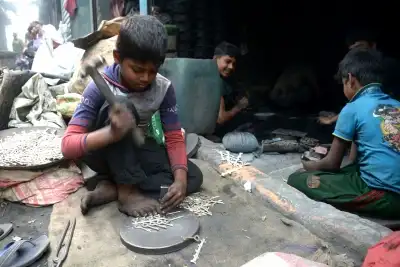
The article states that food inflation in Bangladesh in recent years has changed the behavior of households. Many families have reduced protein-rich food intake, increased reliance on cheap grains, postponed health care spending, borrowed money from informal sources, and cut back on children’s needs.
The report said that when rice, edible oil, pulses, eggs, fish and vegetables remain expensive for a long time, it impacts the nutritional level. Children silently suffer from malnutrition. Women often eat last and eat less. Elders from poor families become more dependent on irregular assistance.
It has also been said in the article that in the year 2025, there will be some relief from migrant income (remittance), but it cannot be considered as a permanent solution. The benefits of remittances do not reach all regions and households equally. It supports many families, but cannot be a substitute for a national food security strategy.
According to the article, Bangladesh’s food security challenge is also a question of inequality. The country has done relatively well in increasing rice production and maintaining supplies of the staple food grain, but food security is not simply an issue of availability; It is also a matter of access, nutrition, sustainability and a dignified life.
The report suggests that the policy-making approach should be based on “Is there enough rice?” changed from “Can poor families afford nutritious food all year round?” Should be focused on. For this, not only the general inflation rate but also regular monitoring of the food basket is necessary.
–IANS
dsc