
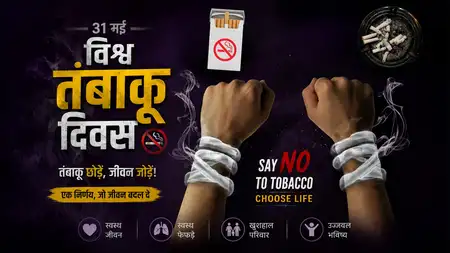
New Delhi, May 30 (IANS). World No Smoking Day is celebrated every year on 31 May, the aim of which is to make people aware of the serious health risks caused by tobacco and smoking. Smoking is a leading cause of death for millions of people around the world today. It not only damages the lungs, heart and other organs but also has a negative impact on the family and society. Through this day, the message is given to the people to quit tobacco, adopt a healthy lifestyle and save the coming generations from this deadly addiction.
According to the World Health Organization (WHO), tobacco use is a major risk factor for many chronic diseases, including cancer, lung disease, heart disease and stroke. It is one of the leading causes of death and disease in India and causes approximately 13 lakh deaths annually. India is also the second largest consumer and producer of tobacco. A variety of tobacco products are available in the country at very low prices.
According to the Global Adult Tobacco Survey India 2016-17, about 26.7 crore adults in India consume tobacco. The most prevalent form of tobacco consumption in India is smokeless tobacco and the commonly used products are khaini, gutkha, tobacco-infused paan and zarda. Forms of tobacco used for smoking include beedis, cigarettes and hookahs.
Globally, tobacco consumption is one of the greatest threats to public health. It not only causes loss of life but also has huge social and economic consequences. The total economic cost of all diseases caused by tobacco use for persons aged 35 years and above in India in 2017–18 was Rs 177,341 crore (US$27.5 billion).
According to WHO, at least 40 million children aged 13-15 years worldwide use tobacco products. The use of e-cigarettes and nicotine pouches is continuously increasing among the youth. Ahead of World No Tobacco Day (31 May), the World Health Organization has urged governments around the world to protect the new generation from addiction to tobacco and nicotine products.
More than 70 lakh people die every year in the world due to tobacco consumption. It is one of the leading causes of preventable death globally and is linked to heart disease, respiratory diseases and more than 20 different types of cancer.
WHO encourages the more than 1 billion tobacco, e-cigarette and nicotine pouch users worldwide to take the first step towards addiction on May 31.
According to a study, the economic cost of tobacco consumption is about 1.04 per cent of India’s gross domestic product (GDP), while the excise duty revenue received on tobacco last year was only 12.2 per cent of its economic cost. Direct medical costs alone account for 5.3 per cent of total health expenditure. The huge cost to the country’s healthcare system due to tobacco consumption can put pressure on the public healthcare system and harm the economy, hence it is necessary to scale up tobacco control efforts in India on a large scale.
Smoking is not just a bad habit but an addiction that gradually hollows out a person’s body from inside. Nicotine present in tobacco makes a person addicted to it, while thousands of harmful chemicals present in its smoke harm the lungs, heart, brain and other organs of the body. Smoking increases the risk of lung cancer, heart disease, stroke, respiratory diseases and many other serious diseases.
Tobacco use impoverishes families, impacts their health, increases inequalities and harms both society and the economy. These factors influence global efforts to achieve the Sustainable Development Goals (SDGs), which aim to create a more just, healthy and sustainable world. Revenue from tobacco runs counter to public health initiatives and sustainable economic development strategies.
–IANS
OP/PM