
The jail and the treatment of the accused felt as if this was a world of some other era, a time where there was no rule of law.
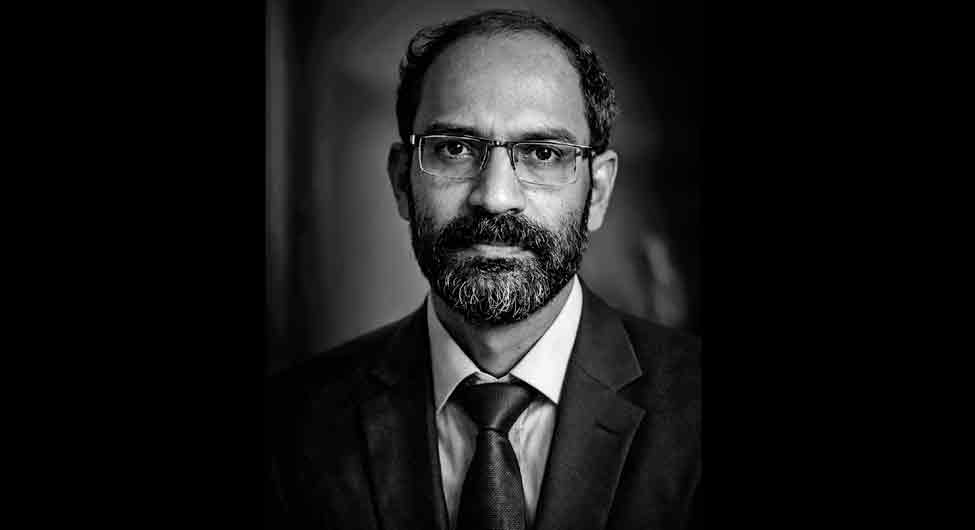
As the prisoners ran towards the van to be taken from the temporary quarantine jail to Mathura jail, I suddenly remembered a story I had once read about the concentration camps of Nazi Germany. When Jews were driven to the camps, many would run to get a side seat, just to catch one last unobstructed glimpse of the outside world. A strange hardness came in my mind. The mind was sad and silent, as if the brain had become completely numb. By that time I had completed 21 days in the temporary jail built in Phulkatori School, Mathura. I was arrested while on my way to Hathras, where a Dalit girl was brutally raped and murdered. I was kept in the dark for more than 24 hours after my arrest. I had no idea what was going to happen next. Eventually, I was produced in court and sent on remand.
When being taken to court, it seemed as if the journey would never end. The car was running fast on unknown roads, there was a strange restlessness in the air. The police officers were carefree, as if they were machines. Armed soldiers were sitting silently around us. This scene was reminiscent of encounters, which have now become common in many parts of the country. For a moment I thought this was my last journey. I thought the car would stop at some isolated place and the bullets would suddenly end the story. I prayed. Thought about his old mother, wife and children. Later I understood that it was not an encounter but a well-planned and part of a long plan. To break me slowly. The plan was to label me a terrorist and take away my respect, little by little every day.
The police and intelligence officials first wanted to know which CPI(M) MP had asked me to go to Hathras. This question was asked again and again, as if it was the only answer they were willing to hear. I have long felt that my arrest was not because of what I did, but because of who I am. Things like my identity, my birthplace were more important than any truth. There was an unspoken truth hidden in this realization, my detention and long imprisonment was not sudden, it was predetermined by prejudice. Months later I learned about the allegations against me. This delay in itself said a lot about the justice system. Yet, the day I was produced in court, a policeman secretly messaged a journalist from Delhi that a writ petition had been filed in the Supreme Court. In a moment of uncertainty, this news seemed like a ray of hope.
Life was difficult in the temporary jail of Mathura. A school building, which was hastily converted into a quarantine jail. We slept on sacks spread on the floor, mosquitoes were constantly buzzing, the entire night was spent tossing and turning restlessly in the classrooms that had been converted into cells. That’s why many people including me aspired to be shifted to Mathura jail. We didn’t know what was waiting for us there. All we knew was that sleep had become a major necessity. Some prisoners tried taking sleeping pills so they could get a few hours of shut-eye. Skin diseases were spreading rapidly. Insects were crawling in the sack sheets given to us. This led to rashes, wounds and infections. While in custody I could not bathe for three weeks. I still remember a special day. A jail employee came to that classroom and played a news clip on an English channel. Congress leader Rahul Gandhi was seen meeting my family in Kerala. Amidst the uncertainty and loneliness, that sight brought me relief. I felt that my family is not alone, the political society is investigating them.
When I got interim bail to meet my mother who was suffering from dementia, I was relieved. He didn’t recognize me. I tried to find a trace of memory, but couldn’t find it. At that moment I felt that in difficult circumstances, we do not want our loved ones to have to face the full brunt of the truth. If she recognized me, how would I explain to her about the jail? How could she tolerate that there are allegations against her son that he is part of the terrorist network? It may sound cruel, but that day his amnesia seemed like a blessing. God, in his own way, had mercy on both of us. She could not recognize me and hence could not understand my pain.
No guidelines were followed in my arrest. My wife also came to know about the arrest from TV. Kerala Union of Working Journalists filed a Habeas Corpus petition in the Supreme Court. Normally, Habeas Corpus petitions are disposed of in seven days but in my case, it took seven months for the Supreme Court to hear the petition, which directed me to approach the lower court again for bail. My case was first handed over to the Crime Branch and later to the Special Task Force (STF). At that time, I didn’t know anything about it. The information reached me in bits and pieces. Usually through jail staff, sometimes through newspaper clippings that came into my hands.
When I was taken from jail to the STF office, television cameras and YouTubers were waiting there. Some were shouting questions, some were expressing anger keeping their audience in mind, some were excitedly calling me and others terrorists. I watched all this from a distance, as if it was happening to someone else. I remember, a prisoner told me about the STF and its treatment of those arrested. I listened, said nothing and prayed. By then, prayer had become more of a habit than a faith.
The jail and the treatment of the accused seemed as if it belonged to another era, an era in which the rule of law did not prevail. We were forced to eat what was served to us, even if the food was spoiled, even if it was crawling with insects. On complaints, there was no improvement but punishment.
I got infected with coronavirus. I was admitted to a nearby medical college. The environment there was worse than jail. Those who were arrested were discriminated against openly and unchecked. I felt it in his eyes, in his voice, in his ignorance. I could only pray, not only for the strength to endure the suffering, but also to maintain my faith in humanity.
I was arrested on October 5, 2020 and released on bail on February 2, 2023. No one knows when the trial will start or end. He spent 28 months in jail in a system where the people in power act as they wish. There is no rule of law, much less humanity.
When I was released on bail, there was a crowd of journalists waiting outside the jail, even though it was Budget day. I spent 14 months in Lucknow jail. Under the bail conditions, I had to stay in Delhi for 45 days and report to the Nizamuddin police station every Monday.
Initially it was difficult to find accommodation; No landlord was ready to rent a room to an accused person under UAPA. Eventually, with the help of journalist friends and different civil society groups, I found a place to stay. Those 45 days felt like house arrest. I was not allowed to go beyond the jurisdictional limits of the police station. After completion of the scheduled time, I returned to Kerala. Although I have not faced open opposition from people, some YouTubers and haters keep following me and trying to defame me as a terrorist. They are few in number. Overall, some good people and leaders are sympathetic towards me. Despite this, I have not been able to get a regular job since my release from jail. With the help of some kind hearted editors, I am freelancing and making a living.
There are still many people who believe that there is no smoke without fire and they keep accusing me. I have learned to live with that doubt. Yet, when I look back, apart from the humiliation and sadness, there are two moments that still stand out to me.
A neighbor, who had asked for ten rupees from my wife. She said she wanted to offer them at a temple near Kerala and pray for my safety. There was another neighbor who came to our house when I returned home for some time on interim bail and brought a bag of dry fruits with her. She was confident that these dried fruits would last until I was finally released and came home forever.
It was through such small, unrecorded sympathies that I survived. In the midst of that unfortunate arrest, long imprisonment and slowly eroding respect, these things gave me courage. In years full of darkness and inhumanity, it was these moments of empathy, from familiar faces and strangers from around the world, that illuminated my soul and cemented my faith in humanity.