
West Bengal witnessed the highest voter turnout since independence, reaching a historic 91.66 percent in the second phase of the elections. However, on the day of voting, political tension was also seen between Trinamool Congress (TMC) and Bharatiya Janata Party (BJP) over the deployment of security forces in the state.
According to the Election Commission of India (ECI), West Bengal recorded 91.66 percent voting till 7:45 pm in the second phase of voting. There was 93.19 percent voting in the first phase of elections held on April 23, resulting in the combined voting percentage of both the phases being a staggering 92.47 percent.
“The combined voting percentage in both the phases has been 92.47%. Earlier, the highest level of voting participation in West Bengal was 84.72% (2011 GELA),” an ECI release said. Voting percentage was high in all categories, with female voters leading the way with 92.28 percent and male voters trailing behind with 91.07 percent.
The Election Commission said that Chief Election Commissioner (CEC) Gyanesh Kumar, along with Election Commissioners SS Sandhu and Vivek Joshi, kept a close watch on the voting through live webcasting, which was also ensured at 100% polling stations in West Bengal (Phase-2).
“Several new voter-friendly initiatives were ensured in these elections, such as easily identifiable color photographs of candidates on EVM ballot papers, Mobile Deposit Facility (MDF), easy-to-read newly designed Voter Information Slips (VIS) and limit of voters to 1,200 per polling station,” the release said. Participation in voting shows a significant increase compared to the 2021 West Bengal Assembly elections, which recorded an increase of 82 per cent. Was done.
The participation in the election marks a significant increase compared to the 2021 West Bengal Assembly elections, which recorded 82.30 per cent participation. Appreciating the voter participation, Gyanesh Kumar said, “West Bengal has recorded the highest ever voter turnout in both the first and second phases since independence – the festival of elections, the pride of West Bengal.” The main contest in the 2026 West Bengal Assembly elections was between TMC and BJP.
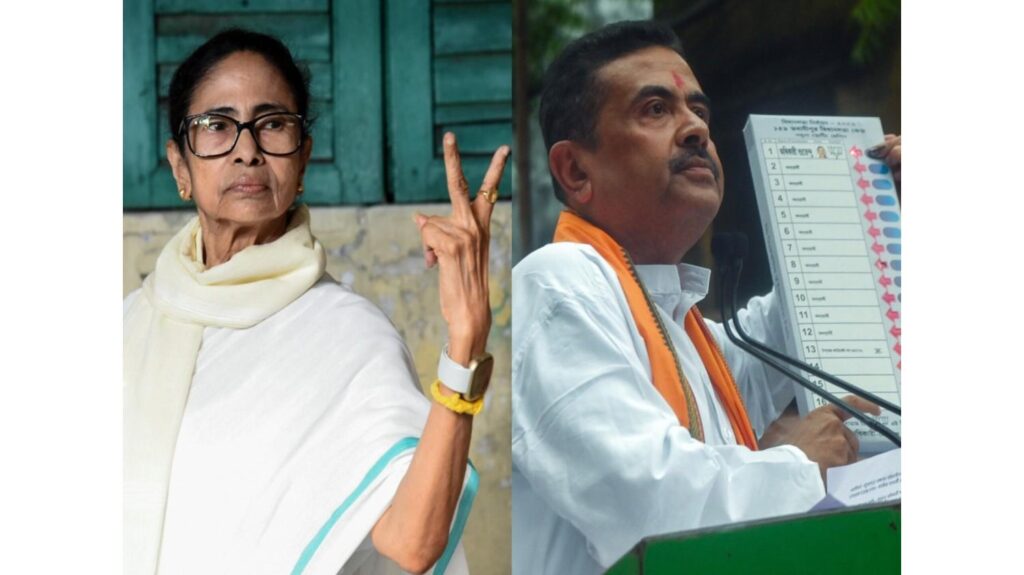
Both the parties are considering heavy voting in their favor. West Bengal Chief Minister Mamata Banerjee has expressed full confidence of TMC’s victory, while BJP leaders have claimed that this time they will form the government in the state. In the second phase, many prominent political personalities including Mamata Banerjee, BJP leader Suvendhu Adhikari, TMC general secretary Abhishek Banerjee, BJP candidate and mother of RG Kar Medical College rape and murder victim Ratna Debnath, TMC MP Mithali Bagh, West Bengal BJP President Samik Bhattacharya cast their votes. West Bengal Chief Electoral Officer (CEO) Manoj Aggarwal said that only minor incidents were reported during the voting.
“Apart from this, the voting was largely peaceful with only minor incidents,” he said while addressing a press conference. “There were no major problems.” Historic voting took place in Kolkata. At the booth in Kolkata where I went to cast my vote, our Booth Level Officer (BLO) told that he has been working for 12 years and at this booth there was never more than 50% voting, but today it has become more than 80%. I visited 10 booths today and at one booth in Alipore there was more than 95% voting,” he said.
However, Mamata Banerjee had earlier alleged that “observers from outside” and police officers unfamiliar with Bengal were being deployed in such a manner that TMC workers were being targeted. Another incident that sparked controversy was when the CRPF conducted a search operation in Falta assembly constituency under the leadership of election observer Ajay Pal Sharma for the West Bengal elections and this resulted in protests as TMC supporters gathered outside the office of party candidate Jahangir Khan and Slogans were raised against the Central Armed Police Forces (CAPFs) during the search.
TMC supporters protested, accusing the police observer appointed by the Election Commission of “intimidating” party workers ahead of the second phase of voting. Senior party leaders and state ministers also alleged that Uttar Pradesh cadre IPS officers were misusing their role. The Election Commission said that even after the end of voting today, 700 companies of Central Armed Police Forces (CAPF) will remain deployed in West Bengal till further orders to maintain law and order.
Abhishek Banerjee also accused security forces of acting as “BJP’s private army” and assaulting civilians, and said the same action led to the death of an elderly man in Udaynarayanpur. There were also reported incidents of violence throughout the day, with both sides accusing each other of abuses and threats.
Suvendu Adhikari, BJP candidate from Bhabanipur and Nandigram, alleged that TMC supporters, who were on a visit to a polling booth in West Bengal during the 2026 assembly elections, attempted to attack him. The incident occurred when he arrived to inspect a polling booth, following which a group of TMC supporters raised slogans of “Jai Bengal” and allegedly surrounded him.
Ratna Debnath, the BJP candidate in West Bengal’s Panihati assembly constituency, also alleged that she was targeted and threatened by Trinamool Congress (TMC) workers during voting. Speaking to ANI, Ratna Debnath alleged that she was abused and threatened, and claimed that attempts were made to attack her during her visit to the polling area.
Meanwhile, a clash allegedly broke out between polling agents of BJP and TMC at booth numbers 147 and 148 at Ramchandrapur Adarsh Vidya Bhavan polling station in Khanakul assembly constituency. A violent clash also took place in the morning near a primary school in Hatra Bazar area of Nadia district. The polling booth is set up at Hatra Bazar Primary School, where tension reportedly erupted between TMC and Indian Secular Front (ISF) workers.
The second phase of voting was being seen as a ‘litmus test’ for TMC as voting shifted to the party’s traditional strongholds in South Bengal and Kolkata.
Voting was held in 142 of the 294 seats in West Bengal in the second phase and the total number of voters was approximately 3.21 crore, which included 1,64,35,627 men, 1,57,37,418 women and 792 transgender voters. With the end of voting, the time for election campaigning and last-minute contact has officially ended. Now all eyes are on May 4. When the results will decide the political future of West Bengal.