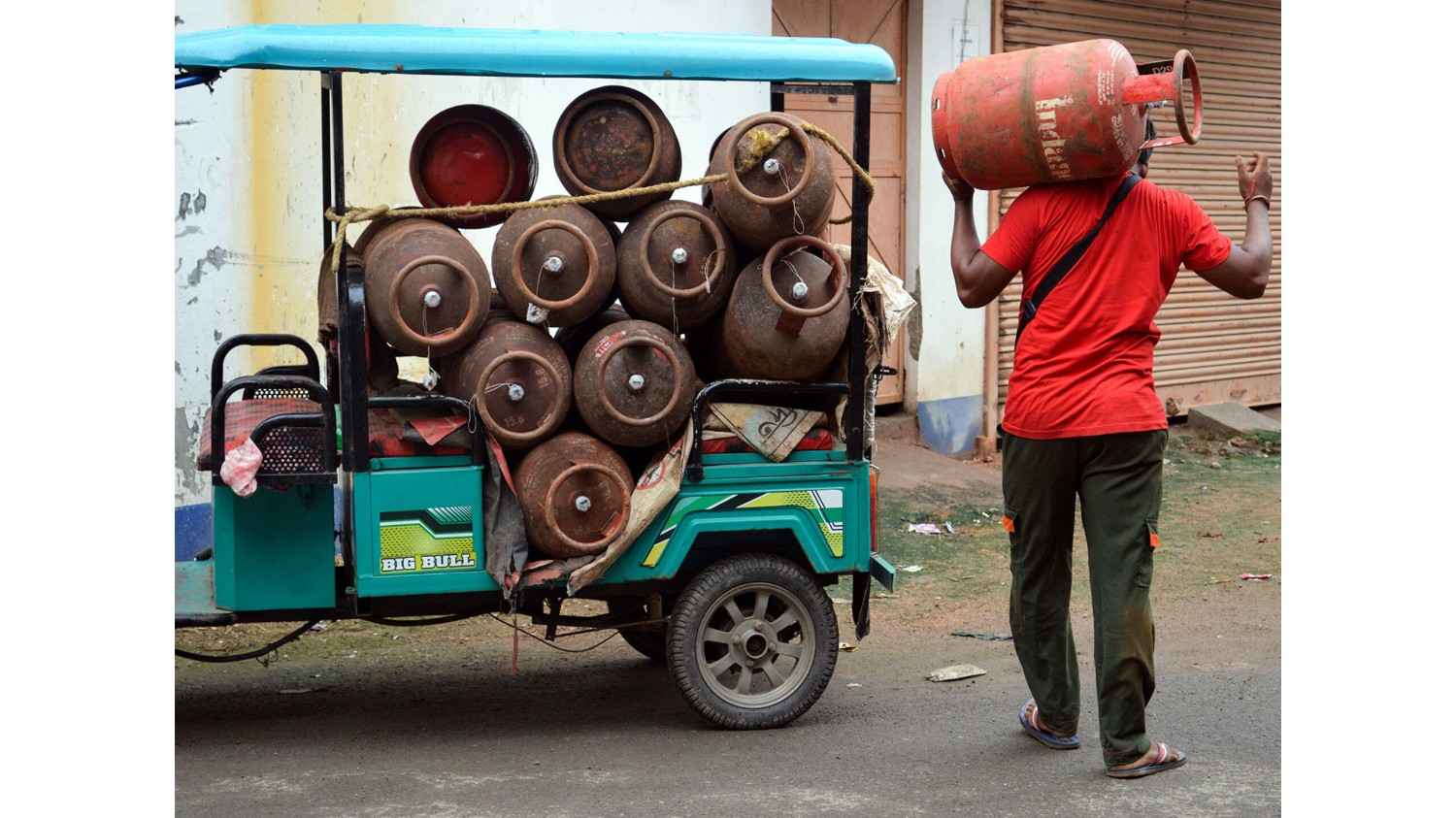
The shortage of commercial LPG across the country is affecting hotels and restaurants, forcing many establishments to shut down their operations. The government has constituted a three-member committee to resolve complaints and give priority to domestic LPG supply.
Bangalore Hotels Association issued a notice saying, “The supply of gas cylinders for commercial use has been stopped from today.”Essential services like senior citizens, students and hospitals depend on it. Immediate action is expected from Union Ministers to restart commercial gas supply. Commercial LPG cylinder distribution was temporarily stopped in Bhopal, Madhya Pradesh. RK Gupta, national vice president of the LPG Association, confirmed that commercial cylinders have not been issued since yesterday, except to hospitals and educational institutions.
“The next booking will be allowed after a gap period of 25 days to avoid hoarding, and there is no shortage contrary to the claims made by the oil companies,” he said. Additionally, industry representatives stressed that domestic LPG supply remains the top priority.
“There is no shortage and supply of commercial and domestic cylinders is continuing as before. Talks are underway with distributors and stakeholders to ensure smooth supply,” said PN Seth, acting president of All India LPG Distributors Federation.
Chandra Prakash, president of the federation, further said, “The government, oil companies and distributors are focusing on domestic cylinders first; priority is being given to essential commercial services like hospitals, but supplies to restaurants have been temporarily stopped.”
The incident comes in the backdrop of the escalating war between Iran, Israel and the United States in West Asia, which has spread to the Gulf countries. Due to the change in priorities, domestic LPG production has increased by 10 per cent in the last few days and LPG and LNG consignments are coming from various sources.
Sources said a new consignment of LPG/LNG is expected to arrive soon. A source said, “We were in crisis earlier, but today there is no crisis of petroleum products. Indian refineries are running at full capacity, as they were before the Iran-Israel conflict.”
The source further said, “We are getting 70 percent of our crude oil supply from sources outside the Strait of Hormuz. We entered the field better prepared for this disruption.” The sources also said that India will recover better than other countries after the West Asia crisis ends. He said that the government has not taken any decision to curb the export of refined oil.
Meanwhile, the central government has invoked the Essential Commodities Act (EC Act) to ensure the country’s energy supply in response to the growing conflict in West Asia. Although the move has temporarily reduced the availability of commercial LPG, officials say India’s energy infrastructure remains strong and refineries are operating at full capacity. To mitigate the impact of disrupted shipping routes in the Strait of Hormuz, the government has mandated a change in prioritization of fuel resources.
Refineries have been directed to maximize domestic LPG production exclusively for domestic use. Supply (up to 100%) has been reserved on priority basis for natural gas coming from domestic pipelines, CNG for transportation and essential pipeline operations. Fertilizer plants have been allocated 70%, while other industrial consumers and tea industries are receiving 80% of their six-month average.
All stakeholders in the gas supply chain – from producers to distributors – are now legally mandated to submit real-time data related to production, reserves and consumption to the central government. An inter-booking period of 25 days has been implemented for consumers to prevent hoarding and black marketing.
The government recognizes its impact on the hospitality sector. Union Petroleum Minister Hardeep Singh Puri has constituted a three-member committee, consisting of executive directors of IOC, HPCL and BPCL, which has been tasked with reviewing the complaints of restaurant, hotel and catering associations.
“The actual requirement of commercial LPG of restaurant associations will be met,” a government source said, adding that the committee will re-prioritize supplies based on verified operational requirements.
The crisis has led to local shortages in states like Karnataka, Madhya Pradesh and Tamil Nadu, where restaurant associations have warned of possible closures. Karnataka Chief Minister Siddaramaiah has formally urged the Union minister to address the unexpected shortages in Bengaluru, highlighting the threat to the city’s food service industry.
Tamil Nadu Chief Minister M.K. Stalin has contacted the Prime Minister seeking support for the hospitality sector along with efforts to ensure the safety of Indian citizens and fishermen in the affected Gulf areas.
Similarly, Rajya Sabha MP and AIADMK leader I S Inabadurai has written to Union Petroleum and Natural Gas Minister Hardeep Singh Puri, seeking his immediate intervention to ensure uninterrupted supply of commercial and domestic LPG. Reacting to the crisis, leaders of opposition parties have also criticized the way the government is handling the situation. Congress has accused the central government of not adequately addressing the shortage of commercial LPG cylinders.
Karnataka Deputy Chief Minister DK Shivakumar said that hotels, hospitals and other establishments could be badly affected by this situation. Shivakumar further said, “Today the entire country is struggling with the scorching heat. Due to lack of gas, all the hotels want to close. All the prices will skyrocket. Everyone will have to consider alternatives like wood, electric stove or kerosene stove.”
Meanwhile, Tamil Nadu Chief Minister M.K. Stalin has written a letter to Prime Minister Narendra Modi urging the central government to intervene and check the supply of LPG cylinders to ensure the safety of Tamils living in the Gulf countries.
Stalin this morning held a review meeting to assess the potential impact of the ongoing US-Iran conflict on Tamil Nadu and outline necessary response measures. “I have written to Honorable Prime Minister Modi urging the Central Government to ensure the safety of Tamils living in the affected Gulf countries and protect the welfare of fishermen from Tamil Nadu stranded in the region,” the Tamil Nadu Chief Minister said in a post.
Speaking to reporters outside Parliament, Priyanka Gandhi Vadra, speaking on reports of shortage of commercial LPG cylinders, said the country is facing a deep crisis and criticized the government for bowing to the US in the trade deal.
Vadra further said, “The crisis is deepening and it will get deeper. The way our government has capitulated to the US in the trade deal, the crisis will deepen further. There is also a war going on. Therefore, this situation will become even more serious,” Vadra further said.
Congress MP Shashi Tharoor also described the shortage as a “very serious problem” due to rising prices and limited availability due to the Iran conflict. Despite the disruption, officials say India entered the crisis in a stronger position than many other countries. India currently sources 70% of its crude oil from fields outside the Strait of Hormuz.
Indian refineries are operating at pre-conflict capacity levels, and the government has taken no steps to curb exports of refined oil. New shipments of LPG and LNG are expected to arrive soon, and the government estimates that India’s economy will recover rapidly once the regional conflict stabilizes.
All city gas distribution entities have been asked to ensure that industrial and commercial consumers supplied through their networks receive eighty percent of the average gas consumption of the last six months, subject to operational availability. Oil refineries have been ordered to minimize the impact of the LNG supply disruption as much as possible by reducing gas allocation to refineries to approximately sixty-five percent of the gas consumption of the last six months, subject to operational feasibility.
Every producer, importer, transporter, marketer or distributor of natural gas, including LNG and reconstituted LNG, has been asked to provide information relating to production, import, reserves, allocation, supply and consumption to the Central Government or any officer authorized by it.
“In view of the current geopolitical disruptions in fuel supply and restrictions on LPG supply, the Ministry has issued orders to oil refineries to produce more LPG and utilize the excess production for domestic LPG use,” the Ministry of Petroleum and Natural Gas said in a post on Twitter.
The impact of the disruption in LNG supply is expected to be borne by refineries and petrochemical units, leading to a 35 per cent reduction in gas allocation, while India will compensate for the shortfall by purchasing crude through routes other than the Strait of Hormuz.
The Strait of Hormuz, located between Iran and Oman, connects the Persian Gulf to the Arabian Sea and is one of the world’s most important oil transit routes. Any disruption in this waterway could have a serious impact on global energy markets and international trade.
Tensions between the US and Iran have escalated in recent days amid concerns over maritime security and the potential threat to commercial shipping in the region.