Indian Railways has launched a state-of-the-art project to run its first hydrogen train on an experimental basis, as per the specifications prepared by the Research, Design and Standards Organization (RDSO) to demonstrate the use of hydrogen-powered train technology in railways.
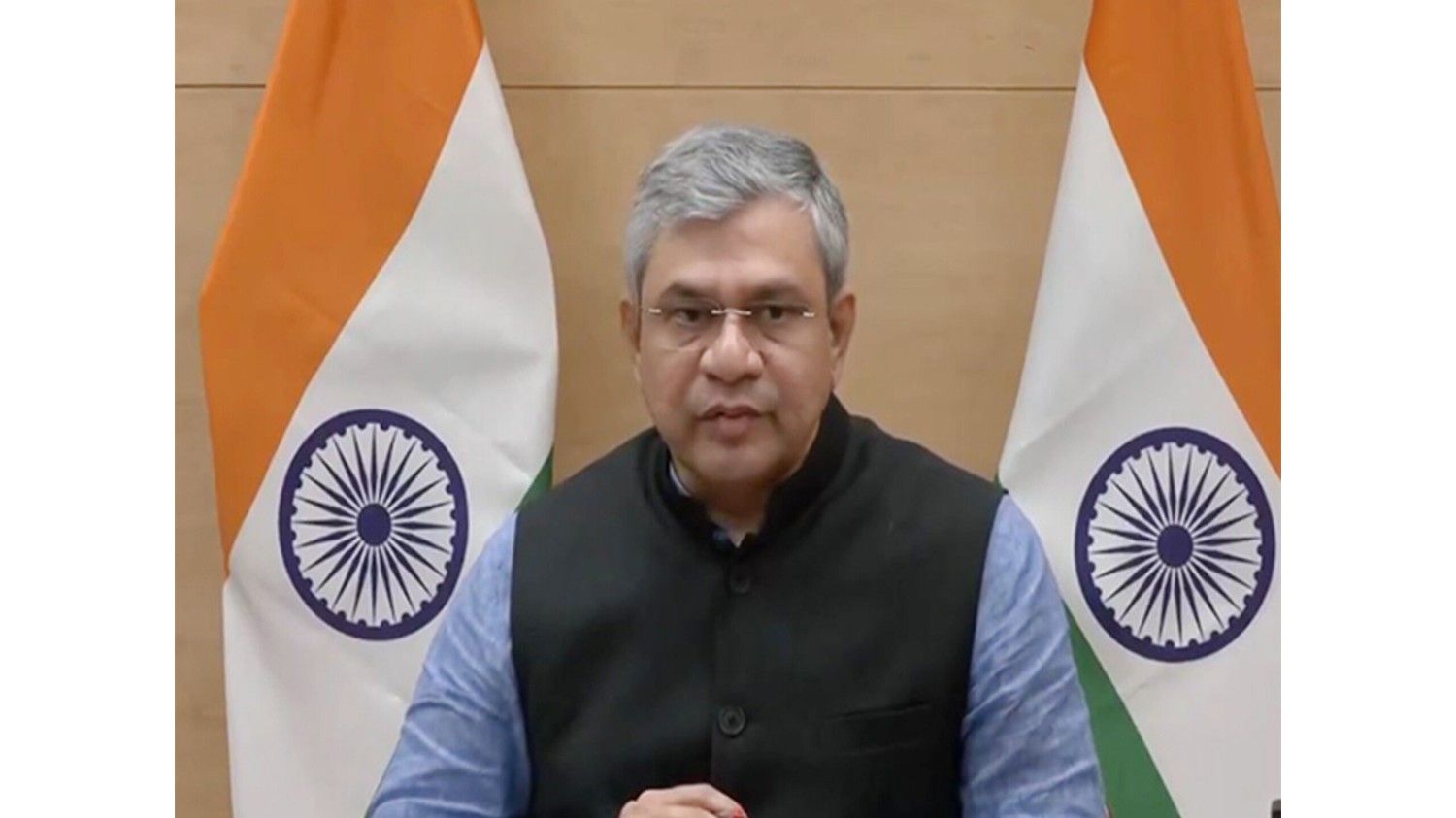
Railways, Information and Broadcasting and Electronics and Information Technology Minister Ashwini Vaishnav gave this information in a written reply to a question in the Lok Sabha today. In his reply, the Minister said that the construction of the hydrogen train-set has been completed. A hydrogen plant has been proposed at Jind to supply hydrogen for this train-set. In this plant, hydrogen is produced through electrolysis, which is an important step in green hydrogen production.
The Minister said that the hydrogen train-set comprises several key elements, including a train designed and developed in India, which reflects Indian Railways’ commitment towards a self-reliant India.
Vaishnav said that this is the world’s longest (10 coaches) and most powerful (2400 kW) hydrogen train set currently running on a broad-gauge platform. Apart from this, this train set has two driving power cars (DPC) of 1200 kW capacity each, with a total capacity of 2400 kW, along with eight passenger coaches. The Minister said that an important feature of this train is that it has zero CO2 emissions; It emits only water vapor.
Vaishnav said the project is an important step towards developing next generation fuel technology for the Railways. The project involved designing, prototyping and producing hydrogen traction technology for the first time for Indian Railways. Since the hydrogen train-set and its infrastructure have been developed on an experimental basis, it would not be appropriate at this stage to compare the cost of hydrogen-fuelled trains with established traction systems.
According to the Minister, this project reflects Indian Railways’ commitment towards promoting rail travel running on alternative energy, which will help ensure a clean and green future for the country’s transport sector.