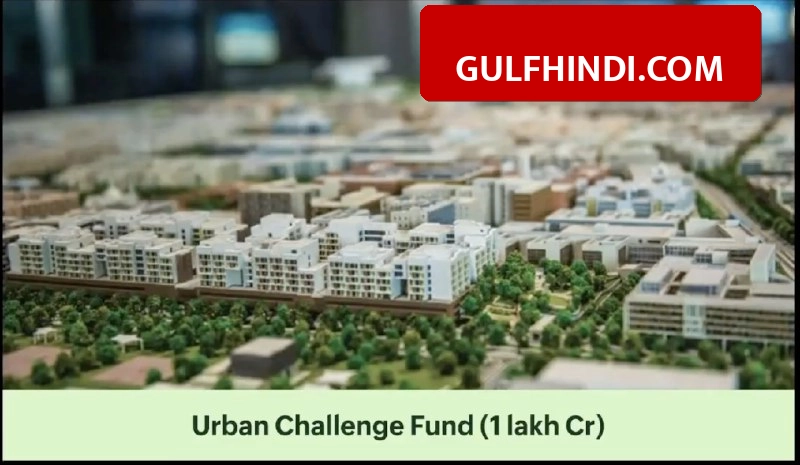
The central government has taken a big step to modernize the cities of the country. The Cabinet chaired by Prime Minister Narendra Modi has approved the ‘Urban Challenge Fund’ (UCF). Under this, the Central Government will provide assistance of ₹ 1 lakh crore. The objective of this fund is to strengthen the infrastructure in cities and make life easier for the people. The government believes that with this, work will be done on projects worth about ₹ 4 lakh crore in the next five years.
Which cities and areas will benefit?
The scope of this scheme has been kept quite large so that development can take place in every part of the country. Apart from big cities with population of more than 10 lakh, it also includes state capitals. The government has paid special attention to small cities i.e. Tier-II and Tier-III cities. Minister Ashwini Vaishnav said that this decision will prepare cities for the future.
Big cities: All cities with population more than 10 lakh.
Capitals: Capitals of all states and union territories.
industrial city: Large industrial hubs with population more than 1 lakh.
Hill State: All major cities of North Eastern and hilly states.
Where will the money come from and guarantee scheme
In this entire project, the money will be arranged in a new way. The Central Government will bear 25% of the total expenditure, while the 25% will have to be borne by the State Government or Municipal Corporation. The remaining 50% money will be raised from the market i.e. through loans or bonds. To ensure that small cities do not face any problem in taking loans, ‘Credit Repayment Guarantee Scheme’ of ₹ 5,000 crore has been started. Under this, small cities will get a government guarantee of up to ₹ 7 crore on taking loans.
What work will be done in the cities
This fund will be used mainly for three types of works. The government has divided it into three parts so that the work can be done properly.
Growth Hub: To develop new areas to increase employment and business in cities.
New look: Revamping old markets, historical places and crowded areas.
Water and cleaning: Improving drinking water, sewage systems and waste management.