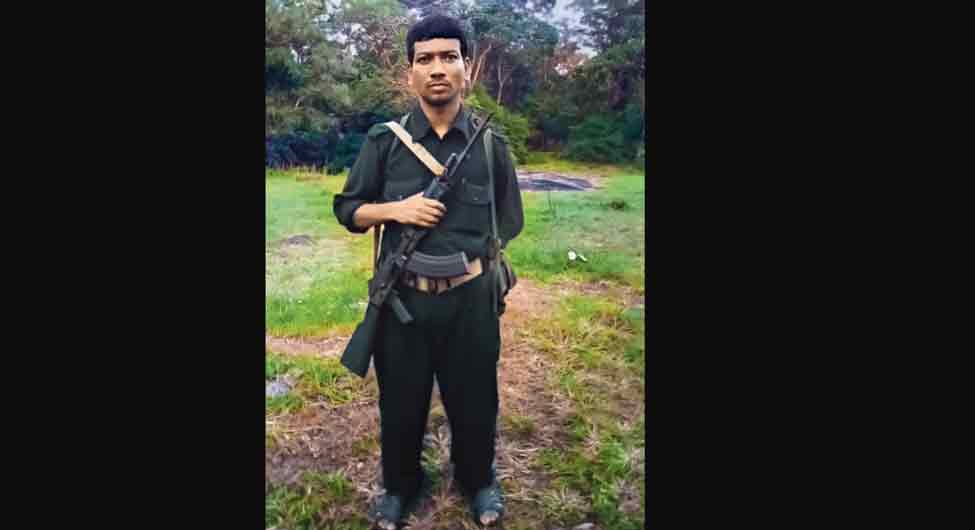
With many leaders and tribal commanders killed in alleged encounters or surrender, is the Maoist movement on its last legs?
At least thirteen Maoists, including two Central Committee members of the banned CPI (Maoist) outfit, were killed in an alleged encounter in Andhra Pradesh. Just months before Union Home Minister Amit Shah’s deadline to “eliminate” the Maoists, the government and security forces are hailing the operation as a major step towards a “Maoist-free India”. Andhra Pradesh and Telangana were considered to be the stronghold of the revolutionary leftist movement even before Naxalbari. The operation is therefore being seen as a major victory for the central government against the Maoists, which was first formalized in 2006 during the UPA government.
Police on 19 November claimed that seven Maoists were killed in an encounter in Alluri Sitarama Raju district of Andhra Pradesh. Police officials said that among those killed was CPI (Maoist) Central Committee member and Andhra-Odisha Border Committee in-charge Metturi Joga Rao alias Tek Shankar. According to the police, three women were also among those who died.
A day earlier, on November 18, six Maoists were killed in a police raid and subsequent ‘encounter’, including Central Committee member and South Bastar battalion commander Madvi Hidma.
The killing of Hidma dealt a deep blow to the guerrilla organization. He is considered the mastermind of many major attacks, including the Dantewada attack in 2010. 76 Central Reserve Police Force (CRPF) soldiers were killed in that attack. According to the police, he was also involved in the 2013 Jheeram Valley attack, in which 27 people, including senior Congress leaders, were killed and had a key role in the 2021 Sukma attack, in which 22 paramilitary personnel were killed.
Hidma was probably the only tribal leader of the Maoist organization who reached its Central Committee. The death of many Central Committee members is the biggest blow ever in the history of the extreme leftist movement. Many experts are now arguing that the Maoist movement is probably reaching its last stages. However, many human rights organizations have expressed doubt on the police version of the encounter.
Andhra Pradesh or Telangana has not only been the stronghold of Naxalite or Maoist movement, but this area also witnessed the struggle of agricultural laborers in the early days of independence. The Communist Party of India waged a war against the landlords and the Nizam here and liberated hundreds of villages. But that rebellion was suppressed due to police and army action.
Hidma’s funeral
Human rights activist and former member of the Legislative Council Prof. M. Kodandaram says, “The Naxalite movement in Andhra Pradesh made a huge impact among the villagers at least in the 1980s and 1990s. The biggest success of the Naxalite movement was that due to its political activism the terror of the landlords ended. They were successful in creating political consciousness among the rural poor. There are two reasons for their decline, firstly government pressure, secondly the political line could not match the changing attitudes of the public.”
JNU’s Ajay Gudavarthy, editor of a volume on Revolutionary Violence and Democracy, argues that the fundamental question remains: What will happen to the tribals? Will they continue to be displaced for mining and mineral resources?
“It is strange that despite the deepening of income inequality and economic crisis, the Maoist movement is facing the biggest setbacks,” says Gudavarthy. He argues that the main reason for this is stubbornness in the thinking of the movement and failure to adapt itself. He says, “But despite all this, everyone in the political mainstream, from BJP to Left parties, adopts similar economic policies. Thus, even if the government succeeds in defeating the Maoists, the real issues remain unresolved.”
Although there is general agreement among those Outlook spoke to that no revolutionary movement can survive unless it matches today’s expectations, some do not agree on the reasons for this disconnect. Maoist ideologue Murali Kannampalli, who was arrested in Maharashtra, says that in his understanding the Maoist movement has tried to understand the changing situation in different areas and make strategies accordingly. But, he says, “The repression that was carried out was so brutal that no activity of any kind was allowed to flourish. Although the blow is serious, it is absurd to say that this is the end of revolutionary politics in the country.”
Some experts also question why the Maoists are not treated like other insurgent groups in the North-East and elsewhere, especially when they have expressed willingness to engage in talks. Professor C. Kasim of Osmania University, a member of the Revolutionary Writers Association, says that the government should have shown more responsibility and accepted the offer of peace and reconciliation talks. He further says, “It is a different matter that the Maoists could not survive without updating their strategy and programme, they seem outdated in today’s time.”
The Naxalite-Maoist movement is the world’s longest running insurgency. Old methods and old programs have perhaps hastened its demise. The bigger issue is whether the government will work to solve the deep socio-economic problems that gave rise to this movement.