
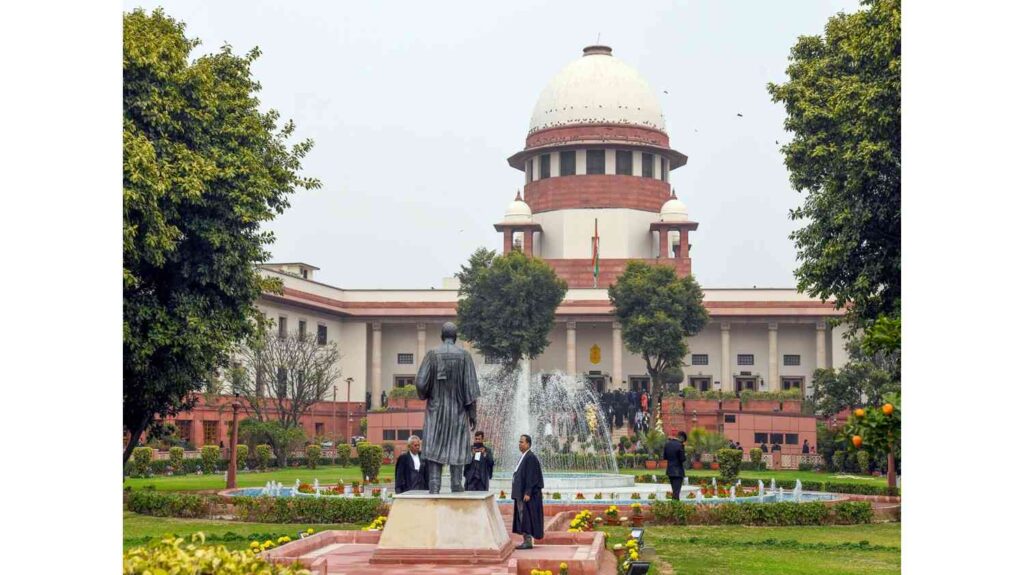
The Supreme Court on Tuesday said that it would consider petitions seeking to ban anti -conversion laws implemented in various states. A bench of Chief Justice (CJI) BR Gawai and Vinod Chandran of Justice has sought answers from various state governments on petitions challenging anti -conversion laws within four weeks. The court has set the next hearing after six weeks.
During the hearing, the lawyer appearing on behalf of one of the various petitioners argued that various states, especially Uttar Pradesh, have made their anti -conversion laws even more strict. The lawyer argued that in Uttar Pradesh, there is a provision of a minimum punishment of 20 years for violating the said anti -conversion law.
In addition, it was argued that the above laws put the opposite burden of presenting evidence and make the bail almost impossible, especially in matters related to inter -religious marriages. The lawyer stressed that ‘dual terms’ for bail, which are found in stringent laws such as the illegal activities (prevention) Act (UAPA) and terrorist and disruptive activities (prevention) Act, have also been implemented in the said anti -conversion laws.
After hearing the arguments, the court said that the case should be settled in sufficient time. Therefore, the court sought answers from various states making anti -conversion law within four weeks and set the next hearing of the case after six weeks.
The apex court has appointed two nodal lawyers for both sides associated with the case. Advocate Srishti Agnihotri has been appointed by the petitioners and advocate Ruchira Goyal on behalf of the states. There are several petitions challenging anti -conversion laws passed by Uttar Pradesh, Madhya Pradesh, Gujarat, Karnataka, Jharkhand, Uttarakhand and Himachal Pradesh governments.