
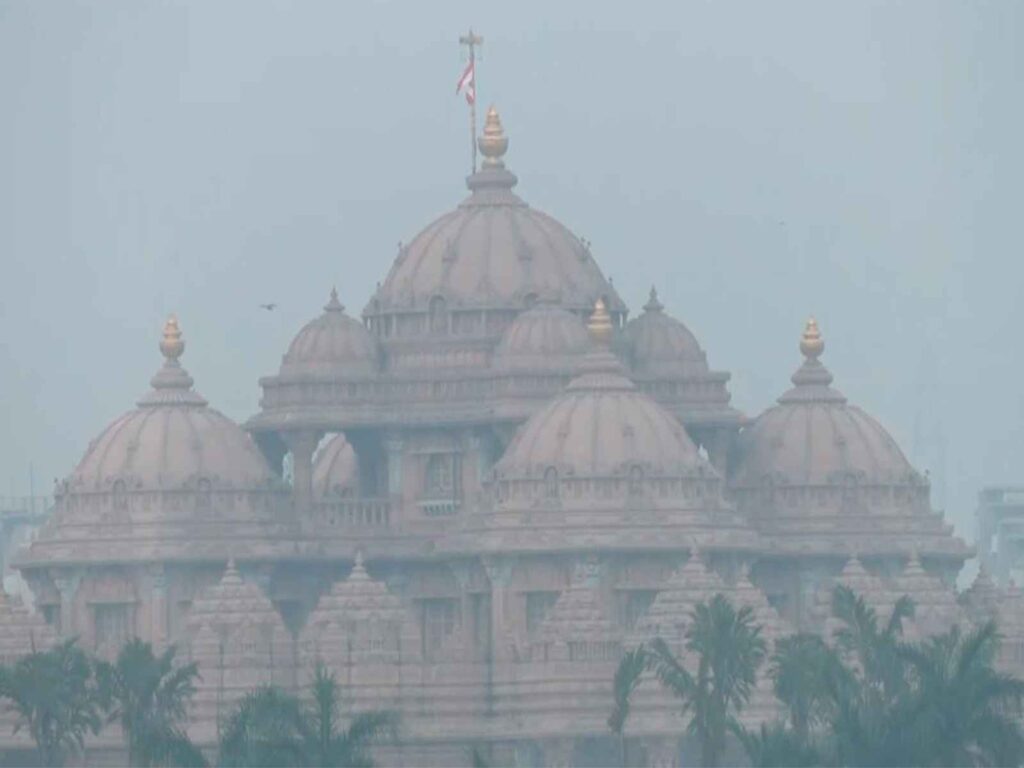
According to the Central Pollution Control Board (CPCB), the air quality index (AQI) around Akshardham in Delhi was recorded at 230 this morning, which is in the ‘poor’ category. Visuals taken from near Barapullah Bridge show that the Air Quality Index (AQI) in the Jawaharlal Nehru Stadium area was recorded at 252.
Expressing concern about the high levels of air quality index (AQI), Ghaziabad pulmonologist Dr Sharad Joshi told news agency ANI, “The air quality index (AQI) has increased significantly, leading to increased levels of particulate pollutants from sources like crop burning, vehicle smoke and fireworks. This can lead to increased respiratory problems for people with a history of COPD, asthma or tuberculosis.” “, which causes symptoms like cough, shortness of breath and chest pain.”
He said people who do not have any pre-existing respiratory problems, especially children and the elderly, are also at risk due to weak immunity.
Dr Joshi further said that the use of ‘green crackers’ during Diwali reduces pollution, but they are “not completely harmless.”
It is noteworthy that according to the Central Pollution Control Board (CPCB), the Air Quality Index (AQI) in the national capital remained in the ‘very poor’ category on Friday morning.
According to CPCB, the air quality index (AQI) was recorded at 367 at 8 am. Anand Vihar recorded the highest air quality index (AQI) of 370, followed by Wazirpur (328), Jahangirpuri (324) and Akshardham (369).
Meanwhile, many areas of Delhi recorded AQI above 200, which means the air quality in these areas has turned ‘poor’. The air quality index in Anand Vihar, Bawana and Chandni Chowk was recorded at 276, 367, 310 and 212 respectively. The air quality index was recorded at 305 in Dwarka Sector 8, 269 in Nehru Nagar, 221 in IGI Airport (T3), 245 in Rohini, 224 in Pusa and 200 in India Gate.
AQI readings are classified into good (0-50), satisfactory (51-100), moderately polluted (101-200), poor (201-300), very poor (301-400), and severe (401-500) categories. Therefore, the higher the AQI reading, the more unhealthy it is to breathe.
Earlier on Tuesday, the Commission for Air Quality Management (CAQM) has implemented Phase I of the Graded Response Action Plan (GRAPE) in Delhi-NCR. According to a statement issued by the commission, the action has been taken after the air quality index (AQI) in the area fell to 211, which has been placed in the ‘poor’ category.
The Commission also considered the forecasts of the Indian Meteorological Department (IMD) and the Indian Institute of Tropical Meteorology (IITM), which have predicted poor air quality in the coming days.
This Phase I of GRAPE is active when the AQI is between 201 and 300. Under this phase, 27 preventive measures are to be strictly implemented by all concerned agencies in NCR. These include use of anti-smog guns, water sprinkling, dust control measures in road construction, repair projects and maintenance activities.
“The sub-committee, in its meeting held today, reviewed the air quality scenario in the area, the forecast of IMD/IITM and observed as follows: The AQI of Delhi has been recorded at 211 (‘Poor’ category) on 14.10.2025. Further, the forecast of IMD/IITM has also predicted the AQI to remain in ‘Poor’ category in the coming days,” the CAQM said in its order.
Accordingly, the Sub-Committee has decided to implement all actions under Phase-I (‘Poor’ Air Quality) of the existing GRAP in the entire NCR with immediate effect.