: Sunday, April 19, 2026 3:24 PM
Barmer The day of 21st April is going to be recorded in golden letters in the history of Rajasthan. The inauguration of the state’s first refinery is not just the launch of an industrial unit, but a triumph of the unwavering hope of the Thar Desert that began with the first drop of oil in 2004. When Rajasthan sees the inauguration of its first refinery, it will not be just the launch of an industry. That would be the fulfillment of the dream that was born in the Thar Desert when the first glimpse of oil was seen from beneath the ground.
No one had ever imagined that a stream of energy would flow from this sea of sand. But in 2004, Cairn made the country’s largest onshore oil discovery—at Mangala—which changed this thinking. This is the same Mangala, who for the first time called the land of Rajasthan not dry but prosperous. Where there was desert everywhere, the oil hidden under the ground started writing a new story. Gradually, this story became not just a discovery, it became a hope – that now there will be no migration from here, but the beginning of development.
Then came 2009… when Cairn started commercial oil production for the first time from Mangala. That moment was not just the start of production, but the moment of birth of faith. On the same day it became clear that Rajasthan will no longer remain a state standing only on the borders, but will create its own strong identity on the energy map. At that time it was said that in the coming times, the economy of Rajasthan would move beyond an agriculture-based structure towards an ‘oil economy’ – and today the changes taking place in western Rajasthan are showing that to be true.
Mangala was not alone. Cairn developed the Bhagyam and Aishwarya fields and integrated them and created a complete oil production ecosystem, making Rajasthan one of the major onshore oil producing regions of the country.
Today, 600 million barrels (more than 60 crore barrels) of crude oil has been produced so far from Barmer Basin. Which helped a lot in reducing the country’s import dependence. This was accompanied by the production of natural gas and other hydrocarbons, turning western Rajasthan into an emerging energy hub.
This energy story has also revealed a major economic impact. According to Finance Department data, since the start of production from Barmer Basin in 2009, the Rajasthan government has received revenue of about Rs 50 thousand crore from oil and natural gas.
But the real war was yet to come. Oil was found, but it was not easy to get rid of it. The waxy crude oil, the desert heat and the long distance—all combined to make a seemingly impossible route. But technology made way—some 700 kilometers of hot pipelines, which still connect the desert to Gujarat.
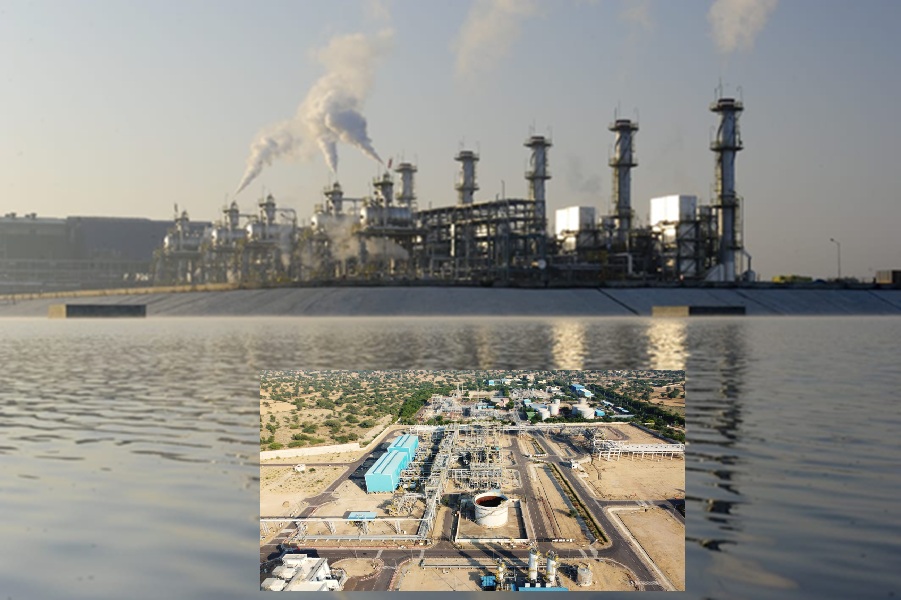
Today that dream has become a reality – HPCL Rajasthan Refinery with a capacity of about 9 to 9.5 million metric tons per year. This refinery will not only produce fuel but will also add a new chain of industrial development through petrochemical production.
The effect of this entire change is also visible on the economy. Due to energy and industrial investment, Rajasthan’s per capita income has continuously increased and the state is today among the major states where manufacturing, energy and infrastructure have developed rapidly. The oil and gas based economy in western Rajasthan has created new opportunities for employment, investment and infrastructure.
It is noteworthy that major oil fields like Mangala, Bhagyam and Aishwarya in Barmer area operated by Cairn Oil and Gas of Vedanta Group are part of this basin. According to industry data, Mangala field has so far produced more than 535 million barrels of oil equivalent.
Experts believe that there are still about 650 million barrels of potential resources in this entire basin, which may prove to be more important for India’s energy security in the coming years.
New technologies are now being used here to increase production in future. Alkaline-Surfactant-Polymer (ASP) technology has been implemented in the Mangala field, which is considered one of the largest commercial advanced oil recovery projects in India. Through this technology, efforts are being made to extract excess oil from mature oil fields by chemical injection, due to which the recovery rate is likely to increase from about 40 percent to 60 percent.
Apart from this, work is also underway to increase additional production from Mangala, Bhagyam and Aishwarya fields through advanced oil recovery (EOR) technologies. For this, drilling of new wells, injection wells and expansion of infrastructure is being done continuously, so that maximum oil can be extracted even from the old fields and production can be maintained for a long time.
Now when the refinery opens on April 21, it will not be just an inauguration. This will not be the last stop of that story, but the biggest turning point – where the journey that started from Mangala will change the fate of the desert and start a new Rajasthan.
Read this also – Click to read the news of your state/city before the newspaper.
Web Title-From Mangala to the Refinery: The Golden Saga of an Oil Economy That Transformed the Destiny of the Thar Desert