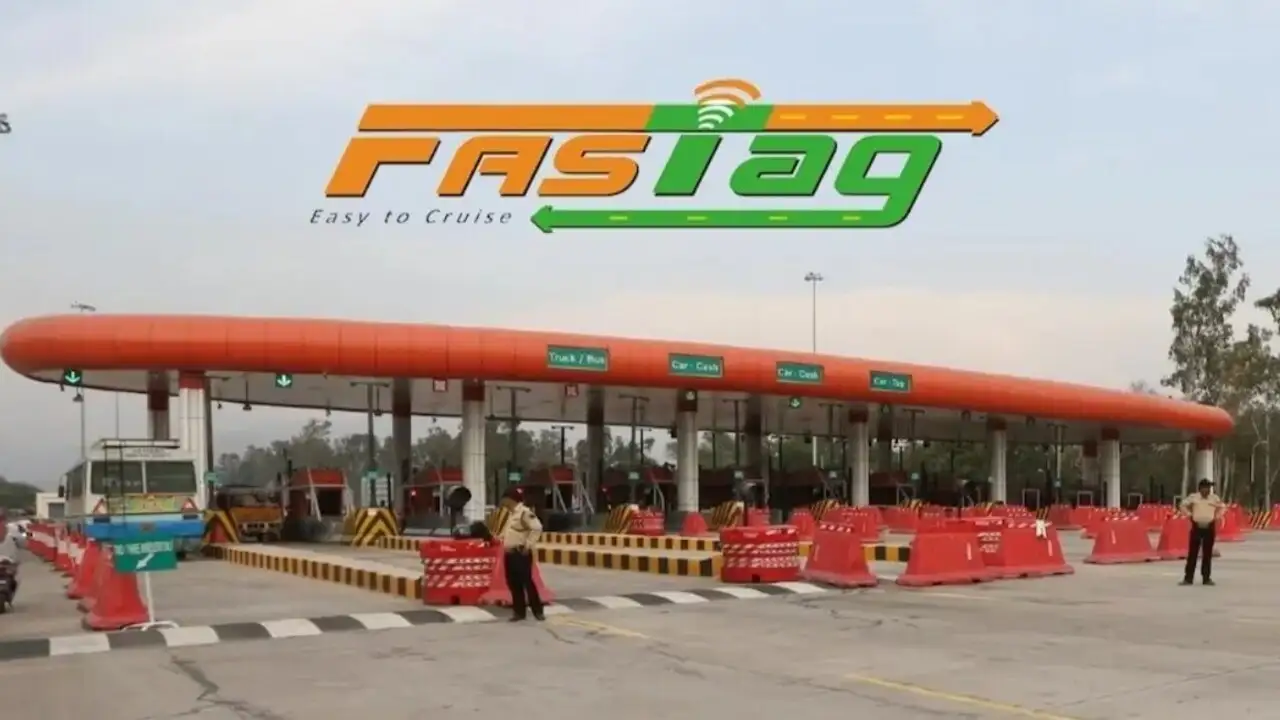
The days of standing in long queues at toll plazas on the country’s highways—which spoil both your mood and your car’s mileage—are soon going to end. Now, your train will continue to move, and the toll will be deducted automatically. This means no stopping, no debate, and no commotion. The government is bringing a system in which cameras will read the license plate, and the toll amount will be deducted directly from your bank account. If all goes as per plan, this change will become a reality on the ground by December, and will completely change your travel experience. Let us delve deeper to understand the complete details of this initiative.
The hassle of stopping at toll plazas on National Highways across the country is soon going to end. Union Minister for Road Transport and Highways, Nitin Gadkari has announced that a seamless and barrier-free toll collection system will be implemented on many highways by December 2026. This will make the journey faster, easier and completely hassle-free. Speaking at the Logistics Power Summit and Awards 2026, Gadkari said a strong infrastructure is essential to reduce the cost of logistics within the country. He further informed that the government is rapidly working on the plan to implement barrier-free toll system on many national highways by December. This initiative will save time at toll plazas and help in reducing the problem of traffic jams.
This new system will use modern technology, which will include Automatic Number Plate Recognition (ANPR) and RFID-based FASTags. High-performance cameras will recognize the license plates of vehicles, and the toll amount will be automatically deducted through the linked FASTag. Drivers will no longer need to stop anywhere. If a vehicle does not follow the rules, an e-notice will be issued to the owner. Failure to make timely payment may result in suspension of FASTag and additional penalties related to VAHAN database may also be imposed. Gadkari stressed that for India to emerge as a global power, it is important to reduce logistics costs to single-digit levels. The development of expressways and economic corridors has reduced India’s logistics costs from 16 percent to 10 percent, according to a report by the Indian Institutes of Technology (IIT) Madras and Kanpur, and the Indian Institute of Management (IIM) Bangalore. He said that in America and Europe this figure is about 12 percent, while in China it is between 8 to 10 percent.
Emphasis on green fuel
Gadkari said that India fulfills 87 percent of its oil needs through imports. Every year approximately ₹22 lakh crore worth of fossil fuels are imported, which also increases pollution. Therefore, it is very important to promote alternative fuels and biofuels. He stressed that green hydrogen is the fuel of the future; However, to make it economically viable, the cost of hydrogen fueling stations needs to come down. Gadkari further said that India is the fastest growing large economy in the world. The government aims to make the country a $5 trillion economy, and an improved road network as well as lower logistics costs will play a key role in achieving this goal.