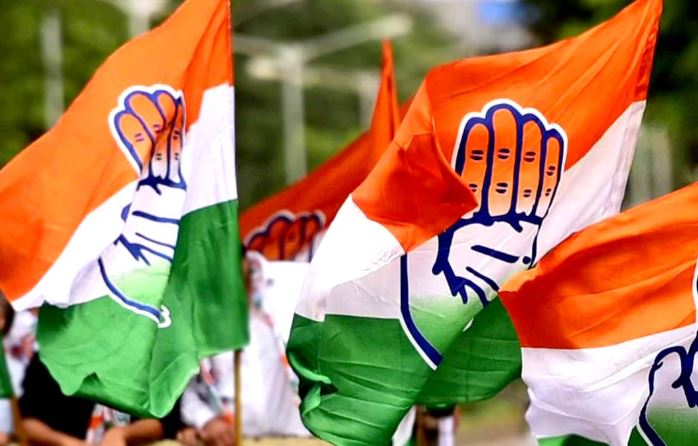
Calling for an overhaul of the National Clean Air Program (NCAP) and immediate updating of national ambient air quality standards, the Congress on Sunday said India’s air pollution crisis is no longer just a respiratory problem but a “major attack on our brain and body”.
Congress general secretary and communications in-charge Jairam Ramesh said air pollution is a public health disaster and a “national security threat to our society, healthcare system and future labor force”.
The former environment minister wrote on the social media platform ‘X’, “India’s air pollution crisis is no longer just a respiratory problem. “This is now a massive attack on our brains and bodies.”
Ramesh said about 20 lakh deaths in India in 2023 were linked to air pollution, a 43 percent increase from 2000. He said nearly nine out of 10 of these deaths were due to non-communicable diseases (NCDs) such as heart disease, lung cancer, diabetes and dementia.
Ramesh said India records about 186 deaths per 1,00,000 people due to air pollution, which is more than 10 times the rate of high-income countries (17 deaths per 1,00,000).
He said that in India, about 70 percent of deaths due to COPD (‘Chronic Obstructive Pulmonary Disease’), about 33 percent of deaths due to lung cancer, about 25 percent of deaths due to heart disease and about 20 percent of deaths due to diabetes are related to air pollution.
He said exposure to particulate matter (PM 2.5), measured in micrograms per cubic metre, has now also been linked to brain damage and accelerated cognitive decline and globally around 6,26,000 cases of dementia deaths in 2023 are linked to air pollution.
“Air pollution is a public health emergency and a national security threat to our society, our healthcare system and our future workforce,” Ramesh said.
“Our current standard for PM 2.5 is eight times the World Health Organization’s annual exposure guidelines and four times the 24-hour exposure guidelines,” he said. Despite the launch of the National Clean Air Program (NCAP) in 2017, PM 2.5 levels have been continuously increasing and surprisingly, now every person in India lives in areas where PM 2.5 levels are much higher than the World Health Organization guidelines.
“We need to overhaul NCAP and also urgently update the National Ambient Air Quality Standards (NAAQS) that were carefully drafted in November 2009,” Ramesh said.
The Congress leader also shared the ‘State of Global Air 2025’ report on ‘X’, which presents a comprehensive analysis of data on air quality and health impacts for countries around the world in 2023.