Amravati, May 21 (IANS). Andhra Pradesh has started implementing its Integrated Clean Energy Policy rapidly. Under this policy, the state aims to attract investment of Rs 10 lakh crore in renewable energy, energy storage, green hydrogen, power transmission and manufacturing sectors by 2029.
As a major step in this direction, 600 MW solar power projects are being started in YSR Kadapa district.
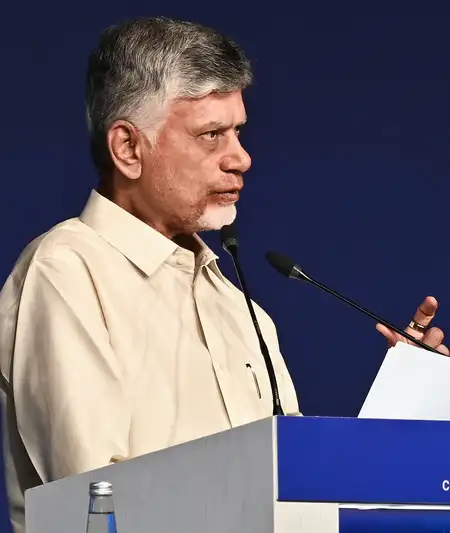
N Chandrababu Naidu, posting on the social media platform ‘X’, said that it is a matter of pride for Andhra Pradesh that the first project under the ‘Integrated Clean Energy Policy 2024’ is now starting. The Government is fully committed to making Andhra Pradesh the clean energy capital of India.
Minister of Human Resource Development, Information Technology, Electronics and Real Time Governance Nara Lokesh will formally inaugurate the ‘SAEL Solar MHP1’ and ‘SAEL Solar MHP2’ projects on Friday.
SAIL Limited has successfully commissioned its 600 MW solar power project in Andhra Pradesh in a record 11 months, according to an official statement issued on Thursday. This achievement shows that Andhra Pradesh is becoming one of the leading states in fast completion of clean energy projects in the country.
This integrated solar power project, built with an investment of about Rs 3,000 crore, is spread over an area of more than 2,400 acres. This is one of the most significant renewable energy investments in Andhra Pradesh in recent years.
Both these 300 MW projects started their commercial operations earlier this year. MHP1 was launched on 30 January 2026 and MHP2 on 13 March 2026.
More than 12 lakh advanced Topcon bifacial solar modules have been installed in this project. Most of these modules were manufactured at SAEL Limited’s manufacturing units in Punjab and Rajasthan.
The clean energy generated from these projects will be sent directly to the national grid under a 25-year power purchase agreement with the Solar Energy Corporation of India.
These projects are expected to reduce carbon dioxide emissions by approximately 11 lakh tonnes every year. This will also have a good impact on the local economy. More than 1,000 laborers were directly and indirectly employed during construction, about 80 percent of whom were from local communities.
This development work has also created long-term economic opportunities for farmers in the region through a systematic land lease arrangement lasting approximately 25 years. This has provided stable and predictable sources of income to rural families.
–IANS
SHK/ABM