Amidst dissatisfaction regarding unemployment and development, it is a do or die challenge for BJP, a fight for survival for Congress and regional parties.
With the announcement of dates, the heat of assembly elections has reached its peak. The setback for BJP in the 2024 Lok Sabha elections poses big challenges for Chief Minister Hemanta Vishwa Sarma, while for the opposition Congress it is a fight for existence. In this sense, these elections are also going to decide the future politics of Assam. However, the opposition is questioning the role of the Election Commission, saying that the single phase voting on April 9 and the results on May 4 means that after the withdrawal of nominations on March 26, candidates have barely ten days to campaign, while the results will come three weeks later. The Election Commission is also under the scanner regarding deletion of voters’ names. In this way, unlike last time, this time everything will be settled before Bihu, the main festival of Assam.
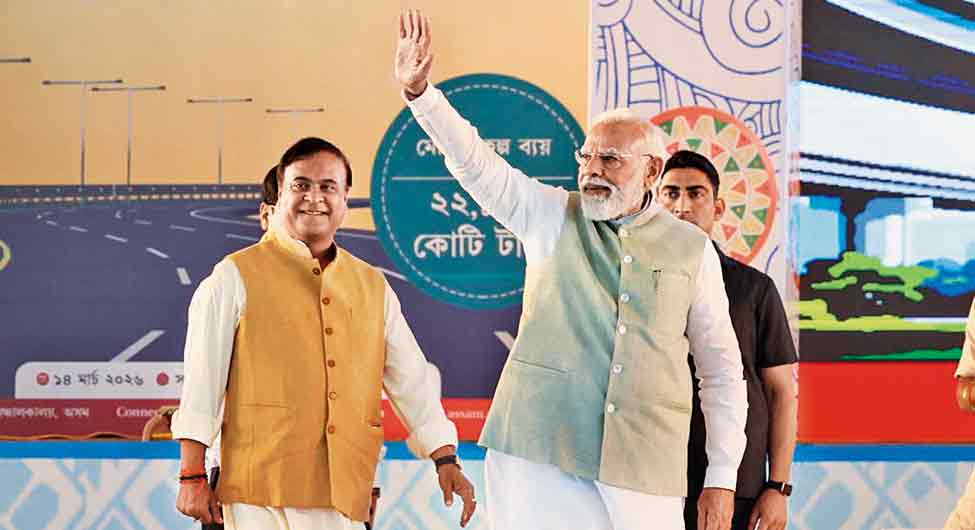
BJP Chief Minister Sarma is trying hard to retain his position, while Congress under the leadership of State President Gaurav Gogoi is trying its best to regain its lost political ground. The alliance led by the country’s oldest party includes Left parties, Akhil Gogoi’s Raijor Dal, AJP and APHLC. Of the total 126 seats in the state, Congress is contesting on 100 seats and its allies are contesting on the remaining seats. BJP has released a list of 88 names in its first list. The Chief Minister of Assam will contest the elections from his traditional seat Jalukbari. BJP has given ticket to Pradyut Bardolai, who left Congress, from Dispur and to former Congress President Bhupen Bora from Bihpuria. Both of them joined BJP at the recent election time. This also indicates that the field is difficult for BJP this time. All India United Democratic Front led by Badruddin Ajmal has also released the list of its candidates.
It is noteworthy that a few hours before the announcement of election dates, the Assam government changed the timing of a program from 6.30 pm to 2 pm and senior officials made many announcements in it, because the Chief Minister was busy in some other program with Union Home Minister Amit Shah. Those announcements included the announcement of honorarium to Bodo musicians, artists, trainers and expert committee members involved in the Guwahati “Bagurumba Dwahau” program on January 17. The state government also announced a Rs 19 crore agreement between Assam State Rural Livelihood Mission (ASRLM) and NDDB Dairy Services for the establishment of women-owned milk producer organizations in Cachar, Hailakandi and Sribhoomi districts. The initiative aims to support approximately 16,000 women from 400 villages. Apart from this, the government also launched a mobile app named “Rudra”, which is powered by AI and Geospatial Information System (GIS). This app will allow people to provide information about potholes on the roads and geo-tag them. The Chief Minister had announced to improve this app in January 2025 itself, so that the road repair work can be expedited and made effective.
what’s at stake
Since coming to power in 2016, the BJP has expanded its support base among various castes, tribes and communities, many of which were earlier traditionally considered vote banks of the Congress. However, the political environment there is fraught with internal tensions, including identity politics and communal divisions. Then, contrary to the government’s lofty claims of development, it is not visible on the ground. There is widespread dissatisfaction among the people. Increasing unemployment especially among the youth and economic development in rural areas is a big issue.
This is why the Sarma government gave an assistance amount of Rs 9,000 to women of about 40 lakh families and distributed appointment letters to 5,690 new government employees in a function organized in Khanapara on March 12. On this occasion, the Chief Minister announced that 65,000 more jobs will be given to the youth. He also claimed that his government has so far provided 1.64 lakh government jobs.
During the 2021 assembly election campaign, the BJP had promised to provide one lakh government jobs every year, later saying that this number was for their entire five-year tenure.
In this election, BJP is largely dependent on the power of manipulation by Chief Minister Himanta Biswa Sarma. The party is definitely making cultural identity and strong leadership an issue in its election strategy, but critics say that the party is still dependent on polarization. Where issues like migration, land ownership, religious identity and protection of indigenous rights are prominent.
Eviction drives affecting Muslim communities and controversies related to deletion of names from voter lists have also made the atmosphere more tense. Opposition parties allege that such issues are being deliberately raised to increase the feeling of insecurity regarding land and identity and to strengthen the support of Hindu voters.
Sarma vs Gogoi
This time, at the center of the debate is Chief Minister Sarma’s campaign against Assam Congress President Gaurav Gogoi, in which for the last two years, Sarma has been continuously alleging that Gogoi had gone there in 2013 on the invitation of Pakistan’s intelligence agency ISIS. On this, Congress leaders have challenged the Chief Minister to present evidence in support of this allegation or take legal action. Congress has been rejecting these allegations as politically motivated.
Such allegations and counter-allegations have now become routine. Gogoi often raises questions related to governance and economic performance, while Sarma in response brings up allegations related to Pakistan. On the other hand, Gogoi has accused the Chief Minister of purchasing huge amounts of land in different parts of Assam. He has said that if his party comes to power, these lands will be investigated and if necessary, they will be distributed among the landless.
Gaurav and Akhil Gogoi in Jorhat
The growing conflict between Sarma and Gogoi has turned this election into a personal contest rather than a political one. This conflict is not just the result of election rhetoric, but has its roots in a decade-old political rivalry that began within the Congress itself. Before joining the BJP, Sarma was a senior minister in the Congress government led by Gaurav Gogoi’s father, the late Tarun Gogoi. After that, in the conflict over leadership in the party, Sarma left Congress and joined BJP. The rupture reshaped Assam politics and laid the foundation for one of the state’s most bitter political rivalries.
Congress’s challenge
The Congress, once the most influential political force in Assam, is still struggling to re-establish itself almost a decade after losing power in 2016. Its presence at the grassroots level appears relatively weak, although the party is trying to re-establish itself through new candidates.
This strategy signals a restructuring of the party, but it could also destabilize its traditional organizational structure, which has long been its strength. In some constituencies, new political faces are being seen as an attempt to create wider social reach or a move that may face opposition at the local level.
The challenge before Congress is not only electoral but also existential. In the last few years, many prominent leaders have joined the BJP, including former state president Bhupen Bora. Many leaders who have left the party have criticized the current state president Gaurav Gogoi, although Congress leaders say that such allegations by leaders who have changed parties are part of political rhetoric.
It is now believed within the Congress Party that restoring credibility is its biggest problem. After years of organizational sluggishness, voters often question why the party does not appear to be at the center of political discourse. Congress leaders say their election campaign is focused on building a broad “anti-BJP” coalition, with the party seeking to present itself as a more liberal and inclusive alternative. Issues like unemployment, inflation, allegations of corruption and resolving tribal tensions are the main points of its election message. However, internal factionalism in the party continues to weaken these efforts. Many district units are still divided and tensions remain between old loyal leaders and newly joined members.
Allies and regional parties
Meanwhile, Congress also seems to be relying on the performance of its allies. These include Assam Jatiya Parishad (AJP), Communist Party of India (Marxist), All Party Hill Leaders Conference (APHLC) and Raijor Dal.
The position of regional parties in Assam politics also remains uncertain. The Assam Gana Parishad, once the leading voice of Assamese regionalism, is now largely aligned with the BJP-led alliance and its independent ideological identity has largely merged with the larger ally. In contrast, new parties such as Raijor Dal and Assam Jatiya Parishad are trying to bring forth a new form of Assamese sub-nationality. Raijor Dal leader Akhil Gogoi is considered an influential political personality. He also gets appreciation due to his activist politics. Now this Raijor Dal and Congress are ready to contest the elections together.
AIUDF strategy
Meanwhile, the All India United Democratic Front is also re-evaluating its political strategy as the party has become much weaker in the state compared to last time. Its alliance with the Congress has broken, but now allegations of “backdoor deal” with the BJP are being made. Gaurav Gogoi has alleged that BJP has taken the support of AIUDF to secure a Rajya Sabha seat. He said the BJP’s dependence on AIUTF support for the third Rajya Sabha seat was contrary to its earlier stand of calling Badruddin Ajmal’s party a threat to the state. AIUDF is planning to contest alone in this assembly elections and according to the party, it can contest on 28 to 32 seats.
last time figures
In the 2021 assembly elections, the National Democratic Alliance (NDA) had won a total of 75 seats. Within this alliance, BJP got 60 seats, Assam Gana Parishad got nine seats, United People’s Party Liberal got seven seats and Bodoland People’s Front got three seats. The opposition alliance, which included Congress, Raijor Dal and Communist Party of India (Marxist), won a total of 25 seats. Of these, 22 seats were won by Congress, two were won by Raijor Dal and one seat went to the account of CPI (M). AIUDF had won 15 seats. After winning the elections, four Congress MLAs joined BJP, while one leader joined Raijor Dal after being suspended from Congress.
As Assam is moving towards elections, this contest is not just becoming one of ideology but also a struggle to retain power and challenge it. Communal divisions, regional aspirations and debates over governance have all combined to shape a political battle that could decide the political direction of the state for years to come.