
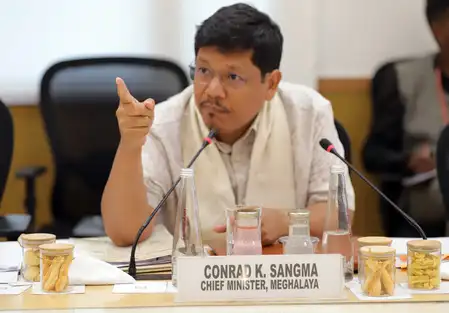
Shillong, July 3 (IANS). Meghalaya Chief Minister Conrad K. Sangma on Friday described climate change as an ‘existential crisis’ and called for immediate and coordinated action to strengthen the state’s preparedness to deal with the possible impact of El Nino. He warned that Meghalaya has recorded an alarming deficit of more than 80 percent in rainfall in June.
Sangma was addressing a workshop on ‘Developing State Response to El Nino: Strengthening Food and Water Security’ organized here. The Chief Minister said that climate change is no longer a distant concern but an immediate reality, which requires urgent action by governments, communities and institutions together.
He said climate change is no longer a challenge of the future; This is our current reality. Forecasts may change, but preparations cannot be delayed. He stressed that the state cannot delay action waiting for improvements in the weather forecast.
Referring to the lack of heavy rainfall recorded in the month of June, the Chief Minister said that it is necessary to make proactive planning in the situation to minimize the impact on agriculture, drinking water availability and livelihoods.
He urged officials to take a flexible, data-driven and adaptive approach when implementing mitigation measures, and said every step taken today will determine the resilience of future generations. We can’t wait for perfect plans. We have to act now. Every step taken today will shape the resilience of future generations.
Highlighting sustainable agriculture as a key component of climate change resilience, Sangma said Meghalaya’s natural farming initiatives have received recognition at the national level, including praise from Prime Minister Narendra Modi.
He said natural farming offers a practical route to mitigating the adverse effects of climate change, but stressed the need for innovation and development in farming practices suited to Meghalaya’s unique geographical and climatic conditions.
The Chief Minister also stressed the need for integrated measures such as water conservation, revitalization of water sources, construction of dams and reservoirs and other water-conservation structures to enhance long-term water security.
Calling for greater community participation, Sangma urged elected representatives, traditional institutions, self-help groups, scientists, students and youth organizations to actively contribute to efforts to combat climate change.
–IANS
ms/