
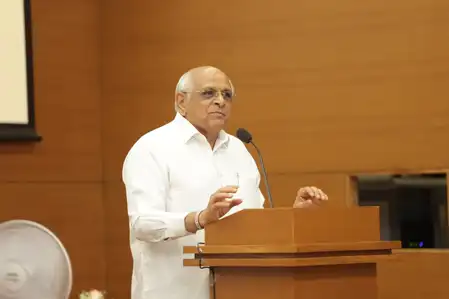
Gandhinagar, June 25 (IANS). Gujarat Chief Minister Bhupendra Patel on Thursday described the Emergency imposed on June 25, 1975, as an attempt to crush the spirit of the Constitution and push the country into the “darkness of dictatorship”. He said this on the anniversary of one of the most controversial periods in the history of independent India.
In a post on social media platform ‘X’, Patel said the Emergency was an attempt to weaken democratic institutions in an attempt to grab power.
He wrote, “The Emergency imposed on June 25, 1975 was an attempt to crush the spirit of the Constitution of India in an attempt to gain power and push the country into the darkness of dictatorship.”
He said that this period will remain “one of the darkest chapters in the history of independent India” as it destroyed the pillars of democracy and limited the freedom of citizens.
He said that this day is celebrated as “Constitution Murder Day” so that the young generation understands democratic values, respects the Constitution and remains aware of the dark chapter which he termed as the period of abuse of power.
He said that this day reminds us that the Constitution acts as a protective shield for the progress of the country and the rights of the citizens.
He paid tribute to those who opposed the Emergency. He said that they faced immense hardships without succumbing to oppression and helped restore democratic values.
Emergency was declared on the night of 25 June 1975 by the then President Fakhruddin Ali Ahmed on the advice of Prime Minister Indira Gandhi under Article 352 of the Constitution. It remained in force till March 1977 i.e. for 21 months.
During this period, elections were halted, the press was censored, civil liberties were limited, and thousands of political opponents, activists, and journalists were detained.
This period still remains an important reference point in discussions on constitutional safeguards and democratic accountability.
Academic and constitutional institutions have repeatedly highlighted the Emergency as a major challenge to Indian democracy, particularly because many fundamental rights were suspended during it.
–IANS
OP/PM