
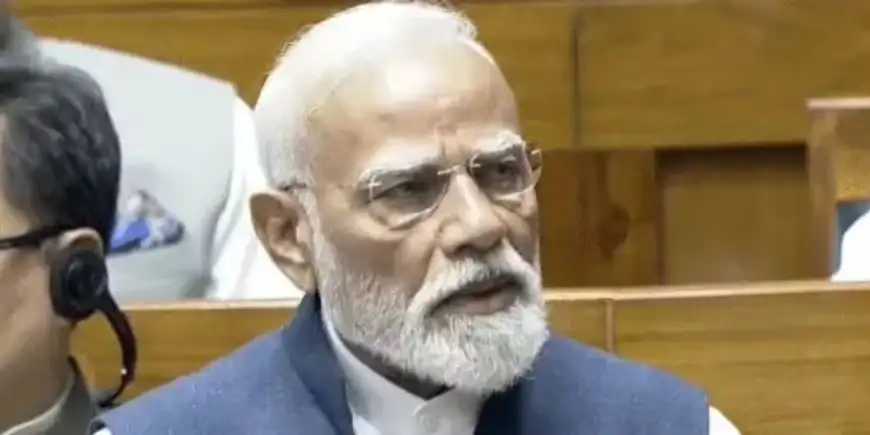
Since the women’s reservation bill was not passed, the political atmosphere in the entire country is quite heated. On Friday, the Women’s Reservation Bill—and two other bills along with it—failed to be passed in the Lok Sabha, leading to political tensions rising rapidly. As a result, political rhetoric on this issue has also intensified. According to reports, Prime Minister Narendra Modi has now openly expressed his displeasure over this entire incident. The special thing is that since this bill was related to reservation for women, this issue has become even more sensitive.
Prime Minister directly attacked the opposition
According to media reports, during the Cabinet Committee on Security (CCS) meeting held inside the Parliament House in Delhi, the Prime Minister made a direct attack on the opposition. He stressed that the opposition had missed a historic opportunity and would have to answer for it for a long time to come. The Prime Minister even said that the opposition will have to pay the political price of this decision. It is being told that the Prime Minister’s tone was quite strict during the meeting. He clearly said that even though the opposition will now try to hide its role in this matter, the government will take this issue directly to the public. He stressed that this message—about the role of the opposition in stopping this bill that empowers women—must reach every village in the country.
the bill could not be passed
Let us now understand what this 131st Constitution Amendment Bill was after all. The government’s aim was to bring about three major changes: First, to increase the number of seats in the Lok Sabha to 850. Second, to take forward the process of delimitation and implement it immediately on the basis of 2011 census. And thirdly, to give the form of law to the provision giving 33 percent reservation to women. However, when the bill was voted on, it got stuck in the same place such bills often get stuck—in the numbers game. Two-thirds majority is necessary for any constitutional amendment. 528 Members of Parliament (MPs) were present in the House, but only 298 votes could be received in support of the bill. 230 votes were cast against it. In other words, the vote count fell about 54 votes short of the required majority, and the bill failed to pass.
The remaining two bills were not introduced
As soon as the bill was dropped, the government also changed its stance. Parliamentary Affairs Minister Kiren Rijiju has made it clear that the remaining two bills related to this—those related to delimitation and union territories—will not be taken forward. Overall, this is not just postponing a bill; Rather, it is going to become a big issue of political debate in the coming times. The government is presenting it before the public by presenting it as an issue of women empowerment, while the opposition is giving its own arguments. It seems that this conflict is going to intensify in the coming days.