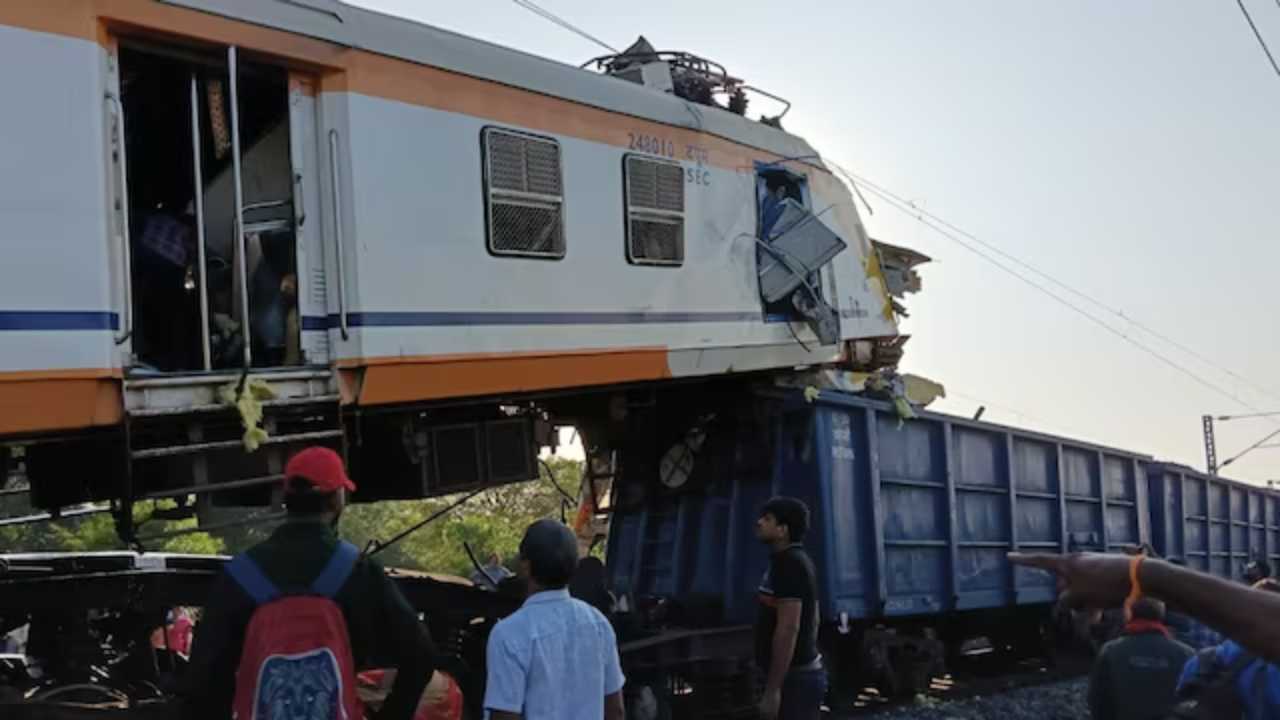
Chhattisgarh train accident update: The horrific train accident that took place on Monday evening in Bilaspur, Chhattisgarh not only took the lives of passengers, but has also raised serious questions on the operation of South East Central Railway. After this accident that happened on Tuesday afternoon, the investigation has now focused in one direction: Why did the MEMU local passenger train break the signal? Initial indications suggest that the main reason for this accident is signal overshooting. Near Bilaspur station at around 4 pm, the coach of the MEMU passenger train fatally collided with the rear of a goods train parked in front. The collision was so severe that a coach of the passenger train ran over the goods train, due to which 6 passengers died tragically and more than a dozen people were injured.
Main cause of the accident: Overshooting became time!
According to information received from South East Central Railway (SECR) sources, prima facie the cause of the accident appears to be signal overshoot of the MEMU train. Initial analysis by the Railways’ operations department makes it clear:
Crossing Signal: MEMU train crossed the prescribed ‘Stop Signal’.
Goods train standing in front: When the passenger train reached near Bilaspur station yard, a goods train was already standing on the same line.
Direct Collision: The loco pilot probably could not control the train at the signal and the train collided directly with the goods train.
The incident points to a major lapse in the operating standards of the Railways, as signal overshooting is one of the most serious safety violations.
Brake failure or human error: focus of investigation
The investigation team is now looking for the answer to this important question whether the signal overshoot was due to technical fault or human error of the loco pilot? Railway officials are thoroughly investigating this aspect. Officials say MEMU trains generally have modern signaling and braking systems, making such lapses on the part of the loco pilot less likely. The investigation focuses on what was the speed of the train at the time of the accident, did the loco pilot apply brakes on time, and most importantly, was the braking system working properly? “It is too early to say whether it was the loco pilot’s fault or a case of system failure. The accident is being thoroughly analyzed and all technical aspects will be examined,” an official clarified.
Chaos and railway action
Immediately after the collision, there was chaos in Bilaspur station yard. Local people and rescue teams immediately became active and rescued the stranded passengers safely. Death of 6 passengers has been confirmed in this accident, which has raised a serious question mark on railway safety. Senior railway officials and technical experts are present on the spot. After the incident, Railways has ordered a thorough investigation of the signaling system. It is also being seen whether the driver of the MEMU train received the correct signal information on time or whether there was any communication gap. This train accident shows how fatal even a small mistake can be, despite modern safety systems. Railways is now preparing to normalize the situation as soon as possible and take action on the factors responsible for the accident.