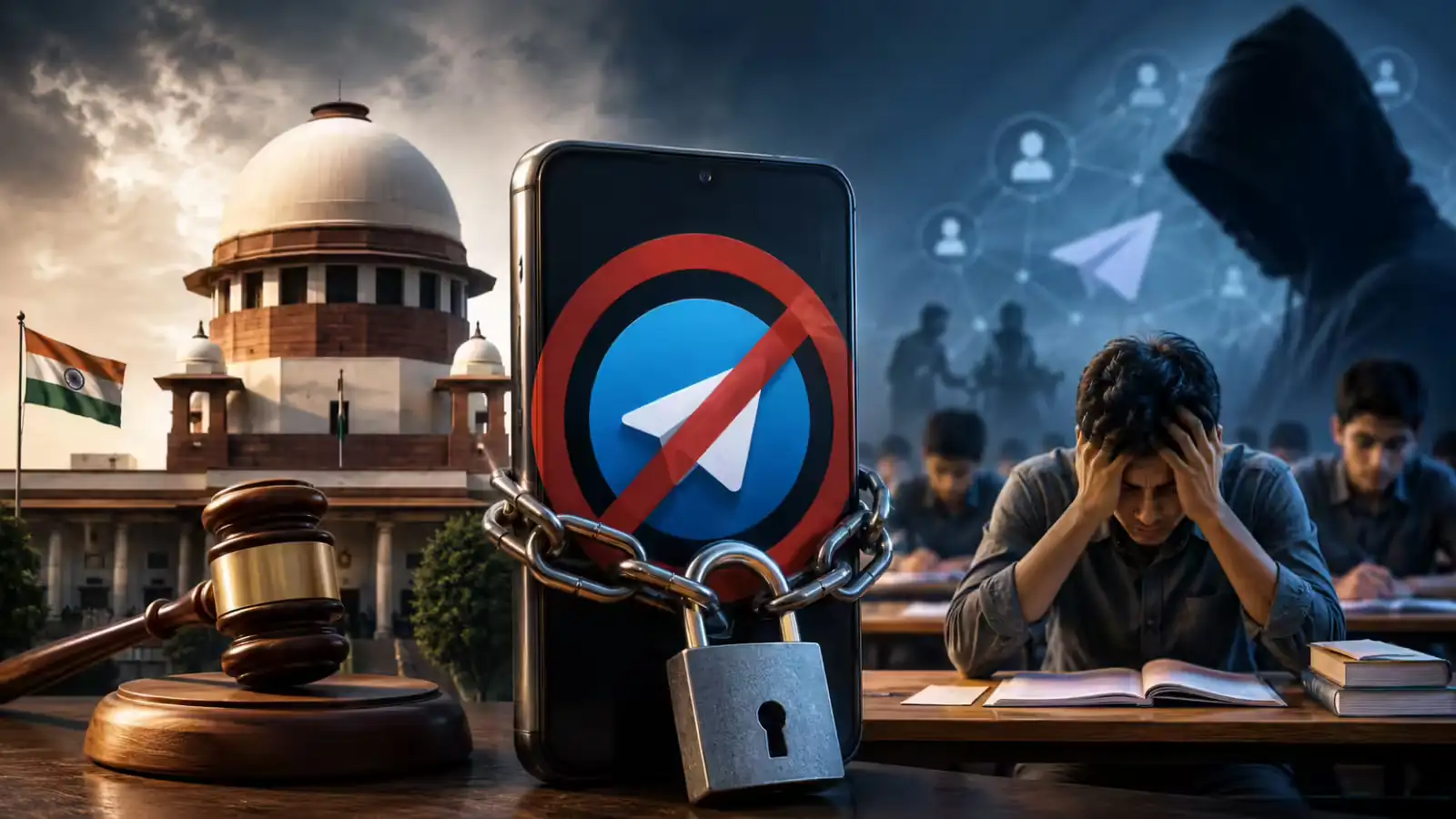
The Indian government on Tuesday imposed a temporary ban on Telegram to prevent paper leak incidents. Telegram has now approached the court against this order, challenging the government’s decision in the Delhi High Court and seeking relief. There will be a hearing in this matter today. Notably, the government has banned access to Telegram until June 22 and ordered its message-editing feature to be disabled until June 30. This decision has been taken keeping in mind the use of apps like Telegram in incidents of exam paper leaks.
**Telegram CEO: 150 million users are being punished**
Reacting to the government order, Telegram’s founder criticized the move. He wrote on X that the Indian government banned Telegram for a week after some users shared leaked exam papers on the platform. He argued that the paper punished Telegram’s 150 million users rather than the insiders who leaked it. Furthermore, the ban did not stop the leaks; Events are now happening through other apps.
**Durov: Several steps taken to stop paper leak**
In a later post, Durov detailed the actions taken against accounts involved in the paper leak and related activities. He said that over the past few weeks, they have removed hundreds of channels sharing exam material and related scams. They make the “edited” label more visible to prevent “backdating” scams. He said banning Telegram – even temporarily – is wrong.
**Why was only Telegram banned?**
The National Testing Agency (NTA) says fraud networks are using Telegram groups to target candidates preparing for the re-exam of NEET (UG) 2026. The government said the decision was taken under the IT Act to prevent persons involved in the paper leak from using the platform. Additionally, some features of Telegram also contributed to this decision. Telegram offers features such as the ability to create large groups, privacy, and sharing of large files, which may be useful to those running fraud networks.