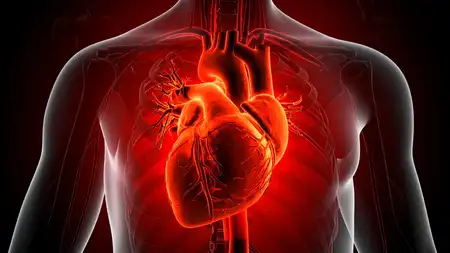
New Delhi, January 13 (IANS). Serious health problems are increasing in Delhi due to cold winds of winter season and continuously increasing air pollution. According to doctors at Delhi’s All India Institute of Medical Sciences (AIIMS), cold is leading to a rapid increase in cases of heart diseases, chronic obstructive pulmonary disease (COPD) and asthma.
Health experts have advised co-morbid (suffering from more than one disease) and elderly people to take special precautions.
Experts have warned that cold causes blood vessels to shrink, which increases blood pressure and increases the risk of heart attack.
Pollution particles are affecting the lungs and increasing shortness of breath. Dr. Rajiv Narang, HOD of Cardiology Department, AIIMS, said that due to drinking less water, eating more salt and pollution in winter, there is additional pressure on the heart.
He said, “Blood vessels shrink in cold, which increases BP and increases the risk of heart attack. Chronic heart patients should avoid morning walking, especially when the AQI is high.”
“It’s very cold these days, and there is a lot of discussion on how to take care of your health. When it comes to heart disease, there are some important things to keep in mind. Blood pressure is likely to increase, especially in winters,” Dr Narang told IANS.
He said, “Many patients whose blood pressure was well controlled earlier are now seeing a rise. To manage this, it is advisable to keep a blood pressure monitor at home and check your BP at least twice a week. Blood pressure monitors are now affordable and easy to use. If your BP is more than 140/90 mmHg, you should consult your doctor.”
Dr. Abhijeet R. of Geriatric Medicine Department of AIIMS. Rao told IANS, “It is very important to maintain body temperature in winter. Avoid going out early in the morning or late in the evening. Elderly people should do daily activities during the day. If possible, after 11 am when the sun is out.”
Dr. Sanjeev Sinha, Professor of Medicine at AIIMS, pointed out the risk of respiratory diseases caused by cold and pollution.
He said, “Exposure to cold air can cause bronchospasm. That is, when a patient inhales cold air through the nose, the windpipe can constrict, causing the windpipe to become narrow or closed and cause difficulty in breathing.”
Experts said there has been a rise in the number of COPD patients in the AIIMS Delhi OPD and emergency department – a condition that is usually associated with a history of smoking and exposure to indoor or outdoor pollution. Sinha said, “COPD patients often show symptoms like cough, difficulty in breathing and breathlessness. Many of them come with severe attacks of chronic bronchitis. Due to extreme cold and low immunity, some patients also develop pneumonia.”
He appealed to the elderly and patients suffering from chronic bronchitis, emphysema, COPD or bronchial asthma to take extra precautions during the cold to protect their breathing.
Children’s doctor Prof. Rakesh Lodha stressed the need to take special care of children’s health this winter.
“Small children are more sensitive to cold. It is important to protect them. Warm clothes should be worn, and the body should be completely covered,” he told IANS.
–IANS
kr/