
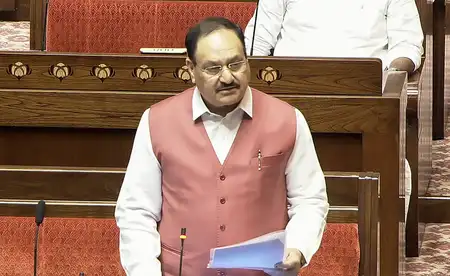
New Delhi, July 24 (IANS). The central government on Friday said that despite the ongoing geopolitical tension in West Asia, the availability of fertilizers remained adequate in the country during the Kharif season. The government said that comprehensive steps like supply diversification, collective procurement and strong monitoring mechanism have been taken to secure the fertilizer supply chain and ensure uninterrupted supply.
Union Chemicals and Fertilizers Minister Jagat Prakash Nadda told the Lok Sabha that the government has promoted long-term business agreements between Indian fertilizer companies and foreign suppliers.
Additionally, alternative supply sources were identified through Indian Missions in various countries and collective procurement of raw materials such as ammonia and sulfur was encouraged through industry groups to achieve better prices and bargaining power.
He said that the Agriculture and Farmers Welfare Department coordinates with the state governments and estimates the state-wise and month-wise fertilizer requirements. On this basis, the Department of Fertilizers releases supply plan every month, continuously monitors the movement of fertilizers through Integrated Fertilizer Management System (IFMS) and reviews the availability through regular weekly video conferences and takes immediate corrective action, if necessary.
According to the Ministry of Chemicals and Fertilizers, imports of ammonia, phosphoric acid and sulfur were most affected by the West Asia crisis, while the cost of potash imports also increased due to disruption in global logistics.
According to the data released by the government, the availability of urea, DAP, MOP and NPKS fertilizers in the Kharif season from April 1, 2026 to July 19, 2026 was more than the requirement. The requirement of urea during this period was 109.40 lakh metric tonnes, while its availability was 163.78 lakh metric tonnes. Whereas, against the demand of DAP 31.57 lakh metric tonnes, 39.54 lakh metric tonnes were available.
The government also said that to deal with the temporary shortage and increase in prices of raw materials like isopropyl alcohol (IPA), ammonia and methanol, propylene was allocated in coordination with the Ministry of Petroleum and Natural Gas, so that their availability could be improved.
Additionally, the Government ensured supply of additional ammonia to pharmaceutical industries and also developed alternative supply sources to increase the availability of methanol in collaboration with existing players as well as domestic manufacturers.
–IANS
DBP