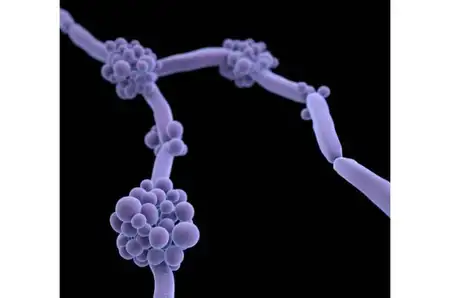
New Delhi, December 30 (IANS). Candida auris, a species of fungus, is becoming dangerous. Indian scientists have found in their study that it is spreading rapidly in the world.
Candida auris is a multidrug-resistant fungal pathogen with the unique ability to grow and persist on human skin.
Researchers from Vallabhbhai Patel Chest Institute of Delhi University conducted this study in collaboration with the team of National Institutes of Health in America. It revealed that fungal infections are spreading rapidly around the world and about 6.5 million people are suffering from it every year.
Due to this the death rate is also increasing.
“C. auris has adopted a clever cellular strategy to survive: the yeast is repeatedly transforming itself, forming clusters of cells, and altering its phenotypic genetic expression to respond to the changing environment,” the team said in a paper published in the journal Microbiology and Molecular Biology Reviews. This fungus is also successful in taking over human skin; Molecular evidence so far shows that cell wall proteins attach like a kind of glue to mammalian cells—and even to non-living surfaces.
Long-term persistence of C. auris on the skin is a major medical concern. It sticks instantly from one body to another.
Additionally, the team said C. auris patients are also at risk for serious infections.
Whereas the host develops mechanisms to fight C. auris. The science so far suggests that the pathogen adopts active methods to avoid resistance.
Diagnosis also remains a challenge, as most conventional laboratory tests are not efficient, leading to delays in treatment.
The good news is that awareness of this new problem is growing—and research is now expanding to meet clinical needs.
“Overall, these data highlight the need to develop new antifungal agents with broad-spectrum activity against fungal pathogens in humans, improve diagnostic tests, and optimize immune and vaccine-based approaches to treat high-risk patients,” the researchers write.
The study also calls for creating better systems to increase awareness about fungal diseases, especially in countries where resources are limited.
–IANS
kr/