
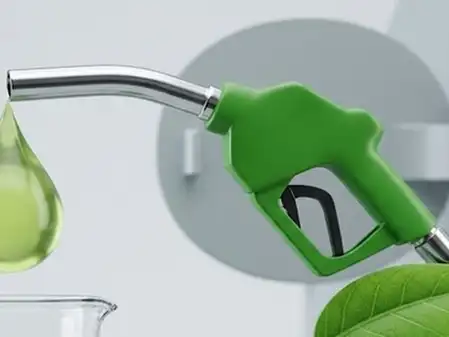
Mumbai, July 5 (IANS). The E20 program of the Central Government is well planned and ethanol blending in petrol has been implemented after several years of discussion with all stakeholders. This includes oil marketing companies, ethanol producers, automobile industry, scientists and automobile research associations. This information was given by former BPCL Director (Refinery) R. Given by Ramachandran.
Speaking to news agency IANS, R. Ramachandran said that technical, operational and policy aspects have all been considered before the implementation of E20.
“The E20 ethanol blending initiative has been a well-thought-out and multi-year process involving all stakeholders—oil companies, ethanol manufacturing companies, the automobile industry, scientists and the Automobile Research Association,” Ramachandran told IANS.
Talking about E85, Ramachandran clarified that it is not yet a part of any government policy or implementation plan.
He said, “E85 is not currently part of any government policy or implementation plan. It is being seen as a possible option in the future. This thinking is inspired by countries like Brazil, where E100 has been developed for use with flex-fuel engine technology.”
Talking about the concerns being raised regarding the use of water during future industrial expansion, he said that along with increasing production, industries should also give priority to saving water.
He stressed on recycling almost 100 per cent of water, making maximum use of treated wastewater and adopting technologies like reverse osmosis and demineralization plants to produce industrial-grade water.
He also suggested that industries adopt alternative cooling systems, including air-based, compressed-air and chilled-air technologies, to reduce reliance on water-intensive processes.
On India’s energy security, Ramachandran said the country’s strength is due to several factors, including consistent diversification of its crude oil import basket over the last five-six years.
He said that the Indian oil industry, in collaboration with the Ministry of Petroleum and Natural Gas, has increased the options for purchasing oil. With this, the country can handle possible supply chain disruptions such as closure of the Strait of Hormuz by obtaining crude oil from alternative suppliers.
–IANS
abs