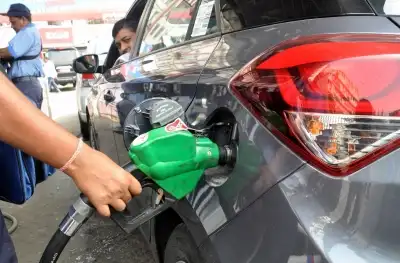
New Delhi, May 12 (IANS). Amid global supply disruptions due to the Middle East crisis and rising crude oil prices, ethanol-blended petrol is rapidly emerging as the sustainable fuel of the future. According to a report by ‘The Times Kuwait’, India has become one of the world’s most successful and most talked about biofuel stories in this field.
The report said that India’s long-term ethanol blending strategy has yielded major benefits. This has helped India, the world’s fastest growing economy, reduce the impact of the oil supply crisis caused by the closure of the Strait of Hormuz, which has affected global markets.
The report noted that India started in 2003 with a target of only 5 percent ethanol blending. After this, the country moved rapidly towards biofuels and has now achieved blending of about 20 percent ethanol in petrol, that too before the scheduled time. Now India is preparing E85 petrol i.e. fuel with 85 percent ethanol and E100 fuel for flex-fuel vehicles running on multiple ethanol blends.
According to the report, the average ethanol blending level in India as of 2014 was only 1.53 percent. However, continued government support, investment in distillery capacity and long-term planning created a strong foundation for today’s rapid expansion.
The report said that the biggest turning point of this campaign came in 2018, when the National Biofuel Policy was implemented. This increased the scope of the program considerably.
Under this, ethanol production was not limited to only sugarcane syrup but was extended to spoiled food grains, excess rice, corn and agricultural residues. This reduced dependence on water-intensive sugarcane and also linked the grain producing areas of North and Central India to the ethanol economy.
The report said that what initially started as an environmental campaign to reduce carbon emissions has now become a comprehensive national strategy for energy security, economic vitality and rural development.
According to reports, this program is helping India save billions of dollars in foreign exchange by reducing its dependence on crude oil imports. Especially at a time when there is uncertainty in the global supply chain due to instability in West Asia.
The report also said that India’s rural economy is also getting major benefits from the ethanol campaign. Sugarcane farmers, grain producers, the distillery industry and biofuel infrastructure developers are benefiting from the increasing demand for raw materials for biofuels. Besides, new employment opportunities are also being created in agriculture, transportation, logistics and manufacturing sectors.
–IANS
DBP