
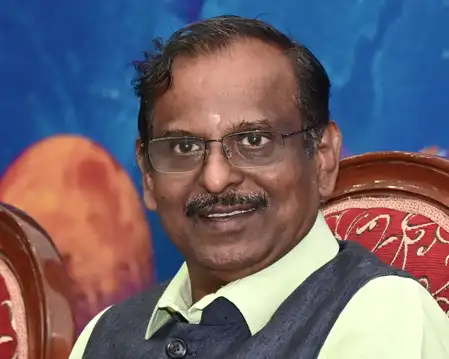
Bengaluru, June 27 (IANS). The Indian Space Research Organization (ISRO) has shared major information regarding the preparations for the Gaganyaan mission. ISRO Chairman Dr. V. Narayanan said on Saturday that Gaganyaan is a very advanced and technology-based mission of India. Under the mission, ‘human rating’ of the launch vehicle and development of all necessary safety systems has been completed. Now three uncrewed missions will be conducted before sending actual astronauts, of which preparations for the first mission are in the final stages.
Speaking to the media, Dr Narayanan said, “No risk can be taken in the Gaganyaan mission. Therefore, all the technologies and safety systems will be tested in several stages before sending humans into space. He said that the date of the first unmanned mission will be announced soon.”
He described the recent successful power head test of the semi-cryogenic engine as a major achievement for ISRO. He said that in this test, almost 90 percent thrust load except the thrust chamber of the engine was successfully tested, which has proved to be an important milestone for future engine tests. He informed that now preparations are underway for full engine testing and the satellites are also almost ready, and its date will also be announced soon.
ISRO said in an official statement issued on Saturday that on June 24, 2026, a successful ‘hot test’ of the Power Head Test Article (PHTA) of the semi-cryogenic engine was conducted at the 175 ton thrust level at the ISRO Propulsion Complex (IPRC) in Mahendragiri, Tamil Nadu. The power head test article covers all major systems of the engine, except the thrust chamber.
This was the eighth hot test in the series, the purpose of which was to study the engine’s performance after pre-burner ignition and its stable performance at higher thrust levels. Earlier tests were conducted at 94 tonnes (47 per cent) and 120 tonnes (60 per cent) thrust levels. For the first time, the engine was successfully run at 175 tonnes i.e. about 88 percent capacity. During testing the main turbopump performed successfully even at 400 and 500 bar outlet pressure.
According to ISRO, the test went as per expectations and all technical parameters of the engine were recorded at expected levels. This success has increased the confidence of the scientists that now they can move forward rapidly towards testing the engine at 200 tonnes i.e. 100 percent capacity. Also, it is a major achievement in the development of indigenous semi-cryogenic engines.
–IANS
DBP