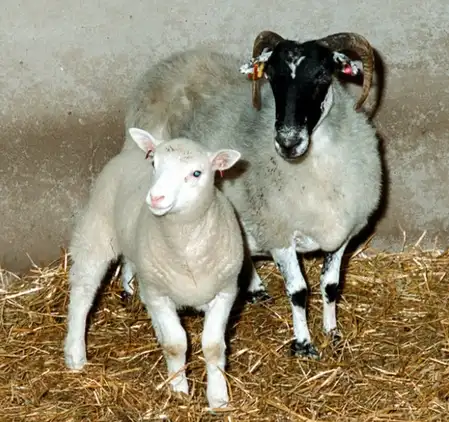
New Delhi, February 21 (IANS). Science is as thrilling as life is mysterious. One such exciting moment came before the world on 22 February 1997. There was a stir in the scientific world when researchers in Scotland officially announced Dolly, the world’s first successfully cloned mammalian sheep. Although Dolly was born on 5 July 1996, the achievement of her cloning was made public on this day. This incident is considered a milestone in the history of modern biotechnology.
Dolly was created at the ‘Roslin Institute’ in Edinburgh, Scotland. The project was led by scientist ‘Ian Willmott’ and his team. The researchers used a technique called ‘somatic cell nuclear transfer’ (SCNT). In this process, a nucleus was extracted from the mammary gland cell of an adult sheep and transplanted into the fertilized egg of another sheep. The developed embryo was then implanted into the womb of a third sheep, giving birth to Dolly.
The special thing about Dolly was that she was not created from an embryonic cell, but from a fully developed adult cell. Earlier there was a belief in the scientific community that adult cells cannot lose their characteristics and it is not possible to develop a complete organism from them. Dolly challenged this belief and proved that even in adult cells the ability to form complete organisms could be reactivated.
This achievement sparked intense debate across the world at the scientific, ethical and social levels. On the one hand, it was seen as a potential revolution in medical science—particularly in the areas of organ transplantation, the study of genetic diseases, and drug testing. On the other hand, fears of human cloning raised ethical concerns. Many countries then took steps towards imposing strict restrictions on human cloning.
Dolly’s life was also a subject of research. In 2003, at the age of six, he was sentenced to death (euthanasia) due to lung disease. Sheep normally have a lifespan of 10 to 12 years, so the question arose whether biological factors associated with cloning were responsible for their relatively short lifespan. However, later studies indicated that Dolly had many of the same health problems as normal sheep.
–IANS
kr/