New Delhi, June 5 (IANS). The country’s largest automobile company Maruti Suzuki India Limited on Friday announced a total investment of Rs 150 crore in two big biogas projects. Through this, the company’s effort is to promote the adoption of sustainable manufacturing and clean energy ecosystem in the country.
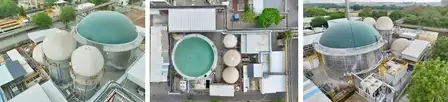
The company said it will set up a new biogas plant with a capacity of 10 tonnes per day at its manufacturing plant in Kharkhoda, Haryana.
This project is expected to start in the current financial year. Additionally, Maruti Suzuki has increased the capacity of its existing biogas plant at Manesar from 0.2 tonnes per day to 0.7 tonnes per day.
The carmaker said these initiatives are in line with the government’s ‘Wealth from the Best’ mission and are aimed at reducing dependence on fossil fuels and promoting renewable energy solutions across all its operations.
According to the company, the upcoming Kharkhoda biogas plant will help reduce carbon dioxide emissions by about 9,490 tonnes per year when run at full capacity.
This plant is expected to meet about 20 percent of the total gas requirement of the manufacturing unit.
Commenting on these initiatives, Managing Director and CEO Hisashi Takeuchi said that the company is continuously striving to reduce fossil fuel consumption and dependence on imported oil.
“At a time when the world faces an increasingly uncertain energy landscape, such initiatives assume even greater importance,” he said.
Takeuchi further said, “In view of the call by the Prime Minister of India to reduce dependence on fossil fuels, it is an opportune time for us to commission the biogas project. This enables us to make a small but meaningful contribution to the current national priority along with many other ongoing efforts.”
This additional expanded biogas plant at Manesar is estimated to generate approximately 3.6 lakh standard cubic meters of biogas per year.
The company estimates that the project will help reduce carbon emissions by approximately 664 tonnes per year.
The Manesar plant uses food waste, Napier grass and paddy straw as raw materials and the production can be further increased by using animal dung.
–IANS
abs