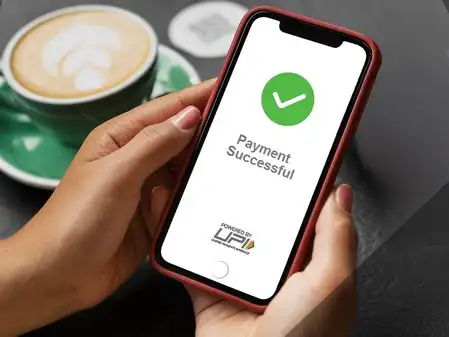
New Delhi, April 30 (IANS). India’s leading digital payments platform, Unified Payments Interface (UPI), has recorded an extraordinary growth of nearly 12,000 times in transaction volumes in the last decade, the Finance Ministry said on Thursday.
UPI, launched by the National Payments Corporation of India (NPCI) under the regulatory supervision of the Reserve Bank of India (RBI) on April 11, 2016, has become the backbone of India’s digital payments ecosystem.
The ministry said that from a modest base of just 2 crore transactions in FY 2016-17, the platform has processed more than 24,162 crore transactions in FY 2025-26.
In terms of value too, the rise of UPI has been equally spectacular. The value of transactions has increased from Rs 0.07 lakh crore in the first year of operation to about Rs 314 lakh crore in FY 2025-26, an increase of more than 4,000 times.
This double expansion in both volume and value highlights how important this platform is becoming, not only for small retail payments but also for high value transactions.
According to government assessments, UPI’s scale, interoperability and trust has established India as a global leader in digital public infrastructure.
The International Monetary Fund (IMF) has recognized UPI as the world’s largest real-time payments system by transaction volume, further strengthening India’s position in the global fintech landscape.
The year 2025 proved to be a turning point in the growth journey of UPI, when the monthly transaction volume crossed the Rs 2,000 crore mark for the first time.
In August 2025, transactions reached 2,001 crore, and this pace continued throughout the year, resulting in a record of 2,163 crore transactions in December.
Overall, UPI will process around 22,000 crore transactions during calendar year 2025, averaging around 60 crore transactions per day. This is an indication of its deep reach and widespread trust among users.
Institutional participation has also expanded significantly. The number of banks live on the UPI network has increased from 44 in FY 2016-17 to 703 by FY 2025-26, which includes public and private sector banks, small finance banks, payment banks and cooperative banks. This broader partnership deepens the geographic reach and strengthens the accessibility of the platform.
The data trends show a clear difference in usage patterns. Person-to-merchant (P2M) transactions account for 63 percent of total transaction volume, driven primarily by high-frequency, low-cost retail payments.
The special thing is that 86 percent of these transactions are of less than Rs 500. On the other hand, person-to-person (P2P) transactions account for 71 percent of total transaction value.
The ministry further said that even within P2P payments, while 59 per cent of transactions are for less than Rs 500, a substantial 41 per cent of transactions are above this limit.
–IANS
SCH