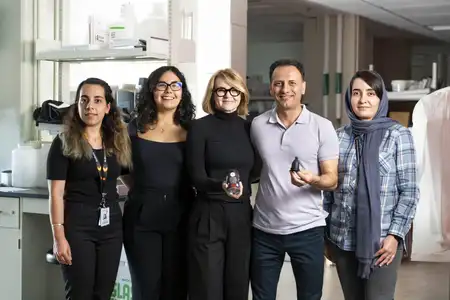
New Delhi, October 11 (IANS). In a major breakthrough, Canadian researchers have developed a safer and easier to use tool for the existing menstrual cup by using seaweed. It is claimed that this tool will track women’s health.
Researchers at McMaster University in Ontario said that the use of the new menstrual (menstrual) cup would prove useful in detecting infections, monitoring reproductive health and detecting conditions such as endometriosis and UTI.
This information has been given in a research paper published in the journal ACS Applied Materials and Interfaces. It is reported that it is a flushable tablet made from highly absorbent seaweed based material.
Generally, women who use cups complain that menstrual blood gets spilled while changing them and this prevents them from using them during those difficult days. But this research aims to overcome these problems. It is designed to prevent bleeding from spreading when the menstrual cup is removed.
“This project helped me understand how much innovation is needed in menstrual care,” said Zainab Husainidost, an associate professor of biomedical and chemical engineering at the university.
“There has been very little progress in the conversation about menstrual care. One reason for this is society’s narrow-mindedness and another is lack of interest, but the Cup has the potential to make a huge difference in the lives of women around the world,” Hosseinidost added.
In addition to convenience and safety, this technology has the potential to significantly reduce the environmental impact of disposable menstrual products and improve access to menstrual care in low-income communities.
Each cup is designed to last for many years, providing a cost-effective and durable solution for users who may not have reliable access to tampons or pads.
Although menstrual cups have been available for a long time, their use has been limited due to usability challenges. These new cups address these concerns while opening the door to future health-monitoring capabilities.
The team envisions future versions of menstrual products that will be equipped with sensors to detect early signs of infection and blood-borne diseases. These will use menstrual blood as a rich source of biological information.
“This could be a new form of wearable technology that could be even more valuable than smartwatches,” said Tohid Didar, an associate professor of mechanical and bioengineering who co-led the research.
–IANS
kr/