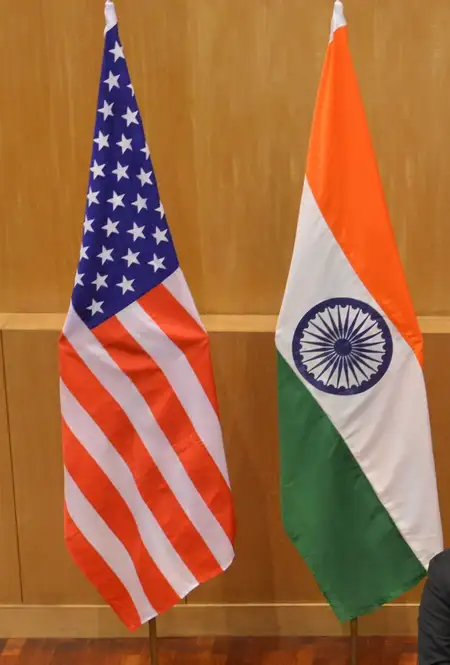
Mumbai, 7 November (IANS). NITI Aayog CEO B.V.R. Subramanian said on Friday that US-India trade talks could be successful by the end of the month. Also said that the country will have to increase its investment rate to 35-36 percent of the Gross Domestic Product (GDP).
He said at a media event in the country’s financial capital that talks are moving in the right direction and hopefully by the end of the month we will get some news on this front.
Apart from this, the CEO of NITI Aayog said that the National Manufacturing Mission will be operational by November, in which it is proposed to create sectoral clusters at 75 locations to establish globally competitive manufacturing hubs focused on 15 sectors.
He said India needs to increase its investment rate to 35-36 per cent of GDP every year to maintain a growth rate of 8-9 per cent, which is currently around 30-31 per cent.
He said India’s economic growth makes it the brightest spot in the global economy. Other countries will be compelled to engage with India due to its unique characteristics such as size, depth of market, innovation potential and talent pool.
The CEO of NITI Aayog termed continued openness, consistency in policies and focus on skill development as necessary to achieve the status of a developed nation.
“Even if other countries impose tariffs, India must remain a world-class, open economy,” he said.
Subrahmanyam emphasized on policy priorities and described the National Manufacturing Mission as the biggest announcement of the last budget.
Subramanian said foreign investors are increasingly attracted to India’s market and cost competitiveness. However, he cautioned that it is necessary to reduce bureaucracy to increase ease of doing business, and focus should be on the principle of “minimum government, maximum governance”.
Emphasizing the importance of human capital, he said, “If I had just one rupee to invest, I would invest it in skill development and education.”
The senior official further said that on an average, Indian students complete six to seven years of schooling, while in South Korea this period is 13 to 14 years.
-IANS
abs/