New Delhi, May 1 (IANS). Climate change has emerged as the biggest challenge facing the entire world today. In simple words, climate change means a permanent change in the average weather conditions of a region or the entire Earth over a long period of time. This includes changes in temperature, rainfall, drought and weather patterns.
Before understanding climate change, it is important to know that there is a big difference between weather and climate. Weather means the external conditions on a particular day or in a short period of time, such as whether it is raining or sunny today. At the same time, climate means the average weather conditions at a place over many years (usually 30 years or more). For example, the city of Phoenix generally experiences dry and hot weather. Even if it rains for a week, the climate there will still be considered desert.
The Earth’s climate has always been changing. Thousands of years ago there was an ice age, when much of today’s America was covered with ice. But now there is scientific concern that the Earth’s climate is changing at a very fast pace. Global temperatures have increased by more than 2 degrees Fahrenheit in the last 100 years. The last few years have proven to be the hottest years in history.
According to scientists, the biggest reason for the rapid warming of the Earth in the last 100 years is the increase in greenhouse gases. Activities done by humans like excessive use of coal, petrol and diesel, factories, cars, buses and deforestation are increasing the gases like carbon dioxide, methane etc. in the atmosphere. These greenhouse gases trap the sun’s heat in the Earth’s atmosphere, causing the Earth’s temperature to increase. This is called greenhouse effect. Naturally this effect keeps the Earth habitable, but human activities have unbalanced it.
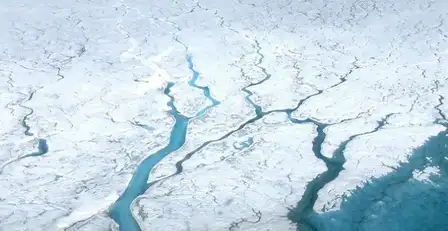
Climate change causes rise in sea levels, rapid melting of glaciers and ice sheets, increase in events like heat waves, droughts and floods, changes in rainfall patterns, changes in the blooming time of plants and flowers, etc.
Scientists from all over the world, including the American space agency NASA and the Indian space agency ISRO, conduct continuous monitoring through satellites, airplanes, weather stations and ground-based equipment. Apart from this, they also study information thousands of years old by extracting ice cores and sediment cores from ice sheets and seabed. All this clearly shows that the Earth is warming at a much faster rate than before.
Climate change is no longer a problem that is far away. It is directly affecting our everyday weather, agriculture, water availability and marine life. Experts believe that if the emissions of greenhouse gases are not controlled immediately, then more serious consequences may be seen in the future.
–IANS
MT/AS