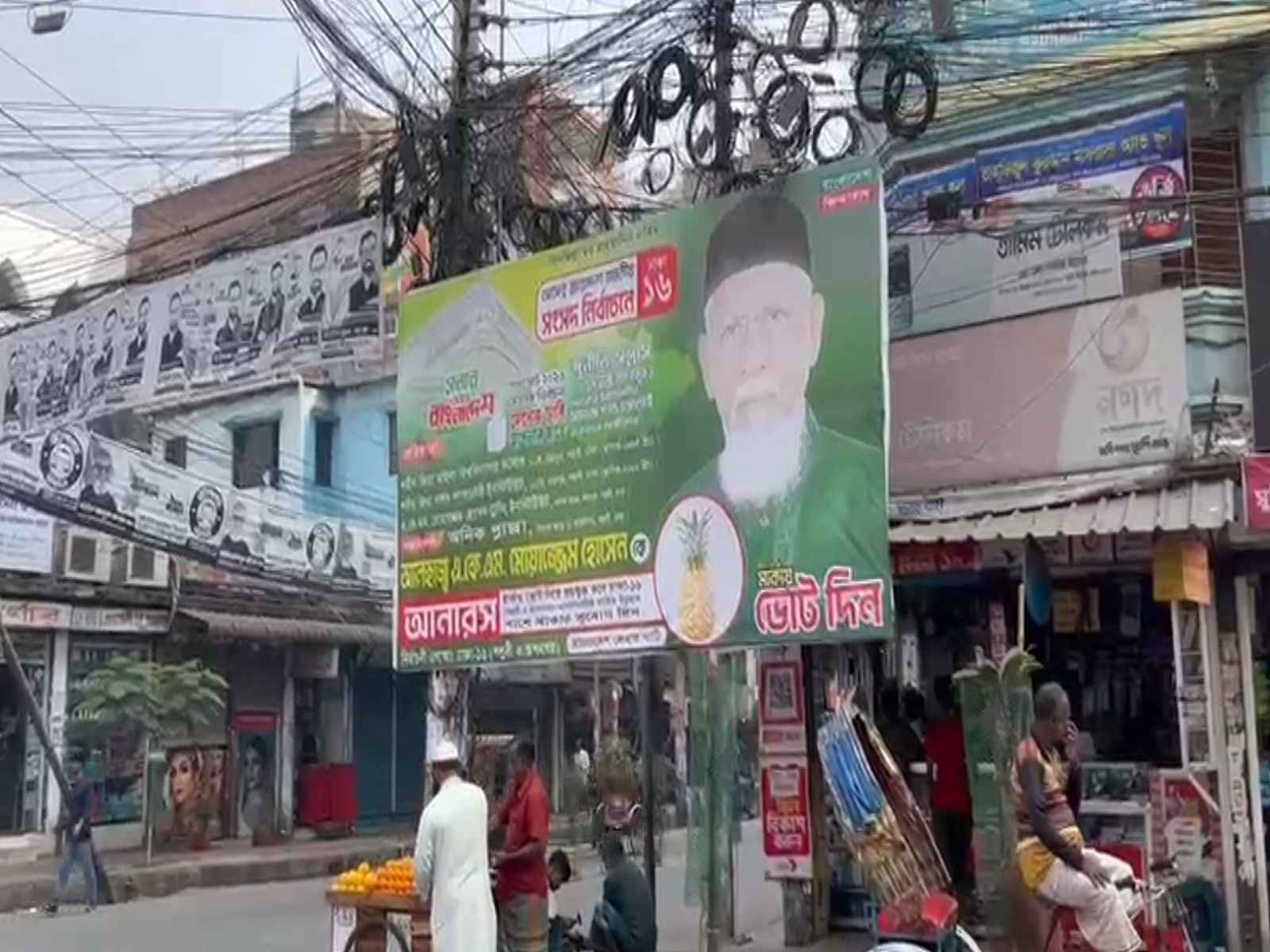
All eyes are on the parliamentary elections to be held in Bangladesh on February 12. The Election Commission and security forces are completing final preparations to ensure a peaceful voting process. The results are expected to be confirmed on Friday, February 13.
The elections come 18 months after a major student-led uprising in 2024 forced longtime Prime Minister Sheikh Hasina to resign and ended Awami League rule, raising widespread hopes for a shift toward greater accountability and reformed democratic governance in the neighboring South Asian country.
After 20 days of intense official election campaigning that ended yesterday, all attention has now turned to this crucial day of voting for over 12.77 crore eligible voters who will elect representatives for 299 out of 300 parliamentary seats, as the election for one seat has been postponed due to the death of a candidate.
Voters will also take part in a simultaneous national referendum on the National Charter, passed in July, a key document that proposes major constitutional and institutional changes that could shape future governance.
In a televised speech addressing the nation yesterday evening, Chief Advisor Professor Muhammad Yunus called on citizens to make Election Day the “birthday of a new Bangladesh” and stressed that the public themselves will shape the bright future of the nation through their votes, the Daily Star reported.
A huge network of 42,779 polling stations has been set up across the country, where voting will take place without any interruption from 7:30 am to 4:30 pm. Among the voters, 6.48 crore are men and 6.28 crore are women.
A total of 1,755 candidates from 50 registered political parties are in the fray, along with 273 independent candidates, including 20 women. It is noteworthy that 63 women candidates are contesting the elections under the banner of the party.
Today ballot papers are being distributed at polling stations and tight security arrangements have been made. Authorities have confirmed that all necessary preparations have been completed, including thousands of election officials and security personnel.
The Election Commission has expressed satisfaction with the current law and order environment. Election Commissioner Brigadier General (retd) Abul Fazal Mohammad Sanaullah said at a press briefing yesterday, “We are satisfied with the current law and order situation. It would have been better if sporadic incidents had not taken place. However, we are in a better position now than before,” the Daily Star reported.
He warned that “evil forces” remained a threat and expressed confidence that law enforcement agencies would do everything possible to safeguard the process. He appreciated the efforts made so far by the security agencies and appealed to the political parties, candidates and supporters to maintain the festive atmosphere.
Inspector General of Police Baharul Alam presented a comprehensive three-tier security framework, which includes static forces at each polling station, mobile patrolling in the surrounding areas and quick response strike units ready for any emergency.
He elaborated that 1,57,805 police personnel will directly perform election security duties, of which 93,391 will be as static force and the remaining in mobile and striking roles, while an additional 29,798 from regular police stations will provide supplementary support, taking the total deployment to 1,87,603.
The European Union Election Observation Mission (EU EOM) described the pre-election atmosphere as “overwhelmingly positive”. “We have been talking to candidates and officials in all districts and regions across the country, and the general atmosphere is very positive and hopeful,” chief observer Ivars Ijabs said at a press conference in Dhaka yesterday, according to The Daily Star.
He said many stakeholders see these elections as a new beginning for Bangladesh’s democracy. The EU has deployed its largest mission ever here, with a total of more than 200 observers, of which 60 long-term observers have been active since the beginning of January and 90 short-term observers are monitoring voting and vote counting.
In this election, mainly candidates from two major alliances are facing each other, one of which is led by Bangladesh Nationalist Party (BNP) and the other is led by Jamaat-e-Islami. BNP President Tariq Rehman and Jamaat Ameer Shafiqur Rehman yesterday called up district leaders and reviewed the constituency level preparations while issuing instructions to party workers and candidates.
Concerns remain about possible post-election unrest in some areas, especially among minority communities. In Chattogram, many minority voters expressed apprehension, with a Hindu youth from the Jamalkhan area saying on condition of anonymity, “On one side there is BNP, on the other side is Jamaat. If BNP loses, they blame the minorities; Jamaat does the same. State, elections and oppression have become synonymous for us,” as quoted by The Daily Star.
Manoranjan Shil, a 56-year-old farmer from Gangachara upazila in Rangpur, described the shock of the attack on his village last July, saying, “We are still haunted by the horrific experience of that attack. We are still scared,” The Daily Star reported.
However, while minority voters in districts like Faridpur and Rajbari reported feeling safe, sentiments were mixed in places like Mymensingh and Tangail.
The election represents a turning point in Bangladesh’s democratic journey, which will have implications for regional stability in South Asia, including relations with India.