The humanitarian crisis within the Islamic Republic has reached a critical stage as ongoing hostilities continue, resulting in reports of heavy casualties and large-scale displacement across the country.
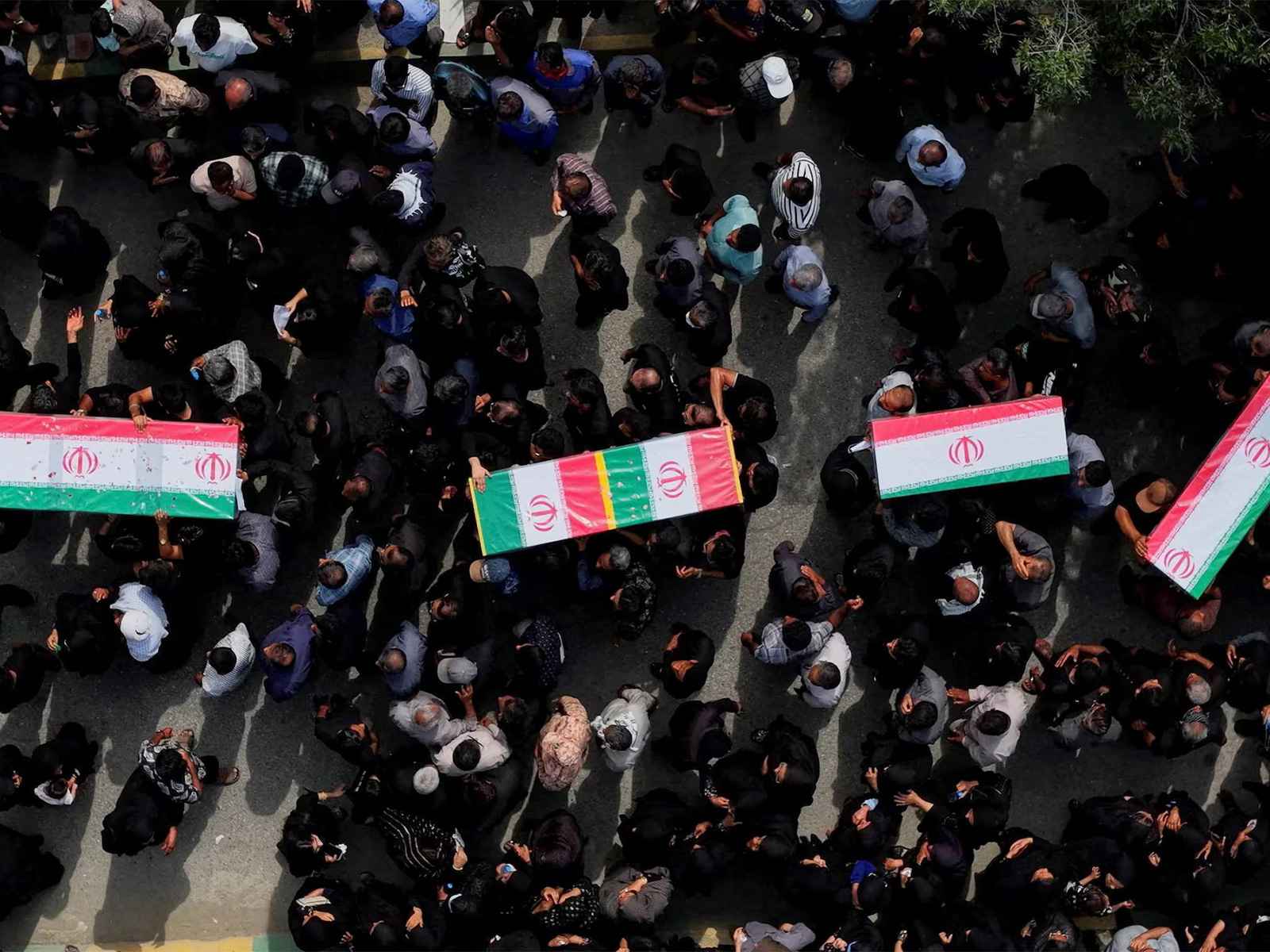
It has been more than a week since the conflict began and the consequences of the humanitarian crisis in Iran continue to grow. According to Al Jazeera, the scale of the destruction continues to grow and official figures show that “more than 1,300 people have been killed” since the violence began.
Fighting has become so intense that “almost 100,000 people have been displaced”, as residents are “forced to flee their homes” in search of safety.
This mass exodus of people has severely strained relief efforts, as the UN Refugee Agency reports a “huge increase in urgent requests for assistance” to meet the growing needs of the affected population.
In the wake of this humanitarian crisis, the Israel Defense Forces (IDF) have announced that the Israeli Air Force (IAF) has carried out targeted strikes on several Iranian military targets in the capital. In a post, the military official said: “Attacked: Several fuel storage complexes belonging to the IRGC in Tehran.”
The operation, which was conducted “under the guidance of IDF intelligence”, targeted specific locations that the military had identified as centers of distribution of resources to various armed units. The IDF reported that “the IAF struck these complexes, where the Iranian terrorist regime distributed fuel to several military units in Iran.”
Regarding the impact of this operation, the military claimed that “the strike has caused significant damage to the military infrastructure of the Iranian terrorist regime.”
The announcement was accompanied by a photo released depicting a “fuel storage center used by the military forces of the Iranian terrorist regime” located in Tehran, highlighting the strategic nature of the targets chosen during the operation.
Parallel to these military strikes, US President Donald Trump on Saturday (US local time) claimed that the United States has wiped out Iran’s entire leadership and described these actions as eradicating a major ‘cancer’ from the face of the earth.
When Trump was asked whether the United States was responsible for the bombing of an elementary girls’ school in Iran, he rejected the accusation and instead blamed Iran for the school bombing, which he attributed to the inaccuracy of Iranian weapons.
Trump said, “No, I don’t think so. Based on what I’ve seen, it was done by Iran. We think it was done by Iran because as you know, their munitions are very imprecise. They have no accuracy at all. It was done by Iran.” He made the comments on Air Force One en route to Miami.
Trump said, “We have a big lead in this war. We have destroyed their entire evil empire. I’m sure that will continue for some time. The war is going incredibly well. It’s as good as it can be.”
On completion of one week of the conflict, Trump said that America has achieved more than what was thought.
He detailed the magnitude of the damage, saying: “We have destroyed 44 ships of their (Iranian) navy. We have destroyed all the planes of their air force. We have destroyed most of their missiles. You can see that the missiles are not coming much anymore. We have also hit their missile manufacturing areas badly.”
“Their drone capability has been greatly reduced and we have hit them where it hurts most, by eliminating almost every form of leadership.”
Despite the aggressive tone of the military operation, US special envoy Steve Witkoff, who was also aboard Air Force One, told the media that a deal with Iran was still possible.
He said, “I think it could happen. I think it would depend on the president, that’s my opinion. But in the early talks he didn’t seem to be very agreeable. He told me and Jared that we will not give diplomatically what you can’t get militarily. So I think he has to change his attitude.”
This rising tension has caused deep concern internationally, especially in Britain. “Many people are very concerned about this situation, and that concern extends not just to what is happening in Iran, but also in the United Arab Emirates, Saudi Arabia, Bahrain, Kuwait and Qatar,” MP Tom Tugenhaut told ANI.
He further said, “India has about nine million citizens in the region; about 3 lakh of our citizens live there, so it is a big concern. The challenge of energy prices is something that we all face.”
Addressing this challenge quickly is not only good for the global economy, but indeed good for families and households around the world.”
These developments come after the joint US-Israeli military strike on Iranian soil on February 28, which resulted in the death of its Supreme Leader, Ayatollah Ali Khamenei, and other senior figures, prompting a strong reaction from Tehran.
In response, Iran attacked US bases and allies across the region, including Israel, Bahrain, Kuwait, Qatar, Saudi Arabia, the United Arab Emirates and Jordan, with ballistic missiles and drones, escalating the conflict in West Asia and increasing the threat to both civilians and migrants.