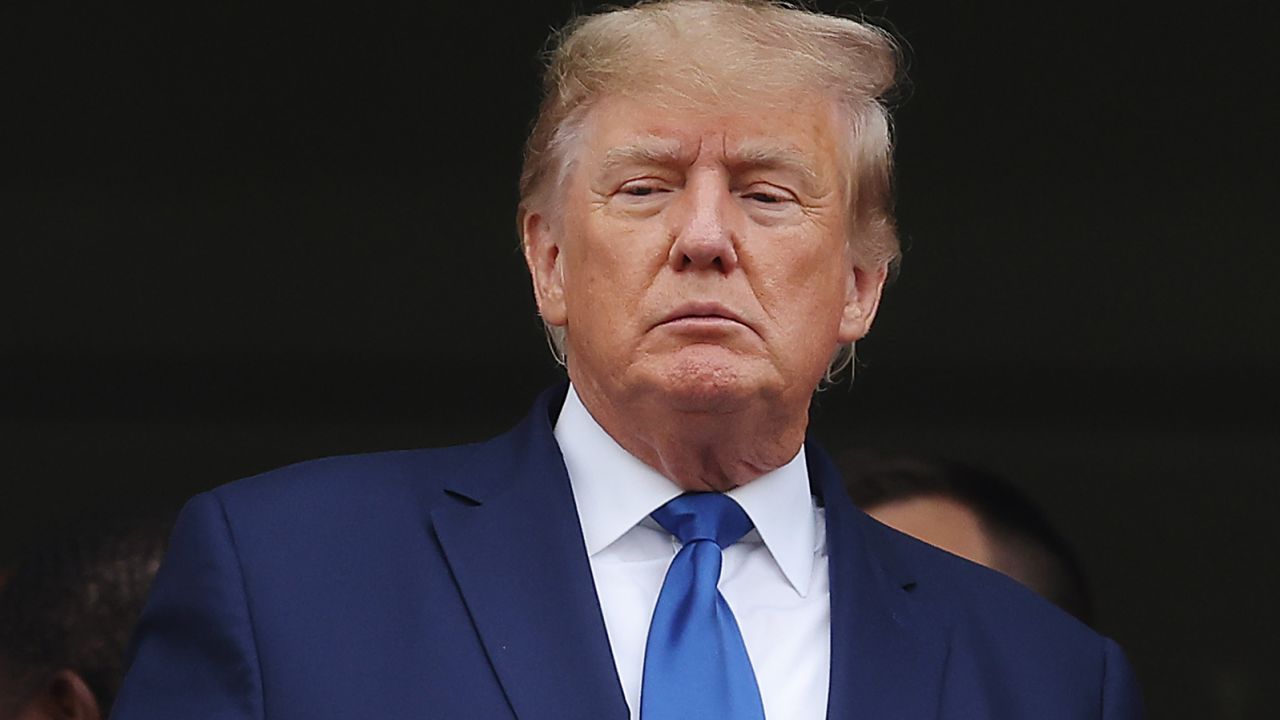
US President Donald Trump on Thursday signed an executive order warning of new tariffs against countries that supply oil to Cuba, increasing economic pressure on the communist island nation.
According to the order issued by the White House, “Additional value-based (notional value) duties may be imposed on imports of goods that are products of a foreign country that directly or indirectly sells or otherwise provides oil to Cuba.”
The directive, issued under the International Emergency Economic Powers Act, describes the Cuban government as an “extraordinary threat” to U.S. national security and alleges that “the regime is aligned with and provides support to a number of enemy states, international terrorist groups, and malign elements hostile to the United States,” including Russia, China, and Iran, as well as Hamas and Hezbollah.
Amid this growing pressure, Mexico has temporarily suspended oil supplies to Cuba, Al Jazeera reports, as Trump seeks to further isolate Havana.
Mexican President Claudia Sheinbaum said the move was a “sovereign decision” and not the result of US pressure.
Addressing reporters he said, “This is a sovereign decision, and it is taken when necessary.”
When asked if supplies would resume, he responded, “In any case, it will be informed,” while also emphasizing that Mexico would “continue to show solidarity” with Cuba.
This suspension will have a significant impact on Cuba’s energy security.
According to Al Jazeera, Mexico and Venezuela were supplying most of the oil to Cuba, but on January 3, crude oil supplies from Venezuela were cut off after former President Nicolas Maduro was captured in a military operation and taken to the US.
As of last month, Mexico accounted for 44 percent of Cuba’s oil imports, Venezuela 33 percent and Russia about 10 percent, while imports from Algeria were smaller.
Mexico’s state oil company Pemex said it supplied about 20,000 barrels a day of oil to Cuba between January and Sept. 30, 2025, giving Mexico a vital, though limited, lifeline after Venezuela’s shutdown.
Since then, Trump has toughened his stance towards Havana. He wrote on Truth Social on January 11, “No more oil or money will be sent to Cuba – zero! I strongly advise them to reach an agreement before it is too late.”
He added, “Cuba depended for many years on vast amounts of oil and money from Venezuela.”
During a visit to Iowa he said that Cuba “is really a nation that is very close to collapse.”
Cuban President Miguel Diaz-Canel rejected pressure from Washington, saying, “We have always been ready to maintain a serious and responsible dialogue with various US administrations, including the current administration, based on the principles of sovereign equality, mutual respect and international law.”
As tensions escalated, Al Jazeera reported that a Cuban diplomat in Bogotá accused Washington of “international robbery” over efforts to block oil shipments to Venezuela.
“The US is carrying out international piracy in the Caribbean Sea, disrupting oil supplies to Cuba,” Carlos de Céspedes said, adding that Havana faces more serious threats from the US than ever in the 67 years since the revolution.
US Secretary of State Marco Rubio has described the Havana government as “a big problem”, while Trump has publicly suggested that Rubio could one day lead Cuba, writing, “I love it!”
Relations between Havana and Washington still remain extremely tense, despite a brief improvement in relations in 2014, which Trump reversed by reimposing sanctions during his first term and banning cruise ships in 2019.
Al Jazeera reported that Cuba is now facing its worst economic crisis since 1959 due to fuel shortages, power cuts and disruptions to food and water supplies.
The situation could worsen as oil flows from Mexico and Venezuela dry up, while rising tensions with the US have led to a nearly 70 per cent decline in tourism since 2018, draining as much as US$3 billion in annual income.
Meanwhile, Mexico is negotiating a trade deal with Washington amid tariff threats as Trump increases his demands on Mexico over drug cartels, further complicating Mexico’s efforts to balance its long-standing ties with Cuba and growing US pressure.