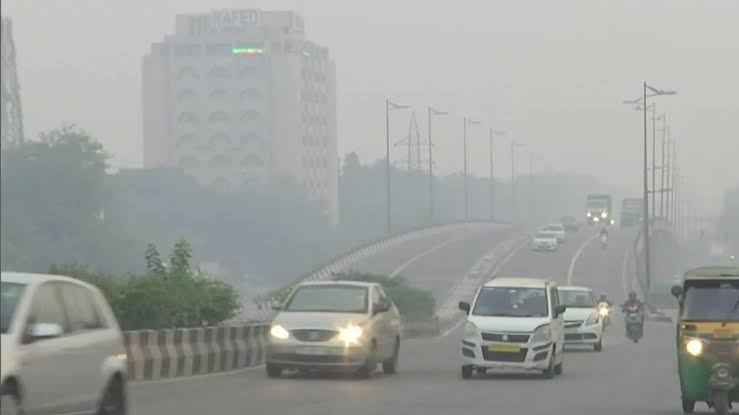
The air quality in Delhi remains hazardous, which is affecting people’s health. According to the Central Pollution Control Board (CPCB), the overall air quality index (AQI) in Delhi on Sunday reached 391, which falls in the severe category, and in some areas it was more than 400.
Dense fog and haze cause pollutants to get trapped, reducing visibility and causing Delhi residents to face morning chill, disrupting their daily lives.
Anand Vihar recorded AQI of 445; 425 in Patparganj; 433 in Nehru Nagar; 445 in Shadipur; 413 in Mundka; and 320 at IGI airport, indicating severe pollution across the region.
As per CPCB classification, AQI readings between 0-50 are considered ‘good’, 51-100 ‘satisfactory’, 101-200 ‘moderate’, 201-300 ‘poor’, 301-400 ‘very poor’ and 401-500 ‘severe’.
Authorities are monitoring pollution levels and implementing several measures, including the ‘No PUC, No Fuel’ rule, to deal with the situation.
The Air Quality Management Commission has implemented Phase IV measures under the Graded Response Action Plan, which include restrictions on construction and industrial activities.
The combination of cold weather, calm winds and dense fog is trapping pollutants, creating haze and smog conditions. This cycle of poor air quality is likely to continue due to the current climate, leading to calls for continuous monitoring and stricter pollution control measures.
Delhi’s air quality index (AQI) was in the ‘very poor’ category on Saturday morning, with it exceeding 300 in many areas. However, by the evening it entered the severe category and touched a level of around 390.
The Delhi Cabinet led by Chief Minister Rekha Gupta approved several important decisions to strengthen the fight against pollution and improve environmental governance in the capital.
The Cabinet also approved allocation of Rs 100 crore for revitalization of water bodies under Delhi government. There are around 1,000 such water bodies in the national capital, of which 160 fall under the jurisdiction of the Delhi government.
Delhi Environment Minister Manjinder Singh Sirsa said, “Revitalization of Delhi’s water bodies will play an important role in pollution control. The Chief Minister has directed that all possible financial assistance be provided to complete this work within a year.”
The Cabinet also approved setting up of Delhi’s first e-waste park spread over 11.5 acres at Holambi Kalan. The facility will adhere to the highest standards of pollution control and operate on a 100 percent circular, zero-waste model.