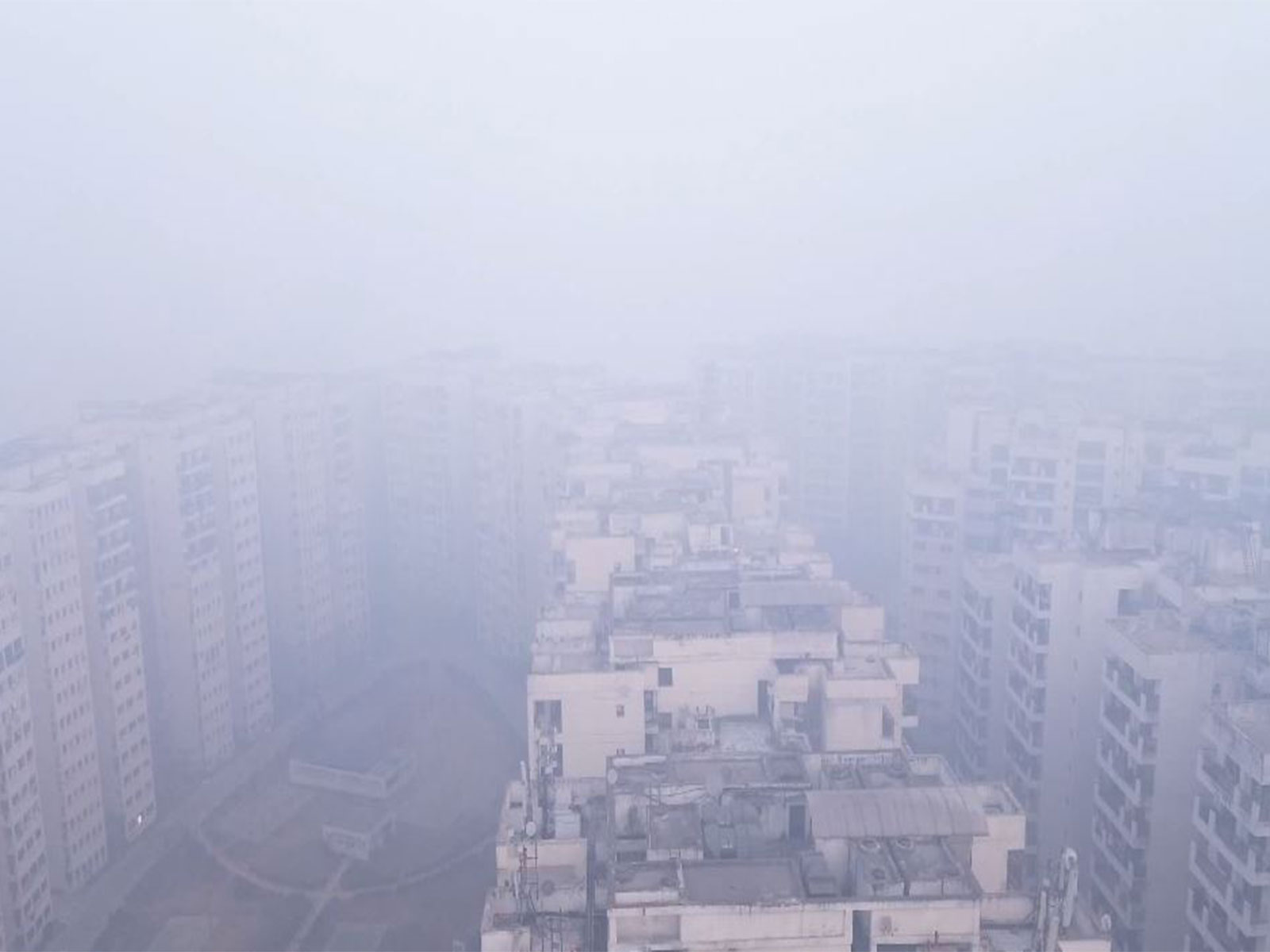
The severe air pollution crisis continued in Delhi on Sunday morning as the air quality in the national capital remained in the ‘severe’ category and the air quality index (AQI) was recorded at 439 at 7 am, according to data released by the Central Pollution Control Board (CPCB).
The situation worsened on Saturday night, with the air quality index (AQI) recorded at 432 at 10 pm, putting it in the ‘severe’ category, and the situation worsened by Sunday morning.
Persistently high pollution levels have raised serious health concerns, especially for children, the elderly and those suffering from respiratory and cardiovascular diseases.
Pollution levels were recorded at alarmingly high levels in many areas of the city, indicating the enormity of the pollution crisis. The air quality index (AQI) of Anand Vihar was 489, Ashok Vihar 463, Bawana 467, Chandni Chowk 464, Dwarka Sector 8 469, ITO 448, Narela 412, Punjabi Bagh 476, RK Puram 467 and Wazirpur 478. All these locations fall in the ‘severe’ category, indicating extremely poor air quality and serious health risks.
According to the AQI classification, readings between 0 to 50 are considered ‘good’, 51 to 100 ‘satisfactory’, 101 to 200 ‘moderate’, 201 to 300 ‘poor’, 301 to 400 ‘very poor’ and 401 to 500 ‘severe’.
Additionally, visibility remained low across the city as the cold wave continued and dense fog blanketed large parts of Delhi. The Indian Meteorological Department (IMD) said that there was dense fog in the morning, moderate fog was seen at many places and dense fog was seen at some places. The minimum temperature on Sunday ranged between 5 to 7 degrees Celsius, which was 1.6 to 3 degrees Celsius below normal.
In response to the deteriorating air quality, the Commission for Air Quality Management (CAQM) on Saturday reimposed Phase-IV measures under the Graded Response Action Plan (GRAP) in Delhi and the National Capital Region (NCR).
The CAQM order said, “Considering the prevailing air quality situation and associated factors and in an effort to prevent further deterioration of the air quality situation in the region, the GRAP sub-committee of the CAQM has unanimously decided to implement all actions envisaged under Stage-IV ‘Severe+’ air quality (Delhi AQI > 450) of the existing GRAP with immediate effect in the state of Central Delhi. This is in addition to the actions taken under Phases I, II and III of the existing GRAP already implemented in the State.”
The order further said, “NCR Pollution Control Boards and other concerned agencies have been asked to intensify preventive measures to prevent further deterioration of the air quality situation in the region.”
As severe pollution, cold waves and dense fog persist, officials have urged citizens to limit outdoor activities, follow health advisories and take precautions to avoid hazardous air quality.