Sikhs have carved a special place for themselves in Malawi, South-Eastern Africa and have become an example of inclusivity.
From serving as soldiers in the British Indian Army to becoming respected citizens, Malawi’s Sikhs have carved a special place for themselves in the country’s long history. Sikhs have made a historical and invaluable contribution to the progress and development of Malawi.
If we look at the events recorded in history, Sikhs played a special role not only in India but in situations of both war and peace wherever they settled. As fearless warriors and border guards, their courage and valor have always been renowned. Standing firm to the last man, he turned the tide of many fierce battles despite great odds, sometimes becoming a victorious hero, sometimes becoming a martyr.
Even during peace time, his contribution has been no less remarkable. As active participants, Sikhs are pillars of their host countries (Malawi), always carrying the torch of progress and development.
Dhamak: Member of the first contingent of the Indian Army
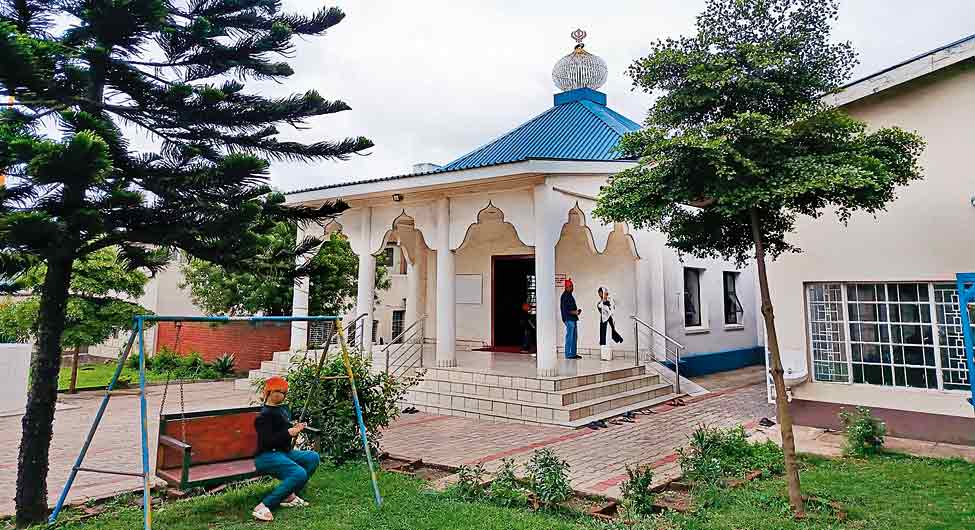
The situation is similar in Malawi in south-eastern Africa. There is a vibrant Sikh community here. Whose center is Gurdwara Sahib located on Temple Road in Limbe area of Blantyre. It is run by the Sikh Association in Malawi (SAM). Gurdwara Sahib of Limbe is one of the oldest Gurudwaras in Africa. It was formally opened on 13 October 1929 to enthusiastic members of the Sikh community. The credit for its establishment goes to Sardar Gyan Singh Saund in 1928. As a spiritual centre, it provides community services such as Gurudwara Langar, in which free food is served to people of all religions. By coming here one gets a different kind of spiritual peace. It is also a place to promote unity among Sikh families and harmony and cooperation with the local people. In times of need, guests are also provided temporary free accommodation and shelter.
Historic milestone in Sikh history
A historical milestone, an immortal saga whose first seed was the arrival of the first Sikh soldier to come to the country. Almost a century and a half ago, to be precise 151 years ago, in October 1864, Havildar Singh became the first Sikh to set foot in the then Nyasaland (Malawi). Havildar Singh, serving in the British Indian Army, was posted in Nyasaland as the personal and trusted bodyguard of Dr. David Livingstone. Dr. Livingstone was a determined, fearless explorer, missionary and courageous Scottish man. He is regarded as a legend in the history of Africa.
presence of sikhs
In July 1891, exactly 29 years after Havildar Singh’s arrival, a contingent of 71 soldiers of the Indian Army, including 40 Sikh soldiers of the 23rd and 32nd Pioneers Regiments and some cavalrymen of the Hyderabad Lancers, formed the core elements of the armed forces of Malawi (then known as Nyasaland) under the command of Captain Cecil Montgomery Maguire, who was captured by the British. Known as the Central African Rifles (B-CAR). In 1902, the induction of more Indian troops from the 1st Battalion of the CAR and the 1st British Punjab Regiment led to the formation of the 1st Battalion of the King’s African Rifles (KAR-1) and the 2nd Battalion of the KAR-2. He was posted in Zomba (the capital of British Nyasaland). Captain Maguire formed and trained the 1st and 2nd Nyasaland King’s African Rifles of Sikh Indian soldiers.
cantonments and military operations
Sikh soldiers, who were part of the armed forces of the British Central Africa Administration, played an important role in military activities in Nyasaland, primarily against powerful Yao chieftains such as Makanjila and Jalasi, in establishing British control and stopping the slave trade. These brave Sikh soldiers served as front line infantry, non-commissioned officers (NCOs), drill instructors for African troops, artillery and machine gun specialists. Many Sikhs fought against slave trading gangs and sacrificed their lives to stop the slave trade in East Africa. With the help of 200 Sikh soldiers, another British officer, Harry Johnstone, ended slavery in Nyasaland in the 1890s. The fearless Sikh warriors also played an important role in defeating the Ngoni tribesmen of Mpesseni (now Zambia) in 1898.
building forts
The contingent of Sikh soldiers was entrusted with the task of strengthening the defence, strengthening the existing forts and building several new forts. Fort Mangochi, Fort Maguire, Fort Lister of Phalombe and Fort Anderson of Mulanje were all forts built by Sikh soldiers to defend against tribal rebellions and attacks. Between July 1891 and October 1899, 380 out of a total of 480 Sikh soldiers sacrificed their lives defending the country. His mortal remains are buried at various locations in Malawi. Many Sikh soldiers were martyred fighting the Mloji tribes at Karonga. Many others died fighting against Makanjila and other Yao chiefs in Mangochi.
vibrant presence
According to recent estimates, the number of Sikhs living in Malawi is around 300, which used to be 3000. Recently, the Gurudwara celebrated Veer Bal Diwas, Martyrdom Week, which commemorates the martyrdom of Guru Gobind Singh Ji’s two youngest sons, Sahibzada Zorawar Singh Ji and Sahibzada Fateh Singh Ji. It is celebrated every year on 26 December. This time of the year is also celebrated by the Sikh community worldwide as Martyrdom Week (Safar-e-Shahadat), in which the supreme sacrifices of the holy family of Sri Guru Gobind Singh Ji are reverently remembered. At Gurdwara Sahib in Limbe, the Sikh community remembered the martyrdom and legacy of Sahibzadas and Mata Gujri Ji. People of different religions, including Sikhs, can practice their religion freely in Malawi.
historical contribution
first sikh havildar singh
Sikhs have contributed to Malawi’s development through their historical role in colonial military and security forces, and through infrastructure projects such as railway construction. The British relied on the expertise of the Sikh soldiers, who were considered the “best chosen” soldiers of the Indian Army at the time. For this reason, Sikh soldiers became part of the country’s first defense force and played an important role in effectively stopping the slave trade in the late nineteenth century. Additionally, along with other Indian workers, Sikhs also participated in colonial infrastructure projects, including the construction of a railway line linking Malawi (then Nyasaland) to the port of Mozambique, which was extremely important for early economic development and trade.
modern contribution
After Malawi’s independence in 1964, Sikhs played an important role in professional fields such as architecture, sports and urban planning. This landlocked country, located in south-eastern Africa, shares borders with Malawi, Zambia (west), Tanzania (north) and Mozambique (east, south and south-west). Africa’s third largest lake, Lake Malawi, located in the Great Rift Valley, forms the country’s long eastern border. Malawi has been called the “warm heart of Africa” because of its gentle, friendly and hospitable people. For example, Sikh architect Ajit Singh Hugan contributed to the planning of Lilongwe when it was declared the new capital.
achievements in sports
Sardar Santokh remained active in sports till the age of 80. Among the general public he is known only by the name Santokh Singh. He is a great athlete, having represented Malawi in seven different sports at national and international level. This in itself is a rare achievement for any player. He excelled particularly in cricket and hockey and became a local icon in Malawi’s sporting history. He represented Malawi at the Commonwealth Games in cricket and hockey (through Indian Sports Club), football (possibly at local/club level) and at least four other sports. It is said about him that he is an all-rounder and he also proved it.
Malawi’s Sikhs generally maintain good relations with other religious and local communities and participate in inter-religious professional or civic organizations such as Rotary and Lions Clubs, thereby promoting social unity in the country. In short, whatever the number of Sikhs, Malawi’s Sikh community remains a vibrant spiritual and social presence. It beautifully reflects Sikh values like community, service and faith.
The Sikhs of Malawi have integrated seamlessly into the culture and social fabric of the country. Yet they have maintained core elements of their culture and ethnic identity without much difficulty. In many ways, they exemplify the enduring cultural heritage of India and are a cause of global pride wherever the Sikhs and their diverse achievements are discussed.
Sat Shri Akal, said so Nihal.
(The author is High Commissioner of India to the Republic of Malawi)