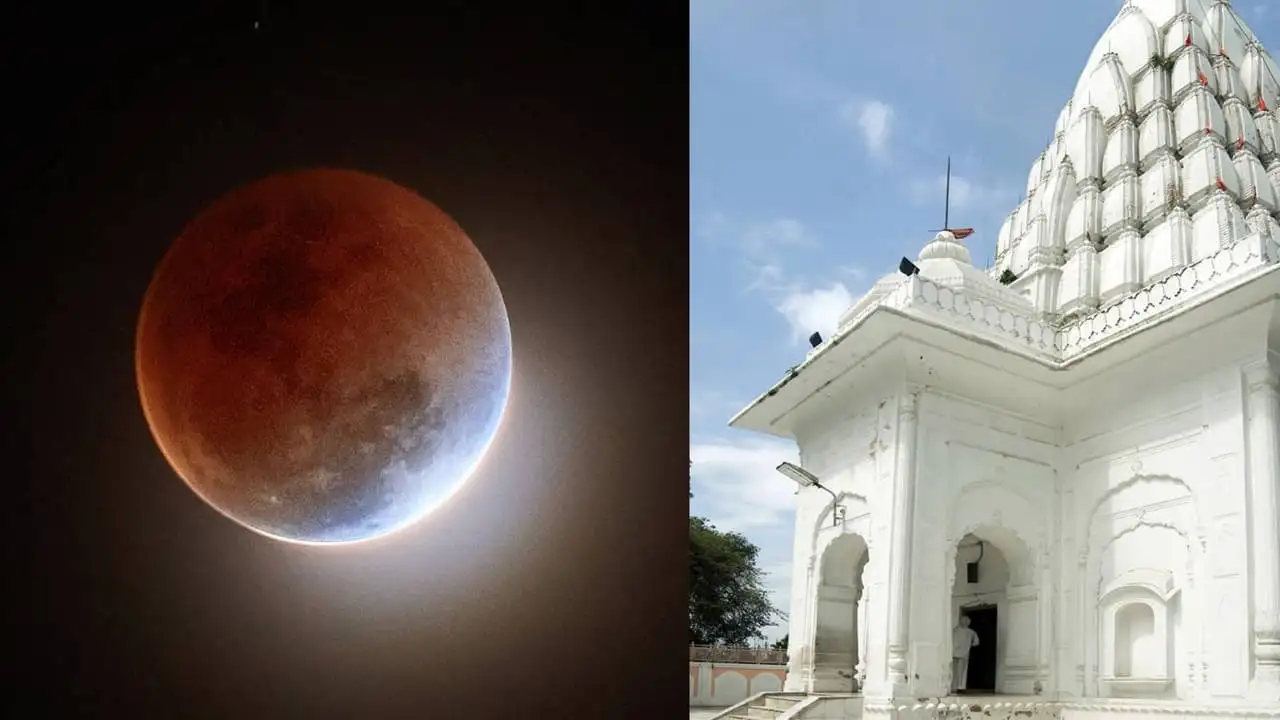
Astronomically, the year 2026 is going to be very eventful. A total of four eclipses will occur this year: two solar eclipses and two lunar eclipses. While the eclipses of February 17 and March 3 have passed, now all eyes are on the solar eclipse of August 12 and the lunar eclipse of August 28. This is because in India the eclipse is considered not just an astronomical event, but an occasion with deep spiritual significance, governed by special rituals—especially *sutak* (periods of religious impurity). But have you ever wondered why the doors of temples are closed as soon as the eclipse begins? Or why are Tulsi (holy basil) leaves kept in food items? Let us try to understand the religious and scientific aspects behind these practices in simple and easy language.
Why do the rules change as soon as the eclipse begins?
According to religious beliefs, the eclipse period is considered a time when the intensity of negative energy in the environment increases. In the Puranas, Rahu and Ketu have been identified as the celestial bodies which are responsible for eclipses. It is believed that when Rahu “swallows” the Sun or the Moon, it has subtle effects on both nature and human life. As a result, a tradition of caution and restraint in daily activities developed during this particular period. In the field of astrology, an eclipse is considered an extremely sensitive time; It is said that this period can affect a person’s mental state, physical health and the environment around him. Therefore, specific guidelines and customs are followed regarding religious rituals, eating habits and daily routine during the eclipse.
Why are the doors of temples closed during eclipse?
The tradition of closing the doors of temples during eclipse is centuries old. According to religious beliefs, the sanctity of the atmosphere is disturbed during the eclipse period; Therefore, temples are closed to protect the idols of Gods and Goddesses from this adverse effect. During this period, regular worship (*puja*) and rituals of offering bhog (*food*) to the Gods and Goddesses are suspended. After the eclipse ends, a special purification ritual is performed in the temples. Holy water (*Gangajal*) is sprinkled in the temple premises, after which regular worship is resumed. In many big temples, special *aartis* (lamp lighting rituals) and chanting of mantras are also performed after the eclipse ends.
Why do people avoid cooking and eating during eclipse?
Both religious beliefs and scientific reasoning have been cited as the reasons behind the tradition of avoiding cooking or eating food during an eclipse. According to religious belief, during eclipse, subtle negative effects increase in the environment, due to which food can get contaminated. However, from a scientific point of view, in ancient times it was believed that the intensity of sunlight decreases during an eclipse, which increases the risk of rapid spread of bacteria. As a result, the tradition of adding Tulsi (holy basil) leaves to food to preserve it began. Even today, in many homes basil leaves are added to food and beverages before the eclipse begins.
What is ‘Sutak’ period?
The time before the eclipse is known as ‘Sutak’ period. It is generally believed that the Sutak period starts about 12 hours before the solar eclipse and about 9 hours before the lunar eclipse. As soon as the Sutak period begins, all auspicious works are stopped. People are advised to avoid performing religious rituals (puja), touching idols, performing marriages, entering the house or participating in any other auspicious ceremony. However, children, elderly and sick people are given some exemptions from these rules.
Why are pregnant women advised to be careful?
Pregnant women are advised to be especially careful during the eclipse. It is believed that the effects of the eclipse can affect the baby in the womb. Therefore, they are asked to stay indoors, not use sharp objects and not take excessive stress. Although these beliefs have no basis in scientific literature, these guidelines are still followed as a precautionary measure in Indian tradition.
Which activities are considered auspicious during eclipse?
In religious texts, the eclipse period has been described as a very powerful time for spiritual practice and chanting mantras. During this time, remembering the name of God, chanting mantras, meditating and doing charity is considered auspicious. After the eclipse ends, many people take ritual bath and donate to the poor. It is believed that doing this reduces the negative effects of the eclipse and transmits positive energy.
Rules related to *Sutak*
According to the scriptures, *Sutak* period (time of religious impurity) does not apply to places where the eclipse is not visible. This is the reason that *Sutak* related to the solar eclipse occurring on August 12, 2026, will not be effective in India, because this eclipse will not be visible there. However, *Sutak* guidelines will be followed in those areas of India where the partial lunar eclipse on August 28, 2026 will be visible.
A unique confluence of faith and science
Beliefs and traditions related to eclipse have been prevalent among people for thousands of years. While science views them as the result of the precise astronomical alignment of the Sun, Earth and Moon, religion views them from the perspective of spiritual energy and its potential impact on life. This is why as soon as the eclipse begins, there is an immediate change in people’s daily routine—including their eating habits and rituals of worship.