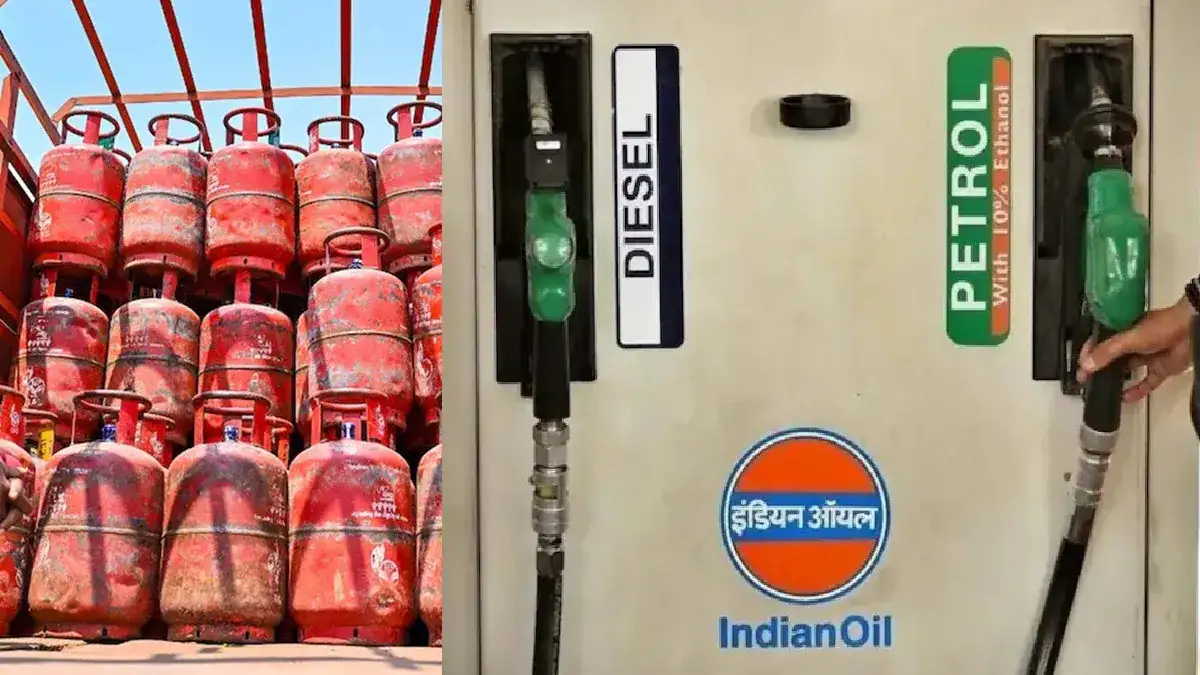
Amid the ongoing conflict in the Middle East and supply shortage, the government has decided to stop the huge financial support given to oil marketing companies like Indian Oil, HPCL and BPCL. According to Finance Ministry sources, the central government – which has already provided support worth ₹1.23 lakh crore – has decided not to provide any further financial assistance to these oil companies. As a result, there are concerns that these companies – which are still incurring daily losses of ₹652 crore despite earlier support – may raise the prices of petrol, diesel and LPG. Although the companies have not yet announced any price increase and this is just a possibility, such a move will hit the common man with another blow of inflation.
**How was the government providing help for your benefit**
The central government had taken a big step to protect common consumers from the effects of inflation. In the first 78 days, the government had provided financial assistance of about ₹1.23 lakh crore to provide relief to state-owned oil companies. According to government sources, this relief package included reduction in excise duty on petrol and diesel. Amid rapidly rising prices in the international market, the government had tried to curb the rising losses of companies by forgoing tax earnings.
**78 days of help ended: Why did the Finance Ministry pull out?**
However, after covering the losses of oil companies for 78 days, the Finance Ministry has now taken a tough stance. The Ministry believes that providing more financial assistance to a particular sector is neither practical nor appropriate. This is the reason why the government has clearly refused to provide any additional financial assistance to the oil companies.
According to sources, after this decision, the government decided that some of the burden of increase in the prices of crude oil and gas will have to be passed on to the common consumers. As a result, government oil companies started increasing the prices of petrol, diesel and domestic LPG from May 15. Oil companies are incurring huge losses of ₹652 crore every day. According to a senior government official, despite the rapid increase in the prices of petrol, diesel and cooking gas in the last few weeks, the financial condition of the government oil companies is very worrying. Yet, these companies are incurring huge financial losses of around ₹652 crore every day.
According to a recent report by the Petroleum Planning and Analysis Cell (PPAC) under the Petroleum Ministry, the average crude oil price for the Indian basket was recorded at $114.48 per barrel in April 2026 and $106.23 per barrel in May 2026. Currently, crude oil prices in the international market are around $93-$94 per barrel, while global LPG prices have increased by more than 46%.
Huge loss on LPG: Supply cost reaches ₹ 1,700
Pressure is increasing on both the common man and oil companies regarding cooking gas. The ‘Saudi CP benchmark’ for domestic LPG has seen a huge increase of almost 50% since January. Due to this increase, the cost of supply of an LPG cylinder has increased by approximately ₹1,600–₹1,700.
Last Sunday, oil companies had increased domestic cooking gas prices by ₹29; However, despite this increase, they are incurring ‘under-recovery’ (loss) of ₹600 to ₹700 on every domestic cylinder. According to government data, the total under-recovery on domestic LPG increased to ₹60,000 crore from ₹41,338 crore last year. The crisis of the Strait of Hormuz and the challenge of new routes
India imports more than 85% of its crude oil requirement and about 60% of its LPG requirement from international markets. Before the conflict in the Middle East began, 40% of India’s total oil imports and 90% of its LPG imports came through the narrow sea route of the Strait of Hormuz. This crisis has disrupted supplies on this route.
To mitigate this risk, the Indian government, in collaboration with oil companies, has significantly diversified the sources of its LPG imports. LPG is now being supplied from new and alternative global markets; However, the move to new routes and sources has significantly increased freight and overall import costs.