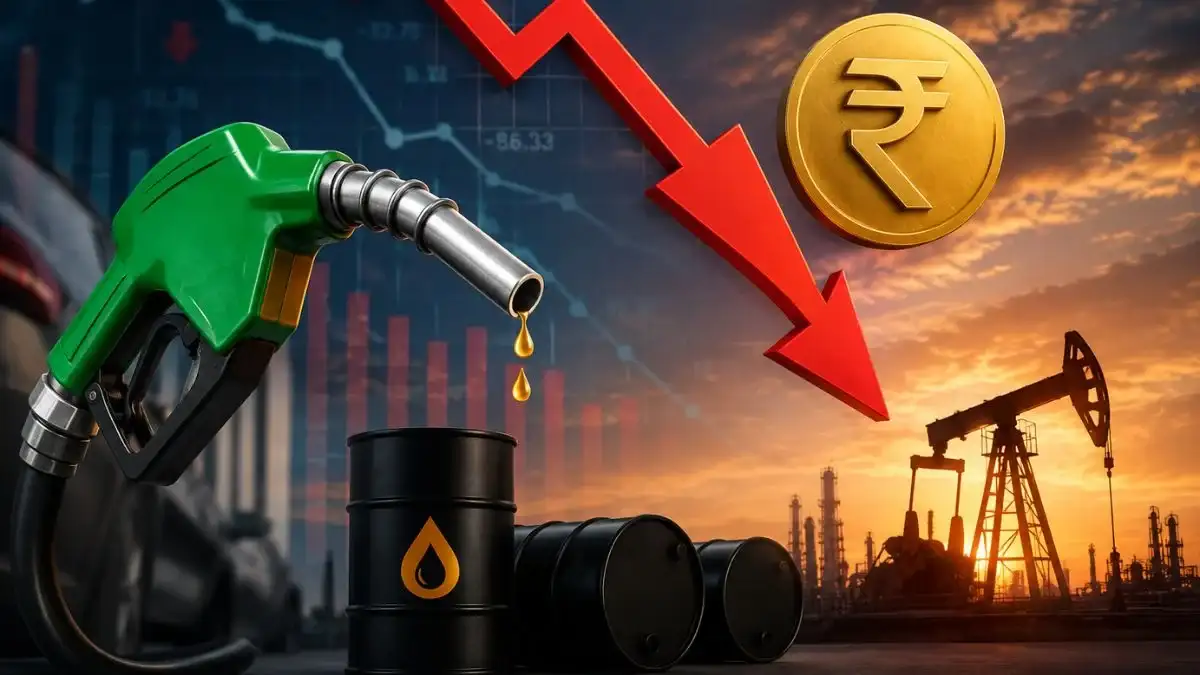
Petroleum Minister Hardeep Singh Puri has indicated that fuel prices may come down when cheaper crude oil reaches India, although it may take some time. “Companies currently have crude oil purchased at a higher price in stock; when the crude oil purchased at a lower price reaches them, prices are likely to go down,” Puri said at a press conference in Uttar Pradesh.
He further said, “Despite the global energy crisis due to the confrontation between the US, Israel and Iran, fuel prices in India have remained largely stable and are in a better position than other countries.” Puri said that to curb the rise in domestic petrol and diesel prices, the government had reduced excise duty in November 2021, May 2022 and again in 2026, thereby incurring a revenue loss of ₹10 per litre. He also said that till now the increase in the prices of petrol and diesel has been limited to about ₹7.60 per liter.
City Petrol Price (per litre) Diesel Price (per litre) Delhi Rs 102.12 Rs 95.20 Mumbai Rs 111.18 Rs 97.83 Kolkata Rs 113.47 Rs 99.82 Chennai Rs 107.77 Rs 99.55 Bengaluru Rs 110.93 Rs 98.80 Hyderabad Rs 115.69 Rs 103.82 Agartala Rs 105.17 Rs 94.05 Guwahati Rs 105.85 Rs 97.33 Patna Rs 113.35 Rs 99.36
How are the prices of petrol and diesel decided in the country?
Petrol and diesel prices in India are decided on the basis of international crude oil rates, rupee-dollar exchange rate, base price, taxes and dealer commission. Oil companies decide the base price by adding the cost of crude oil, refining costs, transportation charges and their profits. Subsequently, hefty taxes and commissions – which amount to around 50-55% of the retail price – are added before the fuel reaches the consumer. State governments levy VAT as per their respective policies. Moreover, petrol pump owners get a fixed commission per liter for their costs and profits. The final price is decided by adding all these components.