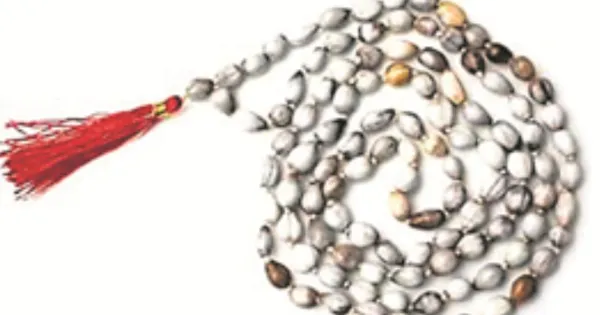
Among the Hindu gods, Lord Vishnu likes Vaijayanti flowers very much. Along with Shankha Chakra, Mace and Padma, he also wears a garland of Vaijayanti flowers around his neck. Vishnu’s incarnations also like Vyjayanti’s garland. Vaijayanti means the flower that grants victory. Someone has written – Peacock crown, Kati Kachni, Gal Vaijayanti Maal. /Yo vanak mo man basyo sada Bihari Lal. As soon as the garland of fragrant flowers of Vaijayanti is made, it is so beautiful that a captivating fragrance starts emanating from the body of the wearer. There is a story in the Puranas that once Maharishi Durvasa was going somewhere, he saw Devraj Indra coming on the way.
Maharishi Durvasa gave him a garland of Vaijayanti flowers for victory everywhere. Indra put the Vaijayanti garland on the head of his elephant Airavat. Airavat the elephant crushed that garland under his feet. Seeing this, Maharishi Durvasa became angry and cursed Indra to be inferior to Sri. Later, Indra had to suffer a lot and apologize to sage Durvasa. It is said that whoever wears a garland of Vaijayanti flowers, Goddess Lakshmi resides in his house and he gets victory everywhere. Goddess Lakshmi likes Vyjayanti flowers very much. Lord Krishna also wears a garland of Vyjayanti flowers.
Vyjayanti or Kena is a perennial plant. Its leaves are smooth like banana, green or copper colored or with spotted and yellow stripes. The flowers are bright, irregular in shape and look very beautiful. The flowers bloom collectively in bright and many colors. It is found in abundance in moist places, on the banks of lakes, ponds and springs. Mainly it is planted in semi-shady places in gardens and orchards. The sepals of the flower are green or copper colored and the petals are green or colored like the sepals. The colored part of the flower is called stominadia, the stamens represent the stominadia, which is the ornamented part of the flower. About 50 species of Canna are found mostly in tropical and sub-tropical countries, among which Vaijayanti is prominent.
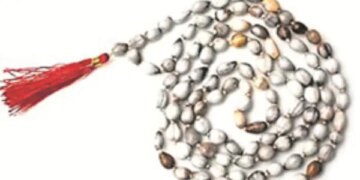
Due to its hard and black gunshot-like seeds, it is commonly called ‘Indian Shot’. Devakili in Sanskrit, Krishnatamarasarvajdaya, Sarvajaya, Kala Phool (Bengali), Devkali (Marathi), Hudingana (Kannada), Kalvalai, Puvalai (Tamil), Krishnatamaya (Telugu) and Kattuvala in Malayalam. Its botanical name is Canna Indica, which comes in the monocotyledon family Cannaceae. It is a perennial herb.
Roots rhizomatous, 2.5 m. Till long, stem is round, fleshy, smooth, leaves are oblong, upper end thin and terminal: flower-paired apical, small: flower bract circular, flower thin and incised, bract about 4 cm. Long, upper stominadia, dark red, about five cm. Is long. At present the species of Vyjayanti are found among garden and flower lovers. They are derived from variants of Canna indica, Canna palacid, Canna iridiflora, Canna glauco and Canna wasiwisii. The punyas of hybrid species are larger, of different sizes and colors.
Flowers generally occur throughout the year, but are most abundant from January to April. To plant the saplings, it is planted in July using rhizomes i.e. root pieces. For planting by seeds, the seeds are soaked in hot water or cow dung manure for 3-4 days, the hard peels become soft. After that, by making a thin long cut on the seed with a knife and planting it in the soil, the plant germinates. The beauty of Vyjayanti flowers is famous all over the world. Apart from beautiful flowers, many benefits can be obtained from Vaijayanti plant. Twine and sack or bag are made from the fiber of its stem.