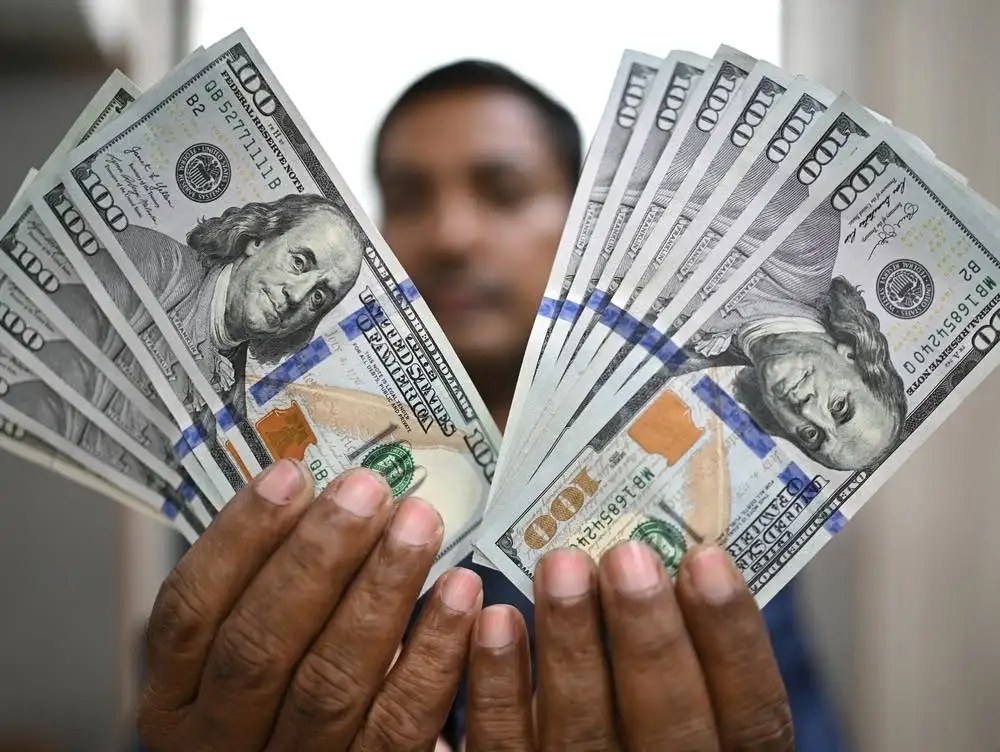
Are the bad days of the dollar beginning? Will it lose its status as the world’s main currency, or has the world found another alternative? A recent report has revealed such things which raise these questions. A Reuters report, citing a survey, says the world is preparing to reduce its dollar reserves – a move never seen before globally.
This survey was conducted by ‘Official Monetary and Financial Institutions Forum’ (OMFIF). This shows that for the first time, central banks around the world are planning to reduce the share of the US dollar in their foreign exchange (forex) reserves over the next decade, rather than increasing it. This is indicative of a global desire to diversify forex reserve portfolios.
Was earlier the focus only on increasing dollar holdings?
Historically, the dollar has been considered the world’s most stable currency and has been the main means of transaction for international trade. Be it the import of oil or the export of food items, transactions have traditionally been done in dollars; However, now the situation is gradually changing. Many countries have started doing business in their local currency and they seem unhappy with the political pressure from America. The survey found that for the first time, a majority of countries want to reduce their dollar holdings over the next ten years.
Why is there talk of reducing dollar holdings?
According to the survey, central banks see three main risks related to the dollar. The main concern is political uncertainty in the US, which has cast doubt on the stability of the currency. The second reason is geopolitical tensions between the US and other countries, which have caused considerable fluctuations in the value of the dollar – this fluctuation was clearly seen during the tensions with Iran. The third major reason is the shift towards a multilateral global financial system; Most countries are now trading with each other using different currencies instead of relying solely on the dollar. This clearly shows that countries around the world no longer want to depend only on the dollar.
**Which currencies are being given priority instead of dollar?**
Although no clear alternative to the dollar has emerged yet, if current trends continue, the world may soon move beyond the dollar to another currency. Surveys show that gold, euro, British pound, Chinese yuan, Norwegian krone and New Zealand dollar are among the most preferred options. However, the survey also states that the euro and yuan have their own limitations, due to which they have not yet been able to completely replace the dollar.
**Increase in gold reserves**
A Reuters report cites another survey that shows a record number of central banks are planning to increase their gold reserves. For many countries, gold is becoming an important means of hedging geopolitical risks and diversifying reserves.
**Will the dollar cease to exist?**
The report shows that the dollar’s global dominance is unlikely to end any time soon, as it remains the world’s main reserve currency. It continues to play a strong role in international trade, investment and as a safe asset. Any change does not happen suddenly, but gradually.
**What will be the impact on India?**
If dollar dependence is reduced, countries like India can boost their currency and increase trade in rupees with the rest of the world. Apart from this, they can increase the share of gold and other currencies in their foreign exchange reserves. However, this will not happen overnight; The dominance of the dollar is likely to gradually diminish.