Karna is one such name among the great characters of Mahabharata, who is still remembered due to his sacrifice and charity. He was called a philanthropist, because for him charity was not a special act, but a natural tendency of life. Every morning, after taking a bath and offering prayers to the Sun God, every beggar who came to Karna’s door never returned disappointed. For him, charity was not a means of fame, virtue or praise, but a simple observance of religion.
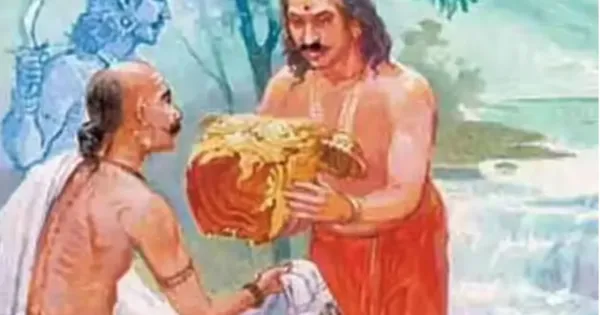
One day Indra, the king of the gods, approached Karna in the guise of a Brahmin. He asked Karna to donate his innate armor and earrings. These armor-rings were an integral part of Karna’s body and made him invincible in battle. Karna had understood that this request was not made for any ordinary purpose. He also knew that this donation would lead him on the path of death and it was related to the protection of Arjuna.
Still, no conflict arose in Karna’s mind. He did not delay even for a moment. Neither did he talk about any condition nor did he expect any reward. By tearing his body he donated his armor and earrings. This was not just physical sacrifice, but an extreme expression of self-confidence and piety. For Karna, religion was bigger than life. Even Indradev became emotional due to this extraordinary sacrifice of Karna. He gifted the Shakti weapon to Karna as a boon, which once used could definitely kill the enemy.
While leaving, Indradev asked him a question – “Karna, you knew that this donation could take your life, still why did you give it?” Karna’s answer was simple, but very profound – “If religion is tied to any benefit or fear, then it ceases to be religion.” This incident teaches us that in Mahabharata, religion is not associated with any side, victory or defeat. It is manifested in man’s conduct, duty and sacrifice. Karna’s life is a silent sermon of the truth that no matter what the circumstances, the path of righteousness is decided by the voice of the soul.