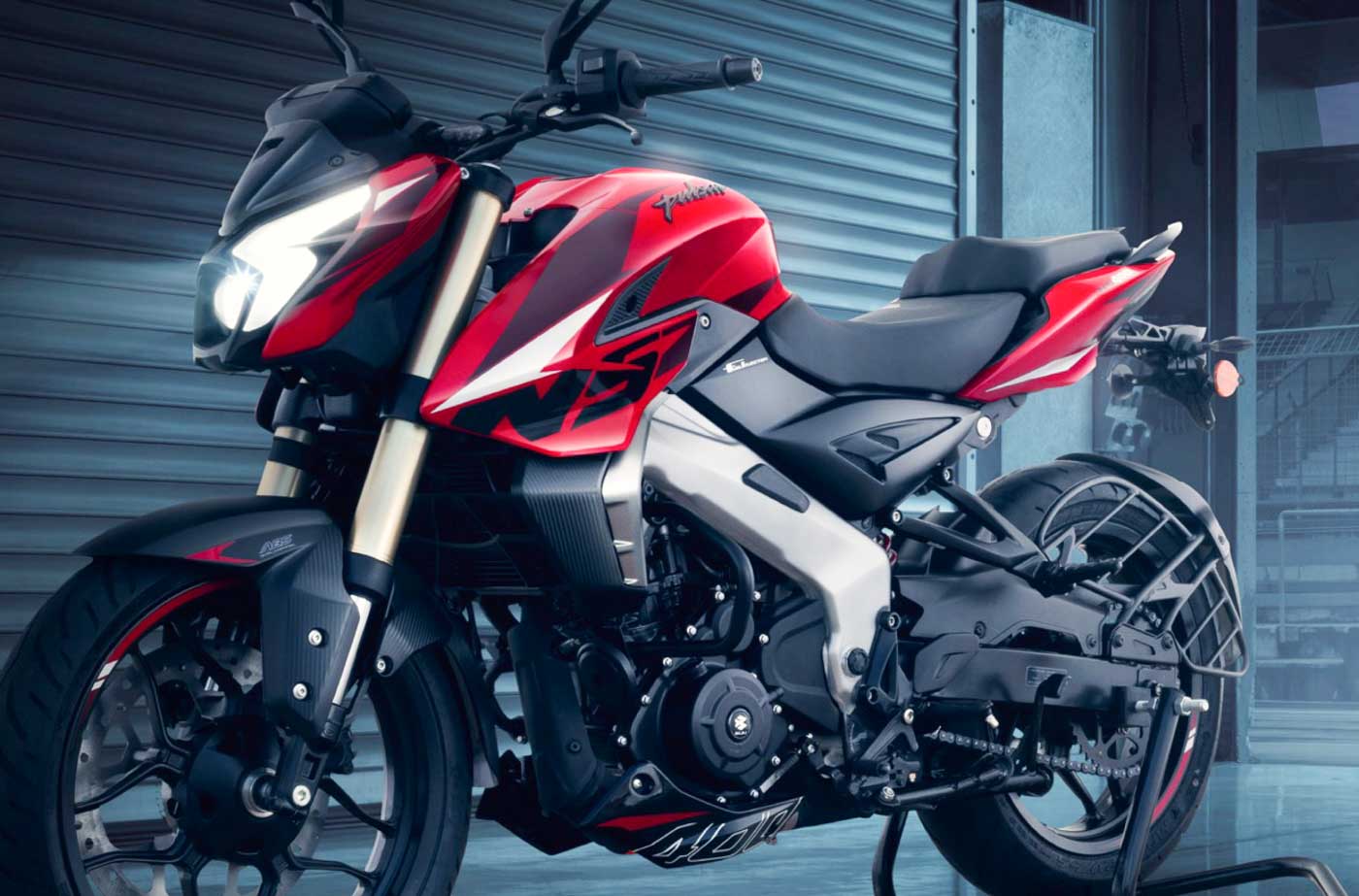
bajaj pulsar ns 400z
To avail the tax benefits of GST 2.0, Bajaj is preparing to launch 350cc versions of NS 400Z and Dominar 400 soon.
The new rules of GST 2.0 have changed the Indian motorcycle market significantly. Now engine capacity (cc) has become the biggest factor in deciding the price of a bike. For this reason, companies are needing to rethink not just the price but their entire bike strategy.
Under the new policy, only 18% GST is being levied on motorcycles with engine capacity up to 350cc, making prices in this segment quite affordable. This has directly benefited the customers as on-road prices have come down and the value of buying a bike has improved. With this, the middleweight segment (250cc–350cc) has now become stronger and more attractive than before.
However, the flip side of this change is that 40% tax is being imposed on bikes with engine capacity more than 350cc. Motorcycles with engines larger than this have now become quite expensive. The price difference which was earlier easy and acceptable to the customers, has now become quite huge. Initially, some companies themselves bore the burden of price increase and did not pass it on to the customers, but now brands have started making changes in the range of their vehicles and bikes.
Pic Source: Avik Sikdar
In this context, the news of Bajaj Auto working on a new 350cc engine platform seems quite correct. The company now plans to take advantage of the tax by reducing engine displacement instead of relying on 400cc motorcycles. Under this strategy, Pulsar 350 and Dominar 350 can play an important role. According to reports, Bajaj is preparing to launch 8 new Pulsar models by May 2026.
It is being said that the 350cc version based on Pulsar NS 400Z, and the platform related to it, can also become the foundation of some models of Triumph and KTM in future. Although the launch date has not been decided yet, Pulsar 350 and Dominar 350 can be launched in the market soon.
bajaj pulsar ns 400z
Interestingly, Bajaj may modify its existing 373cc engine instead of creating a completely new engine. Under this, the bore of the engine will be shortened, while the stroke will be kept the same, due to which the engine capacity can be slightly less than 350cc. This will reduce development costs and give the company more freedom in setting prices. Although this change may result in a slight reduction in power output, the return is expected to result in better torque delivery, smoother performance and a better real-world riding experience.
While mechanical changes to the Pulsar 350 may be limited, bigger updates are possible for the Dominar 350, which include a new design, lower weight, better electronics and modern features. Overall, after GST 2.0, bikes with engines less than 350cc are becoming the best option in the Indian market. For this reason, Bajaj’s new strategy can bring a big change in the market and customers can get high value bikes at better prices.