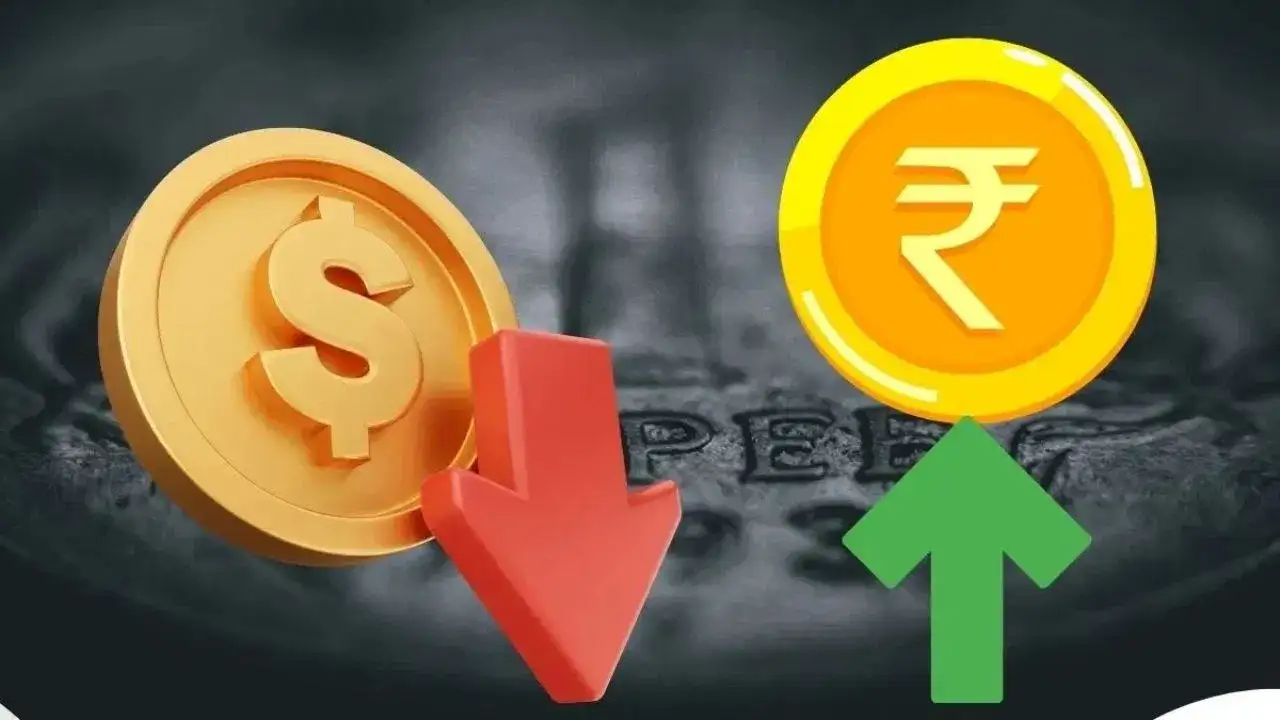
Crude oil prices rose so much that the rupee became stronger by 61 paise in one stroke. In fact, crude oil prices in the international market fell by more than 10%. This effect was seen in the strengthening of the rupee against the dollar. On Wednesday, the rupee strengthened by 61 paise and closed at 94.57 (provisional data) against the US dollar. The reason for this change was US President Donald Trump, who hinted at a possible deal with Iran; Subsequently, Brent crude oil prices fell from their peak and began to approach $100 per barrel.
Despite the immense pressure on the Indian rupee, the Reserve Bank of India (RBI) is also actively using “indirect” strategies to support the currency, Forex market traders said. In addition, the market environment also improved after Trump canceled “Project Freedom”. “Project Freedom” was a US campaign aimed at ensuring the safety of ships passing through the Strait of Hormuz. Let us see how the rupee was able to gain so much strength against the dollar.
Rupee surge*
At the interbank forex market, the rupee opened at 95 against the US dollar; After this it weakened and reached a low of 95.18 in the day’s trade. Finally, the rupee closed at 94.57 (provisional figure), which was 61 paise higher than its previous close. On Tuesday, the rupee had closed at 95.18 against the US dollar. Earlier, renewed clashes in the Gulf region – including attacks targeting UAE infrastructure – had forced investors to shy away from riskier assets, reigniting concerns about supply chains. In this backdrop, despite touching an all-time low of 95.44 during the day’s trade, the rupee started recovering following possible RBI intervention.
Why did the rupee strengthen?
According to Amit Pabari, managing director of CR Forex Advisors, the Reserve Bank of India is considering ways to support the currency without directly using its foreign exchange reserves. Pabari further said that one of the ideas currently being discussed is to encourage public sector banks to raise capital through foreign currency bonds. This could help ease the flow of new dollars into the system. President Trump has suspended “Project Freedom”. This was an initiative aimed at ensuring the safety of ships passing through the Strait of Hormuz. He said progress has been made in ongoing talks aimed at reaching an agreement with Iran to end the conflict. In a post on “Truth Social” on Tuesday, Trump announced that significant progress had been made in talks with Iranian representatives to reach a comprehensive and decisive agreement.
What is Trump’s “Project Freedom”?
“Project Freedom” was launched on Monday to safely free ships stranded due to the closure of the Strait of Hormuz. Trump announced the operation on Sunday, and the US Central Command began implementing it the very next day. Pabari said that, despite some relief being received globally, the feeling of complete relief is still incomplete. US President Donald Trump announced that “Project Freedom” would be temporarily suspended in order to make room for a possible agreement. This move, to some extent, removed the huge uncertainty that had engulfed the markets.
Fall in dollar and crude oil
Meanwhile, the dollar index – which measures the dollar’s strength against a basket of six major currencies – was trading at 97.79 points, down 0.66%.
Brent crude, the global benchmark for the sector, was trading at US$100.81 per barrel in futures markets, down 8.25%. In the domestic stock market scenario, Sensex index closed 940.73 points higher at 77,958.52, while Nifty rose 298.15 points to 24,330.95.
According to stock market data, foreign institutional investors (FIIs) sold shares worth ₹3,621.58 crore on Tuesday.
Meanwhile, India’s services sector growth hit a five-month high of 58.8 in April, driven mainly by new orders and a faster expansion in output, according to a monthly survey released on Wednesday. The survey said that amid the crisis in West Asia, companies have turned from international suppliers to local providers. The seasonally adjusted HSBC India Services PMI business activity index rose to 58.8 in April from 57.5 in March, its strongest rate of expansion since last November.