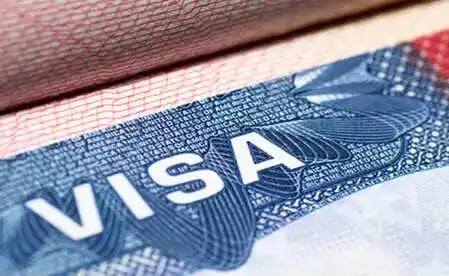
Washington, April 2 (). On Wednesday local time, the US Supreme Court heard a petition challenging President Donald Trump’s order to end his birthright citizenship. During this, President Donald Trump himself was present in the court. This long debate in the court has raised concerns among Indian professionals working on H-1B visas and other temporary permits.
In fact, Trump had instructed American agencies not to recognize the citizenship of children born in America, none of whose parents are American citizens or green card holders.
During the hearing in the court, Solicitor General John Sawyer, arguing on behalf of the government, told the court that the citizenship clause of the 14th Amendment was never intended to be universally applicable. This section does not grant citizenship to children of temporary visa holders or illegal immigrants. It requires direct and immediate allegiance to the United States.
Sauer based his argument on history, saying that the amendment was created after the American Civil War primarily to guarantee citizenship to freed slaves and their descendants.
He argued that the fundamental basis of this guarantee was loyalty, which was tied to lawful residence and not merely birth on American soil. Children of people living on temporary visas do not meet that criterion.
He told the justices that granting automatic citizenship to all births disrespects the precious and profound gift of American citizenship. Justice Samuel Alito raised the question of whether a general constitutional rule could be applied to modern situations such as illegal immigration, which did not exist in the same form in 1868.
Justice Elena Kagan said the administration’s stance appears revisionist. He said that for more than a century, the courts and the public have broadly understood birthright citizenship under the precedent of United States v. Wong Kim Ark.
Justice Ketanji Brown Jackson questioned whether the government was redefining ‘allegiance’ beyond its common law meaning, pointing out that even temporary visitors are subject to US laws and protections while in the country.
Several judges raised questions about how such a policy would work. He asked how officials would determine a child’s citizenship at birth. He also asked whether it would be necessary to check the immigration status of parents in each case. The government explained that the system would rely on objectively verified immigration data. This suggests that visa status can determine whether a child is a citizen or not.
At the same time, lawyers opposing the Trump administration said that this step will overturn the established law. He cited the 1898 decision in the United States vs. Wong Kim Ark case. It established that birth on American soil confers citizenship regardless of the status of the parents, with some limited exceptions such as children of diplomats. Changes in law may create uncertainty. This could affect access to education, employment and government benefits.
Sauer said the administration’s policy will be based on objectively verified immigration status rather than subjective intent and will be implemented in the future.
The case has broad implications, potentially affecting thousands of children born annually in the United States and raising constitutional questions about the scope of congressional and executive power over citizenship.
In fact, the 14th Amendment, ratified in 1868, states that all persons born or naturalized in the United States and subject to its jurisdiction are citizens. It was enacted after the Civil War to overturn the Supreme Court’s Dred Scott decision, which had denied citizenship to African Americans.
Indians are the largest group of H-1B visa holders in America. Many people stay in the country for years waiting to get a green card. They build their careers and raise families. Their children are often born in the United States and are considered citizens under current law. The government’s argument challenges that long-standing practice.
—
vc
ee