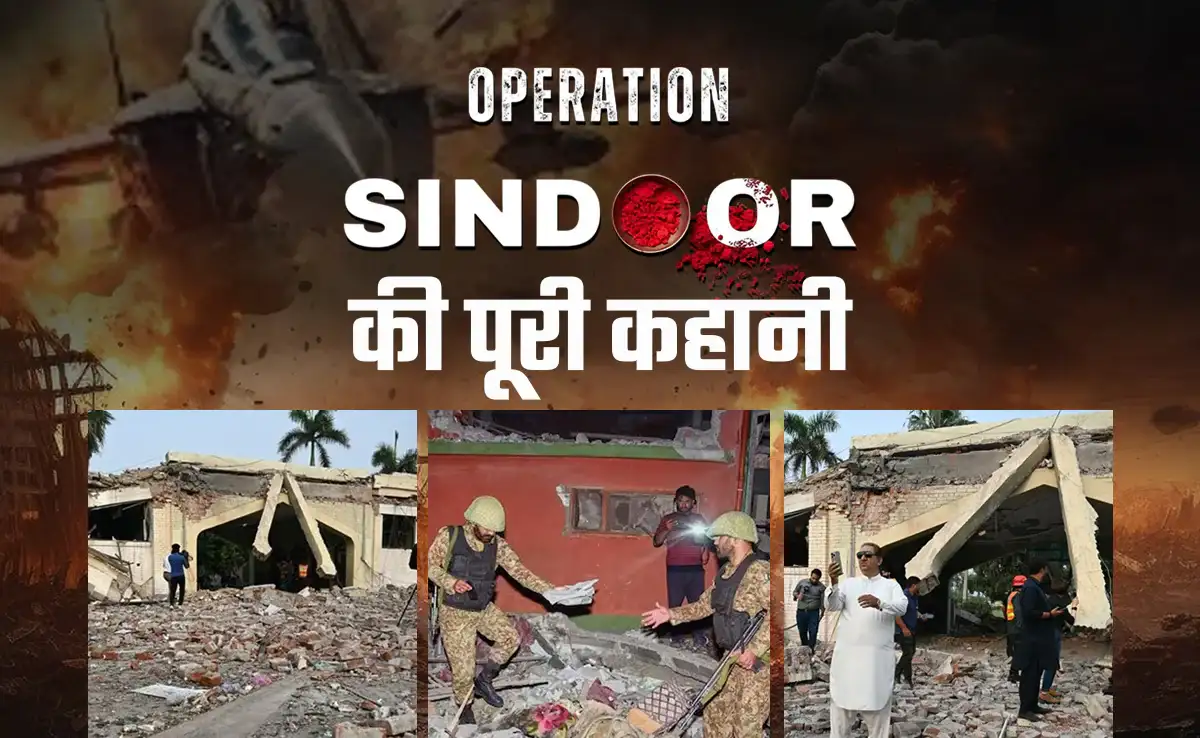
Today is the first anniversary of “Operation Sindoor” launched by the Indian Army against terrorists. Last year, in response to the terrorist attack in Pahalgam, India launched “Operation Vermillion”. Under this operation, several powerful attacks were carried out to destroy the hideouts of terrorists present in different areas of Pakistan and Pakistan Occupied Kashmir (PoK). To mark the first anniversary of “Operation Sindoor”, the Indian Army has released a 90-second video today – Thursday. This video shows a glimpse of the huge damage caused to the neighboring country.
Last year, on the afternoon of April 22, the beautiful Betaab Valley (formerly known as Baisaran Valley), located in Pahalgam, Jammu and Kashmir, suddenly came into limelight. That day, terrorists opened fire on tourists – specifically after asking about their religion – and killed 26 male tourists who had come to enjoy the scenic views. A few weeks after this serious terrorist incident, the Indian Army launched “Operation Sindoor”. Inspired by its determination, the Army caused heavy losses to the terrorists who had taken shelter on Pakistani soil.
On the anniversary of Operation Sindoor, we salute the valor and sacrifices of our armed forces, whose courage and dedication continue to safeguard the nation. Their actions during the operation reflected unmatched precision, seamless jointness and deep synergy across services,… pic.twitter.com/r8pVDnEoYV
— Rajnath Singh (@rajnathsingh) May 7, 2026
Army’s powerful 90-second video
To commemorate the first anniversary of “Operation Sindoor” launched in response to the Pahalgam terrorist attack, the Indian Army shared a 90-second video on social media platform ‘X’. In this video, detailed information related to the operation is given, which was carried out under the leadership of Prime Minister Narendra Modi. Further, the Army confirmed that India’s strong retaliatory action was very carefully planned and executed with utmost precision. India remains steadfast in protecting its sovereignty and ensuring the security of its people. Nine terrorist camps were among those targeted during the strikes in Pakistan and PoK under “Operation Sindoor”. These targets include the headquarters of Jaish-e-Mohammed (JeM) in Bahawalpur; Sawai Nala and some areas of Syed Na Bilal (Muzaffarabad); Lashkar-e-Taiba (LeT) bases at Muridke and Mahmuna Joya (Sialkot); Gulpur and Abbas (Kotli); And terrorist hideouts located in Barnala and Sarjal (Bhimber).
India’s resolute response calibrated and precise.
Committed to safeguarding sovereignty and its people.#JusticeServedJai Hind. pic.twitter.com/fegLXxMJjm
— ADG PI – INDIAN ARMY (@adgpi) May 7, 2026
Salute to the bravery and sacrifice of armed forces: Rajnath
On the first anniversary of “Operation Sindoor”, Defense Minister Rajnath Singh, in a post on “X”, said: “We salute the bravery and sacrifice of our armed forces, whose courage and dedication have consistently ensured the security of the nation. During this operation, their actions demonstrated unmatched precision, impeccable synergy and deep coordination between various forces – setting a new benchmark for modern military operations.”
Created chaos in Pakistan and Pakistan Occupied Kashmir (PoK)
The Indian Army launched “Operation Sindoor” on the night of 7 May. As part of this operation, India carried out heavy air strikes on nine terrorist hideouts located in Pakistan and Pakistan Occupied Kashmir (PoK), reportedly killing at least 100 terrorists. Furthermore, these strikes caused heavy damage to terrorist hideouts.
Although these military operations significantly increased tensions with Pakistan – and even led to retaliatory attacks by the Pakistanis – the alert Indian Army successfully repelled most of their attacks. During the operation, which lasted approximately 88 hours, high-ranking military officials from both countries held discussions through a communication hotline; After which, on 10 May, a mutual agreement was reached to suspend military operations. After this agreement, the military conflict between the two countries ended.