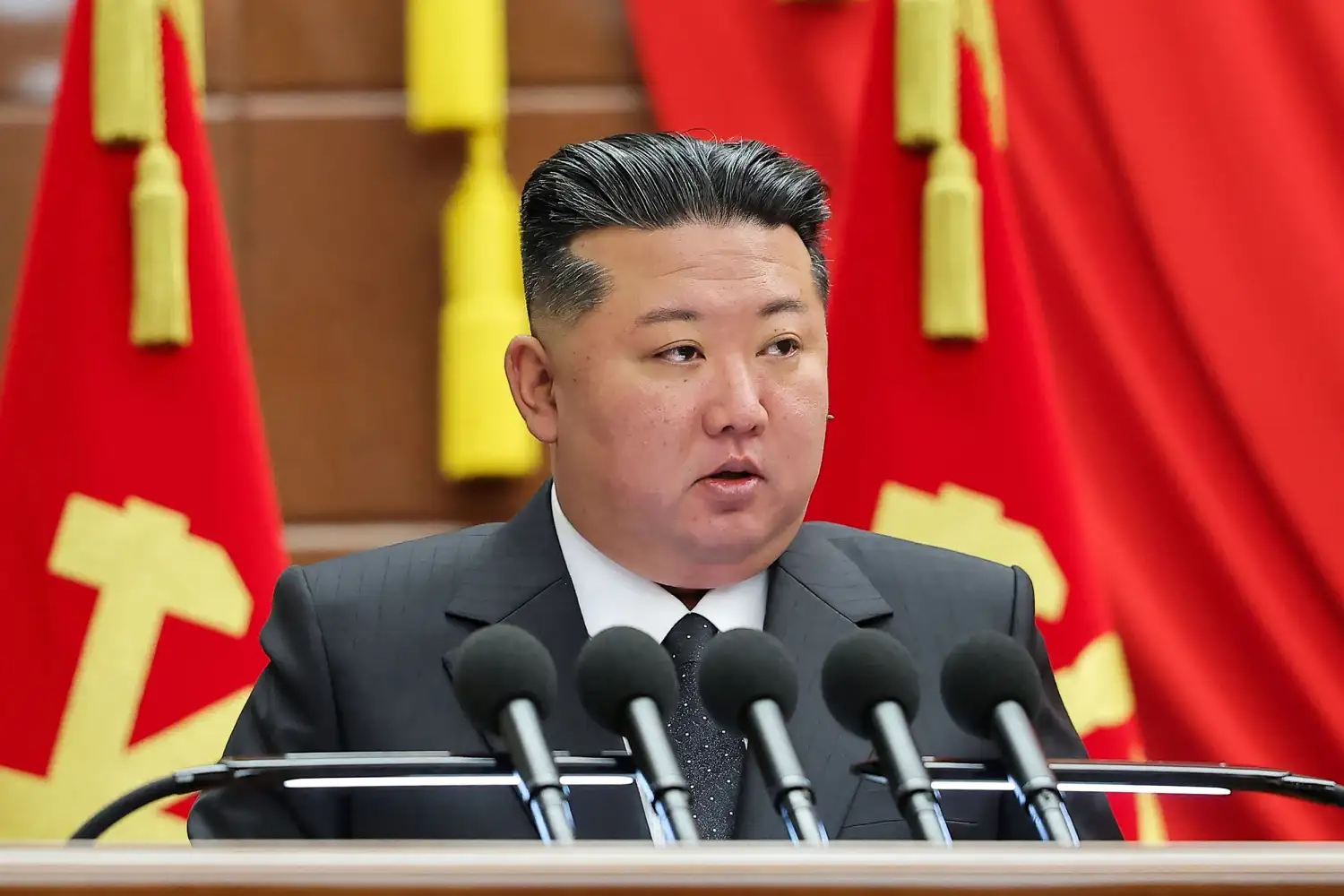
North Korea has once again attracted the world’s attention. Reports suggest that by amending its constitution, the country has further strengthened its policy on nuclear countermeasures. Under this new provision, the military has been ordered to automatically launch a nuclear strike in retaliation if Supreme Leader Kim Jong Un is assassinated or is directly attacked. In this context, let us know whether similar laws exist in other countries of the world.
North Korea’s new constitutional principle
According to reports, North Korea’s revised nuclear doctrine formally establishes the principle of taking automatic retaliation in the event of an attack targeting Kim Jong Un or the country’s top leadership. Such a policy is intended to serve as a strategic deterrent against adversaries. By guaranteeing nuclear retaliation even after its leadership is eliminated, North Korea aims to deter its enemies from attempting regime change or carrying out deliberate attacks against its command structure.
Russia’s “Dead Hand” System
Russia has perhaps the world’s most famous automated nuclear response system. Known locally as “Perimeter” and in Western discussions as “Dead Hand”, the system is said to have been developed during the Cold War. Its purpose was to ensure that even if Russia’s political leadership and command centers were suddenly destroyed in a nuclear attack, a retaliatory nuclear strike could still be carried out.
China and the fear of “decapitation” (led-destruction)
China officially adheres to a nuclear policy of “no first use”. This means that the country claims that it will not be the first country to use nuclear weapons in any conflict. However, there has been a long-running debate among strategic analysts over how China would respond in the event of a “decapitation strike” – that is, a targeted attack aimed at eliminating its central leadership. Reports suggest that China has started prioritizing the development of command and control systems that are capable of retaliating even after a major and crippling attack.
United States of America
In the United States, the authority to authorize a nuclear attack rests primarily with the President. However, the US government maintains “continuity of government” measures and emergency command systems that ensure that a counter-attack can still be conducted if Washington’s leadership structure ceases to function for any reason. This “Doomsday Protocol” ensures that, if the top civilian leadership is removed, the authority to conduct a nuclear strike can be assigned to pre-determined military commanders.
Pakistan’s nuclear policy
Pakistan is different from countries like India. This is because it does not follow the nuclear principle of “no first use”. Pakistan’s strategic policy states that nuclear weapons can be used when there is a threat to the country’s existence, or when there is a risk of its command and control systems being compromised.