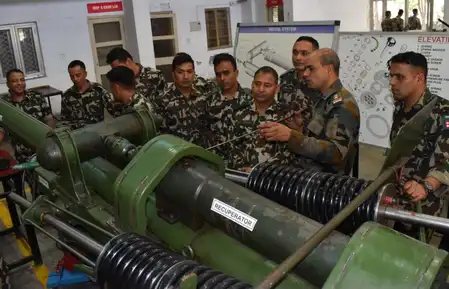
Vadodara, March 30 (). The Indian Army successfully conducted a four-week special training program on 105 mm Light Field Gun (LFG) for Nepal Army trainees at the Corps of Electronics and Mechanical Engineers (EME) School, Vadodara, Gujarat.
The objective of this training was to strengthen the technical competencies associated with the maintenance, repair and operation of artillery systems, so that soldiers can effectively use these weapons in a variety of situations.
During this course the participants were given detailed information about the structure, functioning and routine maintenance of 105 mm LFG. Additionally, special emphasis was placed on advanced repair techniques, fault diagnosis, and measures to ensure long-term functionality of the system. Priority was given to practical exercises in the training, so that the trainees can be better prepared to deal with the challenges faced in real situations.
Strengthening operational readiness was also an important aspect of the programme. Trainees were taught how to maintain artillery systems active and effective in difficult and diverse geographical conditions such as mountainous terrain or border areas. This not only increased their technical ability but also developed their understanding from a strategic point of view.
This training promoted exchange of knowledge between the two countries. Expert trainers from the Indian Army shared their experiences and expertise, while Nepalese trainees also shared their operational experiences. This mutual cooperation further strengthened the professional understanding and coordination between the two armies.
Defense experts believe that such joint training programs are extremely important for regional security and stability. This initiative further strengthens the long standing friendly relations between India and Nepal.
This training program not only proved helpful in the development of technical skills but also provided new strength to bilateral defense cooperation. This initiative of the Indian Army reflects its commitment to pursue such collaborative efforts in future also.
—
SAK/VC